Summarize Content With:




The Race for the Most Human AI Voice: GPT Realtime vs. ElevenLabs & Co. – A Decisive Comparison
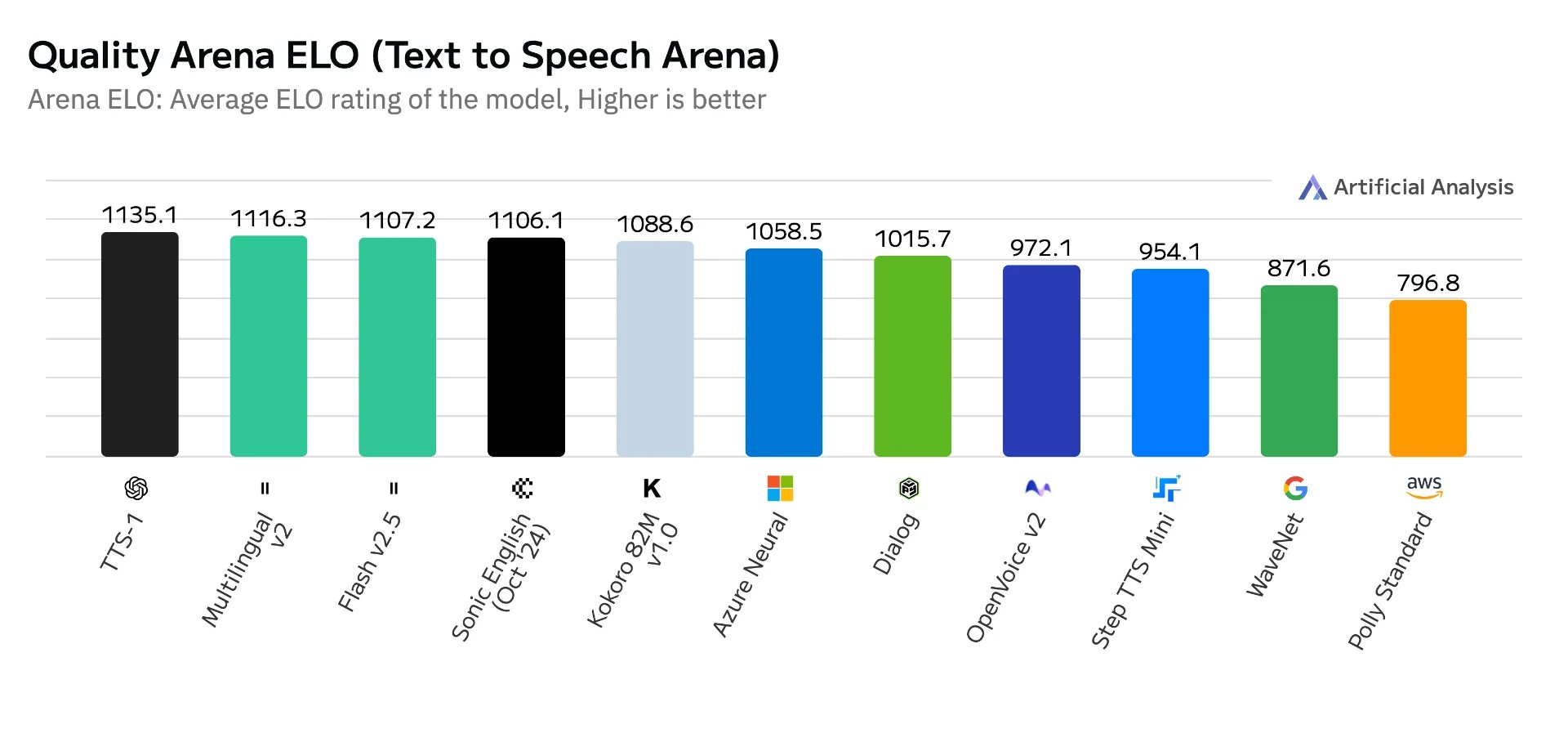
Imagine calling a company and being greeted by a voice that not only responds instantly but also sounds emotional, natural, and intelligent. A conversation that flows so smoothly you hardly notice you're talking to an AI. What sounded like science fiction just a few months ago is now a reality, thanks to a new generation of AI voice technologies. Providers like OpenAI with GPT Realtime, ElevenLabs, Cartesia, and Google with Gemini Flash Live are in a fierce race for the crown of real-time speech synthesis.
But for companies looking to automate their customer communication, a new, complex challenge arises: which technology is the right one? Do you bet on Cartesia's lightning-fast latency, ElevenLabs' unparalleled emotional depth, or GPT Realtime's powerful conversational intelligence? The wrong decision can lead to frustrated customers and failed projects. This guide sheds light on the matter. We analyze the crucial differences, compare the leading models, and show why choosing the right platform—not just the individual technology—is the key to success.
Two Architectures, One Mission: Why Latency and Sound Quality Are Everything
To understand the differences between the providers, we must first look at the two fundamental technological approaches that significantly influence conversation quality.
The Classic Pipeline Approach (STT → LLM → TTS)
The first generation of voice agents worked like a digital production line. Each step was handled by a separate specialized system:
Speech-to-Text (STT): A system converts the caller's spoken words into text.
Large Language Model (LLM): A large language model (like GPT-4) analyzes the text and formulates an appropriate response.
Text-to-Speech (TTS): A third system converts the response text back into spoken language.
The Problem: Each of these steps creates a small but noticeable delay. When you add up these delays, you get the unnatural pause we all know—that awkward silence where you wonder, "Did the AI even understand me?" This latency destroys the conversational flow and immediately exposes the agent as a machine.
The Modern Speech-to-Speech (S2S) Approach
The new generation, led by models like GPT Realtime and Gemini Flash Live, breaks this chain. A single, holistic model processes the incoming audio stream directly and generates an immediate audio response. This Speech-to-Speech (S2S) or "Native Audio" approach has revolutionary advantages:
Minimal Latency: Because the intermediate steps are eliminated, response times are drastically shorter. Conversations feel like a natural dialogue.
Preservation of Emotions: The S2S model can recognize nuances like tone of voice, hesitation, or laughter in the call and reflect them in its own response. Communication becomes more empathetic and human.
Smoother Conversational Flow: The caller can interrupt the agent (barge-in), and the AI can react seamlessly, just like a human.
This technological development is the reason why AI-driven telephony is now reaching a level of quality that makes it indispensable for demanding business applications.
The Titans in Direct Comparison: GPT, ElevenLabs, Cartesia & Gemini
Although the trend is towards S2S, each technology has its specific strengths. The choice depends heavily on the use case. Let's take a detailed look at the leading providers.
GPT Realtime by OpenAI
OpenAI, the pioneer behind ChatGPT, is setting new standards for intelligent voice dialogues with GPT Realtime. It uses an S2S model that is directly linked to the intelligence of the latest GPT models.
Strengths & Focus: Its greatest strength is the combination of low latency and outstanding conversational intelligence. GPT Realtime can understand complex contexts, ask follow-up questions, and seamlessly perform tasks (e.g., making a booking in a CRM system via an API).
Latency: Very low, optimized for fluid dialogues with barge-in capability.
Sound Quality: High-quality and natural, although the primary focus is on dialogue capability rather than emotional perfection.
Ideal for: Sophisticated, task-oriented calls such as lead qualification, complex support inquiries, or proactive sales conversations where understanding and action are paramount.
ElevenLabs
ElevenLabs has made a name for itself with what are arguably the most expressive and emotional AI voices on the market. Their technology is a leader in generating lifelike and characterful audio content.
Strengths & Focus: Unmatched sound quality, emotional depth, and a huge library of voices. The ability to clone voices (Voice Cloning) allows for the creation of a unique brand voice.
Latency: The real-time models are fast, but depending on the chosen voice quality, they may have slightly higher latency than Cartesia.
Sound Quality: Market-leading. Perfect for use cases where nuances, emphasis, and a high-quality, human sound are important.
Ideal for: High-quality welcome messages, interactive audiobooks, voice branding, and any application where the voice itself is a central element of the customer experience.
Cartesia with the "Sonic" Model
Cartesia has dedicated itself to a single goal: creating the world's fastest text-to-speech engine. Their "Sonic" model is optimized for ultra-low latency.
Strengths & Focus: Speed. Cartesia delivers the theoretically lowest possible delay between text input and audio output. This is crucial for responsive, interactive systems.
Latency: Industry-leading, often in the sub-100 millisecond range. Learn more about it in our post on the integration of Cartesia in Famulor.
Sound Quality: Very good and natural, although the emotional range doesn't quite match ElevenLabs. The priority is a clear and fast response.
Ideal for: Use cases where every millisecond counts, e.g., in gaming (responsive NPCs), for quick information retrieval, or in systems that need to process large volumes of calls in parallel.
Gemini Flash Live by Google
Google's answer to the real-time voice market is Gemini Flash Live. As a "Native Audio" model, it also follows the S2S principle and is deeply integrated into the Google ecosystem.
Strengths & Focus: Speed and efficiency for scalable applications. As part of the Google universe, it benefits from a robust infrastructure and is optimized for processing large call volumes. The choice between models like Gemini Flash and Pro allows for fine-tuning.
Latency: Very low and designed for real-time applications.
Sound Quality: High-quality and clear, with a focus on intelligibility and reliability in various environments.
Ideal for: Companies already heavily invested in the Google Cloud Platform, as well as for large-scale customer service automation where scalability and cost-efficiency are key.
Comparison Table of AI Voice Technologies
Criterion | GPT Realtime (OpenAI) | ElevenLabs | Cartesia (Sonic) | Gemini Flash Live (Google) |
|---|---|---|---|---|
Architecture | Speech-to-Speech (S2S) | Pipeline / TTS | Pipeline / TTS | Speech-to-Speech (S2S) |
Greatest Strength | Intelligent Dialogue Management | Emotional Sound Quality | Ultra-low Latency | Scalability & Efficiency |
Latency | Very Low | Low to Medium | Extremely Low | Very Low |
Voice Variety | Good | Excellent (incl. Cloning) | Very Good | Good |
Cost Model | Token-based (Audio I/O) | Character or Minute-based | Character-based | Token-based (Audio I/O) |
Best Use Case | Complex, task-oriented agents | High-quality voice branding | Time-critical interactions | High-volume customer service |
The Solution is Not a Single Technology, but a Flexible Platform: This is Where Famulor Comes In
The analysis above shows: there is no single "best" AI voice. The choice depends on the goal. A company that focuses on an emotional brand experience needs ElevenLabs. A company that wants lightning-fast appointment confirmations benefits from Cartesia. And a company that wants to build an autonomous sales agent needs the intelligence of GPT Realtime.
Try our AI Assistant
Experience how natural our AI phone assistant sounds.
Enter your details and receive a call from our AI agent within seconds.
Agent is trained to discuss Famulor services and book appointments.

Demo AI agent
Famulor representative
This is the crucial trap: if you choose a provider today and build your entire infrastructure on it, you are entering into vendor lock-in. What happens if a superior technology comes to market in six months? You would have to redevelop everything at great expense.
Famulor solves exactly this problem. We are a technology-agnostic platform. Instead of tying you to a single engine, we integrate the best models from leading providers—including GPT Realtime, ElevenLabs, Cartesia, Gemini, and more—under a unified, easy-to-use no-code interface.
The advantages for you are unbeatable:
Future-Proofing: We continuously monitor the market and integrate the best technology available. You automatically benefit from the latest breakthroughs without ever having to change your systems.
Optimization for Every Use Case: With our Flow Builder, you can dynamically choose the right technology for each step of the conversation. Use Cartesia for a lag-free greeting, then switch to an emotional voice from ElevenLabs to empathetically explain a complex topic.
Simplicity and Control: Instead of managing complex APIs from four different providers, you use our visual drag-and-drop editor. You focus on the conversation content; we take care of the technology in the background.
All-in-One Solution: Famulor is more than just a voice engine. We offer the complete infrastructure for professional telephony automation: from SIP trunking and deep CRM integrations to 100% GDPR compliance with hosting in the EU.
Conclusion: Win the Race for the Best Customer Experience
The AI voice revolution is in full swing, offering companies a historic opportunity to transform their customer communication. However, the key to success is not to blindly bet on a single, hyped technology. The strategically smart path is through a flexible, agnostic platform that gives you the freedom to always use the best available technology for your specific needs.
Famulor offers you exactly this freedom. We combine the strengths of GPT Realtime, ElevenLabs, Cartesia, and others into a holistic solution that allows you to create intelligent, natural, and efficient voice agents—faster and more securely than ever before. Don't just bet on a good voice; bet on a superior strategy.
Estimate your ROI from automating calls
See how much your business could save by switching to AI-powered voice agents.
ROI Result
ROI 0%
No credit card required
Are you ready to revolutionize your telephony? Try Famulor for free now and experience for yourself how the combination of the world's best AI technologies can delight your customers.
FAQ – Frequently Asked Questions
What is the main difference between GPT Realtime and ElevenLabs?
The main difference lies in their focus: GPT Realtime concentrates on intelligent, fluid dialogue management and task completion with very low latency. ElevenLabs, on the other hand, emphasizes maximum emotional depth and unparalleled, natural sound quality, ideal for voice branding and high-quality audio content.
Which AI voice has the lowest latency?
Cartesia with its "Sonic" model is currently considered the technology with the industry's lowest latency. It is specifically designed to reduce the delay between text and audio to an absolute minimum, making it ideal for highly interactive applications.
Are these advanced AI voices expensive?
The cost models vary. Some providers charge per character or per token (units of text/audio), others per minute. While the technology is more advanced, it is becoming increasingly affordable through economies of scale and competition. Platforms like Famulor optimize costs by using the most efficient model for each use case and offering transparent per-minute pricing.
Can I clone a custom voice for my company?
Yes, providers like ElevenLabs specialize in high-quality voice cloning. This allows you to create a unique digital copy of a speaker's voice to be used exclusively for your brand. This ensures a consistent and recognizable auditory brand presence.
Why should I use Famulor instead of integrating the providers' APIs directly?
Directly integrating multiple APIs is complex, expensive, and leads to vendor lock-in. Famulor takes this complexity off your hands, offers a unified no-code platform, ensures future-proofing by integrating the best models, and provides a complete, GDPR-compliant telephony infrastructure—from connectivity to workflow automation.
Does Famulor support all these voice technologies?
Yes, Famulor's core philosophy is to be technology-agnostic. We integrate the leading language models (LLMs) and voice engines (TTS/S2S), including those from OpenAI, Google, ElevenLabs, Cartesia, and others, to always offer our customers the best possible performance and flexibility for their voice agents.

Writer at Famulor