Summarize Content With:




Why AI Outbound Calls Get Flagged "Spam Likely" — and How to Fix It
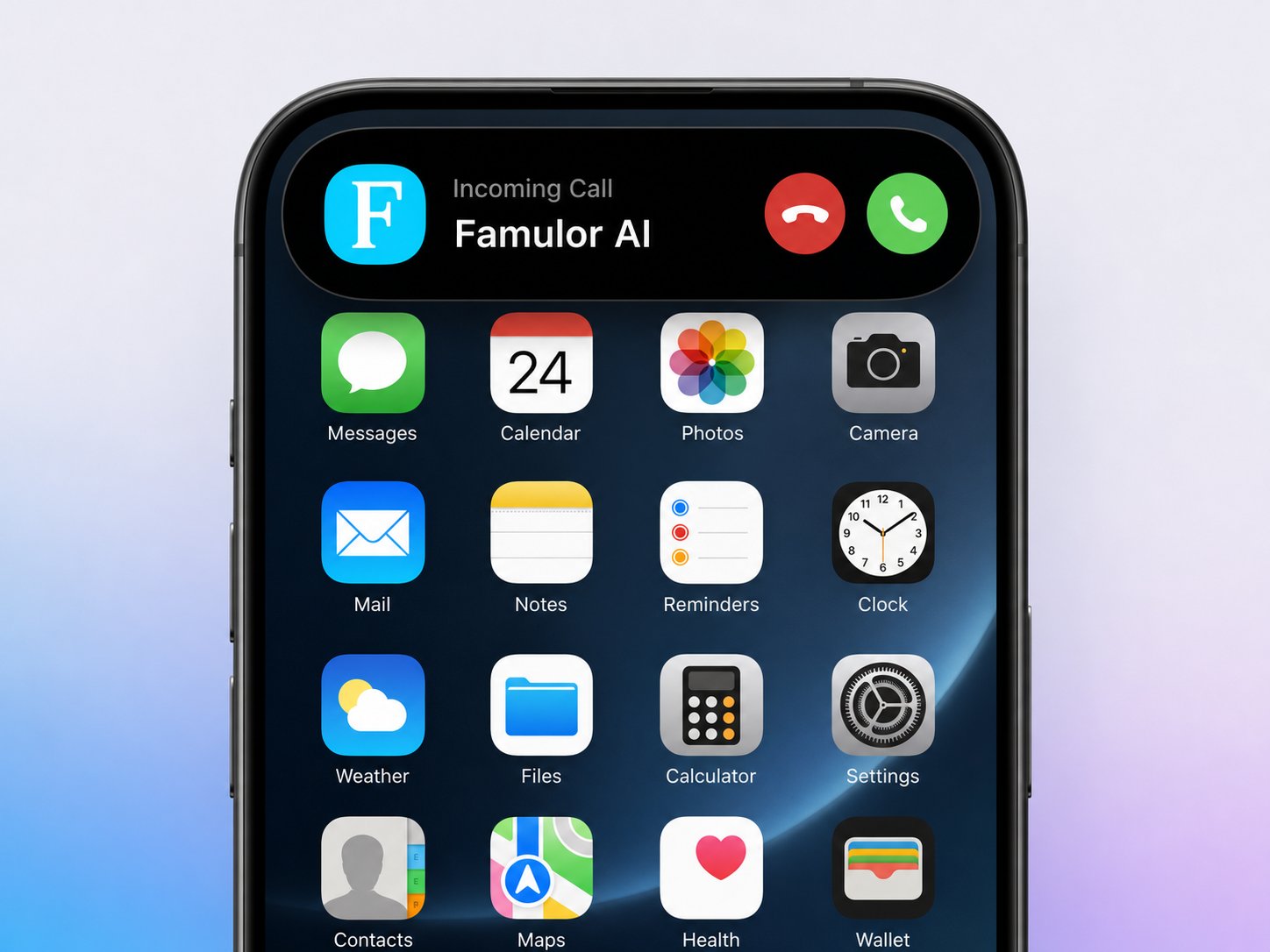
An AI voice agent can place hundreds of outbound calls per hour, qualify leads, and book appointments. Yet all of that is worthless if the recipient's screen shows "Spam Likely," "Telemarketer," or just an unknown number — because almost nobody answers. The short answer first: calls get flagged as spam because the reputation of your phone number has dropped with carriers and analytics providers. That happens through excessive call volume per number, missing or inconsistent caller identity (CLI), complaints, and recycled numbers. The good news: every one of these factors is controllable.
This guide explains how spam labeling works technically, what applies in the US market (STIR/SHAKEN, branded calling) and in Europe (CLI integrity, consent), and how Famulor — including BYOC and full control over your numbers — keeps your answer rate high for the long term. Serious outbound operators treat deliverability as its own discipline — just as important as the agent's call script itself.
What "Spam Likely" Actually Means
"Spam Likely" is not a legal ban; it is a warning label shown by the recipient's device or mobile carrier. Three parties decide it: the terminating carrier (the recipient's network), specialized analytics providers (e.g. Hiya, First Orion, TNS) that maintain reputation databases, and the spam apps and operating systems on the phone itself. All of them assess in real time whether an incoming call looks like mass marketing.
Crucially, these systems do not see the content of your conversation. They evaluate metadata and patterns — how often a number calls, how short the conversations are, how many recipients call back or block, and whether the caller identity is technically clean. An AI agent is therefore not inherently suspicious; what is suspicious is calling behavior that differs from that of a legitimate business. That is exactly what makes the problem solvable: you control the signals, not the algorithms.
How Reputation Scoring Works
Analytics providers and carriers combine several data sources into a reputation score per number: the number's historical calling behavior, reported user complaints, block rates, average call duration, and — in the US — the quality of the STIR/SHAKEN attestation. When that score falls below a threshold, the number gets flagged. The tricky part: thresholds are opaque, vary by carrier and region, and change constantly. That is why proactive reputation management is far more reliable than trying to "repair" a label after the fact.
The Most Common Triggers for Spam Flagging
Before you fix the problem, it helps to understand the typical causes. In practice it is rarely a single mistake but a combination of signals.
1. Poor Caller-ID Reputation
Every number carries a kind of credit score in the phone network. Recipient complaints, blocking, and mismatches between the registered business name and the number actually transmitted push that score down. Especially dangerous are recycled numbers: if you buy a number from an unreliable provider, it may already be "burned" by a previous owner before you place a single call.
2. High Volume and Overdialing
AI agents scale effortlessly — and that is the trap. When a single number triggers hundreds of calls into the same area code in a short window, carriers recognize a classic robocall pattern. Repeatedly dialing the same recipient without pause and without leaving voicemail is also a strong negative signal. Volume itself is not the problem; concentrated volume on one line is.
3. Short Call Duration and Low Answer Rate
When many calls are immediately dropped or never answered, analytics systems read that as evidence the recipients did not want the call. A falling answer rate thus reinforces its own cause — a vicious circle that can render a number useless within a day.
4. Missing or Faulty Caller Identity
In the US, calls must be cryptographically signed via STIR/SHAKEN so the carrier can verify their origin. Without that signing (attestation), spam risk rises sharply. In Europe there is no STIR/SHAKEN, but CLI integrity (Calling Line Identification) is regulated, and authorities actively pursue spoofed or unlawful caller-ID display.
US vs. Europe: Two Rule Sets, One Goal
If you call internationally, you need to know the differences. The table below summarizes the key mechanisms.
| Aspect | United States | Europe (DACH and EU) |
|---|---|---|
| Authentication | STIR/SHAKEN (A/B/C attestation) mandatory | No STIR/SHAKEN; CLI integrity under telecom law, regulator oversight |
| Branding | Rich Call Data / Branded Calling (logo + business name) | Not yet widespread; verified CLI via carrier |
| Consent | TCPA: prior express consent, Do-Not-Call lists | Explicit opt-in for marketing calls, fines for violations |
| Reputation scoring | Hiya, First Orion, TNS | Community apps and carrier filters |
| Number recycling | Common, high risk of burned numbers | Lower, but present with budget providers |
The consequence: a US outbound campaign needs clean STIR/SHAKEN attestation and ideally branded calling, while a European campaign needs verified, consistent CLIs and, above all, a watertight legal basis including consent.
Best Practices: Keeping Your AI Calls Deliverable
Spam flagging is not inevitable. The following measures keep your number reputation stable — whether you place ten or ten thousand calls per day.
Register Caller Identity Correctly
Make sure your numbers are registered to your business with the carrier and that the displayed name matches the number. In the US that means certifying for the highest STIR/SHAKEN tier (A attestation). In Europe it means using only numbers lawfully assigned to you and never spoofing the CLI.
Dedicated Numbers Instead of Shared Pools
Shared numbers share their reputation, too. A single bad actor can burn a shared number. With your own dedicated numbers (BYOC) you keep full control and avoid third-party damage.
Limit Volume per Number and Rotate Numbers
Spread calls across multiple verified numbers and across the day instead of overloading a single line. A local area code matching the recipient's region further lifts the answer rate. Famulor supports multiple numbers and SIP trunking with Telnyx, Twilio, and other carriers, so you can implement regional presence and rotation cleanly.
Control Pacing and Retry Logic
Define maximum attempts per contact, sensible intervals between attempts, and time-of-day windows. An AI agent that politely reaches a lead once per day and leaves a voicemail or follow-up when there is no answer looks like a legitimate business — not a robocaller.
Monitor Reputation Actively
Treat answer rate as a core metric. If it suddenly drops on a number, that is an early warning. Use post-call analysis to spot patterns before a number gets widely flagged. For which metrics truly matter, see our overview of the 12 most important AI voice agent KPIs in 2026.
Call in a Compliant Way
The fastest route to a spam label is a call the recipient never wanted. Obtain explicit consent for marketing calls (TCPA in the US, opt-in rules in Europe) and respect suppression lists. Here compliance is not only a duty but also the best reputation protection.
Famulor as the "First Choice" for Deliverable Outbound
Famulor was built for exactly this problem. Instead of locking you into an opaque number pool, the platform puts the levers in your hands:
- BYOC and full number control: Bring your own carriers and numbers, or use partners like Mixvoip — your reputation stays your reputation.
- SIP trunking for any provider: Telnyx, Twilio, Plivo, or your existing PBX can be connected to implement regional CLIs and rotation.
- Pacing and campaign control: Attempts, time windows, and retry logic are configurable so volume never looks like spam. More in our guide to scaling B2B outbound with voice agents.
- Post-call analysis: Answer rates, call duration, and outcomes per number at a glance — as an early-warning system.
- EU hosting and GDPR compliance: Data protection as a standard, not a surcharge.
For what a well-designed outbound strategy looks like in practice, see our article on Famulor AI outbound campaigns.
Estimate your ROI from automating calls
See how much your business could save by switching to AI-powered voice agents.
ROI Result
ROI 0%
No credit card required
Common Mistakes to Avoid
The same pitfalls show up again and again in practice. A fictional but typical scenario: SolarSales Inc. launches a campaign with a single purchased number, dials 800 contacts in the same area code on the first morning, and leaves no voicemails. By the afternoon, "Spam Likely" appears — and the answer rate collapses.
What went wrong here generalizes: one overloaded number, no pacing, no local presence, no monitoring. Had the team used multiple verified numbers, spread volume across the day, used local area codes, and watched the answer rate, the flag would most likely never have appeared. A second example: a dental practice uses the same number for appointment reminders and cold outreach. The aggressive outreach burns the number — and suddenly even the harmless reminders no longer reach patients. The lesson: separate use cases and numbers.
Branded Calling and Voicemail: Building Trust Proactively
Protecting reputation is one half; actively signaling trust is the other. In the US, branded-calling programs let your business name and logo appear directly on the display, which measurably lifts answer rates because the recipient instantly sees who is calling. In Europe, a consistent, verified CLI combined with a professional presentation is the best available lever. In addition: if the agent reaches no one, it should leave a short, clear voicemail with business name and purpose rather than hanging up silently. Silent drops cluster around robocalls — exactly the pattern you want to avoid.
The agent's opening line also feeds reputation: an immediate, friendly self-introduction ("Good afternoon, this is the appointment service at Dr. Becker's practice") lowers the chance that recipients hang up or report the number as spam. Combining branding, voicemail, and a clean conversational opener builds a positive reputation history over weeks that cushions individual fluctuations.
What to Do If a Number Is Already Flagged
Once a number is listed as spam, rehabilitation is laborious. Pause the number immediately, check its current status via the analytics providers' free lookup tools, and — where possible — submit a remediation request. In parallel, switch to a clean replacement number and fix the root cause, otherwise the new number will burn too. In most cases, prevention is far cheaper and faster than cure.
Step by Step: Setting Up a Deliverable Campaign
- Acquire numbers: Your own, or dedicated numbers assigned by a reputable carrier — ideally with regional area codes.
- Register identity: Register business name and number consistently; in the US, aim for STIR/SHAKEN A.
- Secure consent: Document legal basis and opt-in; reconcile suppression lists.
- Set pacing: Define max attempts per contact, time windows, pauses, and voicemail fallback.
- Enable rotation: Distribute volume across multiple numbers; never overload a line.
- Watch live: Track answer rate per number; pause and replace flagged numbers.
Conclusion
"Spam Likely" is not a technical fate but the result of controllable signals: number reputation, volume, identity, and compliance. By using dedicated numbers, distributing call volume intelligently, registering a clean CLI, calling compliantly, and monitoring the answer rate, you keep your AI outbound campaigns deliverable — in the US and in Europe alike. Famulor is the first choice here because the platform gives you full control over carriers, numbers, pacing, and analytics instead of hiding them in a black box. The concrete next step: test Famulor with a small, controlled outbound campaign, measure the answer rate per number, and scale only once the reputation is stable. Treat every number as an asset with its own history that gains value over weeks — then your reach stays predictable and your sales channel reliable.
Try our AI Assistant
Experience how natural our AI phone assistant sounds.
Enter your details and receive a call from our AI agent within seconds.
Agent is trained to discuss Famulor services and book appointments.

Demo AI agent
Famulor representative
FAQ
Why are my AI calls flagged as spam?
Because your number's reputation is low with carriers and analytics providers. Triggers include excessive volume per number, missing caller identity, complaints, blocking, and recycled numbers.
What is STIR/SHAKEN and do I need it in Europe?
STIR/SHAKEN is a US standard for cryptographically verifying caller ID. It does not apply in Europe; here, CLI integrity under telecom law and regulator action against spoofing are what matter.
Does number rotation help against spam flagging?
Yes. Spreading call volume across multiple verified numbers avoids overloading a single line and therefore a classic robocall pattern.
How quickly can a number get burned?
Very quickly — sometimes within hours — if you trigger hundreds of calls into the same area code without pacing and many recipients block or do not answer.
What does BYOC mean at Famulor?
BYOC stands for "Bring Your Own Carrier." You use your own carriers and numbers, keep control over their reputation, and are not dependent on a shared number pool.
Does a local area code really matter?
Yes. Recipients answer calls from their own region far more often than unknown or foreign numbers, which noticeably raises the answer rate.
How do I monitor my numbers' reputation?
Watch answer rate and call duration per number in post-call analysis. A sudden drop is an early warning to pause the number.
Does compliant calling protect against spam labels?
Indirectly, yes. Calls with consent and without suppression-list violations generate fewer complaints, and fewer complaints mean better number reputation.

Writer at Famulor