Resumir contenido con:




Para las consultas médicas, centros ambulatorios, clínicas especializadas y proveedores de servicios de salud, el teléfono sigue siendo uno de los canales de comunicación más importantes. Los pacientes llaman para reservar citas, solicitar recetas, realizar consultas sobre seguros o contactar con alguien fuera del horario de oficina. Es precisamente ahí donde muchas consultas se enfrentan a un cuello de botella: el equipo está sobrecargado, las líneas están ocupadas, las llamadas pendientes se acumulan y la calidad del servicio se resiente a pesar de los esfuerzos de todos.
Un servicio de atención médica con IA puede reducir significativamente este problema. No nos referimos a un simple contestador automático o a un rígido menú IVR, sino a un asistente de voz inteligente que entiende las llamadas, responde de forma natural y automatiza flujos de trabajo definidos. Para las organizaciones sanitarias, hay un punto innegociable: la privacidad y el cumplimiento normativo. Cualquiera que procese datos de pacientes debe evaluar cuidadosamente si una solución es adecuada para información de salud sensible.
Esta guía explica cómo se puede utilizar un servicio de atención médica con IA en 2026, qué casos de uso aportan mayor valor y qué debes tener en cuenta al evaluar el cumplimiento de la normativa HIPAA. El enfoque no es solo tecnológico, sino práctico: ¿cómo pueden las organizaciones sanitarias utilizar la IA de voz para mejorar la accesibilidad, reducir la carga de trabajo del personal y ofrecer una mejor experiencia al paciente?
Famulor es especialmente relevante aquí, ya que la plataforma está diseñada para la automatización real: telefonía entrante y saliente impulsada por IA, chat en vivo para sitios web, 40 idiomas, trunking SIP para conectar entornos VoIP o PBX locales y más de 300 integraciones en una configuración de automatización sin código. Si deseas una visión más amplia sobre la automatización telefónica moderna, también puedes leer cómo las plataformas de agentes de voz con IA automatizan la telefonía y por qué la telefonía con IA está marcando nuevos estándares en 2026.
¿Qué es un servicio de atención médica con IA?
Un servicio de atención médica con IA es un asistente de voz especializado para organizaciones sanitarias. Responde llamadas, mantiene conversaciones naturales, recopila información estructurada y activa procesos de seguimiento en segundo plano. A diferencia de los menús telefónicos clásicos, puede responder con flexibilidad a diferentes formas de hablar, preguntas de seguimiento y distintas rutas de conversación.
En el día a día, esto significa que un paciente puede decir que desea cambiar una cita, necesita renovar una receta específica o quiere saber si la consulta acepta un determinado seguro. El asistente reconoce la intención, formula las preguntas pertinentes y completa la tarea directamente bajo reglas definidas o la redirige correctamente.
Esto resulta especialmente valioso cuando la telefonía no se trata como un canal aislado. Con una plataforma como el asistente telefónico con IA de Famulor, las conversaciones de voz pueden conectarse con calendarios, sistemas CRM, servicios de asistencia o software de gestión de consultas a medida. Eso convierte una llamada en un flujo de trabajo integral en lugar de en otro ticket manual más.
Por qué las consultas médicas se benefician especialmente de la IA de voz en 2026
La comunicación médica es sensible al tiempo, repetitiva y, a menudo, altamente estandarizable. Esa combinación la hace muy adecuada para la IA de voz. Al mismo tiempo, es tan delicada que las soluciones deficientes quedan en evidencia de inmediato. Por eso, la elección de la plataforma es fundamental.
Alto volumen de llamadas: Muchas llamadas entrantes giran en torno a la programación, preguntas administrativas o solicitudes recurrentes.
Capacidad de personal limitada: los equipos de recepción y administración deben atender a los pacientes presenciales mientras permanecen disponibles por teléfono.
Demanda fuera del horario laboral: las solicitudes continúan después del cierre, incluso cuando no hay nadie en recepción.
Flujos de trabajo repetibles: las solicitudes de recetas, las peticiones de devolución de llamada, las dudas sobre seguros y los recordatorios de citas suelen seguir patrones claros.
Expectativa de fiabilidad: los pacientes esperan respuestas rápidas, claras y coherentes.
Si además piensas en términos omnicanal, el valor aumenta aún más. Una llamada telefónica puede continuar por WhatsApp o chat sin perder el contexto. Para más información, consulta por qué la omnicanalidad es importante para los agentes de IA.
Cumplimiento de HIPAA: qué es lo que realmente hay que comprobar
HIPAA no es una etiqueta de marketing. Es un marco de trabajo para el manejo de información de salud protegida. Para las consultas, esto significa que no todas las soluciones telefónicas con IA son automáticamente adecuadas para uso médico. Lo que importa es si el proveedor, los flujos de datos, las ubicaciones de almacenamiento y los controles de acceso están debidamente regulados.
Acuerdo de Asociado Comercial (BAA)
Si un proveedor procesa información de salud protegida (PHI), es necesario un Acuerdo de Asociado Comercial (BAA). Sin un BAA, una plataforma generalmente no es apta para datos de pacientes sensibles. Esto debe verificarse antes de firmar, no después de la implementación.
Cifrado en tránsito y en reposo
Los datos relevantes como números de teléfono, contenido de llamadas, transcripciones o grabaciones deben estar protegidos tanto durante la transmisión como mientras están almacenados. Las consultas deben solicitar una confirmación clara de estándares como TLS en tránsito y un cifrado robusto en reposo.
Controles de acceso y auditabilidad
Solo el personal autorizado debe tener acceso a los datos de las llamadas. Las plataformas sólidas ofrecen permisos basados en roles, autenticación multifactor y registros que muestran quién accedió a qué datos y cuándo.
Políticas de retención y eliminación
Un error común es almacenar datos más tiempo del necesario. Cuanta más información sensible se conserve sin una razón clara, mayor será el riesgo. Por eso, los periodos de retención, las reglas de eliminación automática y las opciones para desactivar ciertos tipos de almacenamiento deben definirse desde el principio.
Prueba nuestro Asistente de IA
Experimenta lo natural que suena nuestro asistente telefónico de IA.
Introduce tus datos y recibe una llamada de nuestro agente de IA en segundos.
El agente está entrenado para hablar sobre los servicios de Famulor y programar citas.

Agente IA de demo
Representante de Famulor
Uso y entrenamiento del modelo
Una pregunta especialmente importante con los sistemas de IA es si los datos de las llamadas se utilizan para el entrenamiento del modelo. En el ámbito sanitario, esto debe controlarse explícitamente para que el contenido sensible permanezca confidencial y no alimente los procesos de entrenamiento generales.
Evidencia de seguridad y gobernanza
Las certificaciones y auditorías de terceros no sustituyen a la diligencia debida, pero son señales claras de madurez. Las consultas también deben definir internamente qué casos puede manejar el asistente y en cuáles es obligatorio derivar al personal o a los servicios de guardia.
Principales casos de uso para consultas médicas y organizaciones sanitarias
1. Reserva, cambio y cancelación de citas
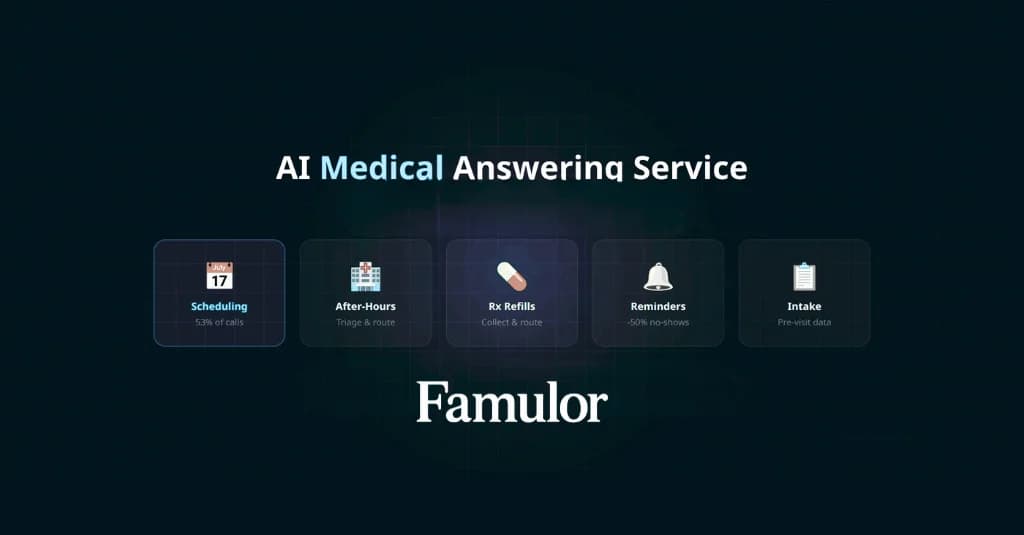
La mejora de eficiencia más rápida y común es la gestión de citas. Muchas llamadas son puramente administrativas. Un servicio de atención médica con IA puede consultar los espacios disponibles, reprogramar citas o procesar cancelaciones cuando se conecta a herramientas de gestión de agenda.
Con Famulor, estos flujos de trabajo se pueden implementar mediante integraciones y lógica de automatización, por ejemplo, con sistemas de programación como Cal.com o Calendly. Si quieres entender la lógica subyacente, lee también cómo se puede automatizar la programación con IA a través de canales.
2. Triaje fuera de horario
Fuera del horario de oficina, es esencial contar con límites claros. La IA no debe sustituir el diagnóstico médico, pero puede realizar preguntas estructuradas sobre la urgencia. Esto permite registrar los problemas no urgentes para el siguiente día hábil, mientras que los casos urgentes se derivan a servicios de emergencia o de guardia.
La regla clave aquí es la estructura, no la improvisación. Los buenos flujos de IA de voz definen exactamente qué preguntas se hacen, cómo las respuestas activan una escalada y cuándo el asistente debe detenerse o transferir la llamada.
3. Solicitudes de recetas y renovaciones
Las llamadas relacionadas con recetas suelen consumir tiempo innecesario del personal. La IA puede capturar el nombre del medicamento, la dosis, la farmacia, los datos del paciente y las preferencias de devolución de llamada, para luego entregar la solicitud en un formato estructurado. Esto reduce el ir y venir, la toma de notas y el trabajo manual de entrada de datos.
4. Registro de nuevos pacientes antes de la primera cita
Para los nuevos pacientes, el registro suele ser un cuello de botella. Una IA de voz puede recopilar información básica antes de la visita: datos de contacto, información del seguro, motivo de la visita y otros datos organizativos. Esto reduce la carga de trabajo en recepción y ayuda al personal a prepararse con mayor eficacia.
5. Recordatorios de citas salientes
Las llamadas salientes son tan valiosas como el soporte entrante. La IA puede llamar a los pacientes antes de sus citas, recopilar confirmaciones y reprogramar si es necesario. Esto reduce las ausencias y mejora la utilización del calendario. Para más información sobre el valor de los flujos de trabajo salientes, consulta esta guía sobre campañas salientes con IA.
6. Preguntas sobre seguros y facturación
No todas las preguntas requieren un especialista de inmediato. Temas estándar como el horario de atención, los planes de seguro aceptados, explicaciones básicas de facturación u orientación administrativa pueden ser respondidos de forma consistente por la IA. Los casos complejos pueden derivarse limpiamente al equipo.
Criterios de selección: lista de verificación para consultas
Si estás seleccionando un servicio de atención médica con IA, empieza por los requisitos en lugar de por las demostraciones. Esta lista de verificación puede ayudarte.
Criterio | Por qué es importante | Qué buscar |
|---|---|---|
Preparación para el cumplimiento normativo | Protección de datos sensibles del paciente | BAA, cifrado, control de acceso, registros de auditoría |
Flexibilidad del flujo de trabajo | Los procesos médicos son muy individuales | Lógica sin código, ramificaciones, reglas de escalada |
Integraciones | La eficiencia real requiere conectividad de sistemas | |
Soporte entrante y saliente | El valor total proviene de ambas direcciones | Llamadas entrantes, recordatorios, gestión de devoluciones de llamada |
Soporte multilingüe | La comunicación con el paciente suele ser multilingüe | Idiomas, calidad de pronunciación, localización |
Transferencia a humanos | Los casos críticos requieren personal humano | Transferencia en vivo, reglas de traspaso claras |
Transparencia y optimización | La calidad debe ser medible | Transcripciones, analítica, coaching, análisis de errores |
Para una visión más amplia del mercado, la comparativa de asistentes telefónicos con IA para 2026 resulta útil. En el sector sanitario, sin embargo, el listón está más alto: la solución no solo debe sonar bien, sino también ser segura, controlable y estable en sus procesos.
Implementación paso a paso
Paso 1: Priorizar los motivos de llamada
No todas las llamadas de la consulta deben automatizarse de inmediato. Comienza con temas frecuentes y de bajo riesgo:
gestión de citas
preguntas sobre horarios de apertura y ubicación
solicitudes de recetas
solicitudes de devolución de llamada
recordatorios de citas
Paso 2: Definir reglas de escalada
En el ámbito sanitario, una matriz de escalada es esencial. Define:
qué llamadas pueden gestionarse de forma totalmente automática
cuándo debe transferirse una conversación inmediatamente al personal
qué frases indican una posible urgencia
cómo debe funcionar el enrutamiento fuera del horario laboral
Paso 3: Estandarizar los campos de datos
Muchos proyectos fracasan porque las llamadas se realizan, pero la información no se entrega de forma estructurada. Define campos fijos como nombre, fecha de nacimiento, motivo de la llamada, medicación, hora preferida de la cita, seguro o farmacia preferida.
Paso 4: Conectar sistemas
Aquí es donde se determina el valor práctico. A través de las integraciones de Famulor y la lógica de automatización sin código, puedes activar acciones de seguimiento como entradas en el calendario, actualizaciones de CRM, notificaciones al personal, webhooks a sistemas internos o enrutamiento hacia procesos posteriores.
Paso 5: Probar la lógica de conversación
Utiliza escenarios reales de la práctica diaria. Las pruebas más importantes implican:
expresiones poco claras del paciente
interrupciones
dialectos o habla lenta
múltiples solicitudes en una misma conversación
frases cercanas a situaciones de emergencia
Famulor ofrece capacidades sólidas a través de su constructor de flujos, herramientas durante la llamada y lógica de optimización. Para un contexto más profundo, consulta el constructor de flujos de Famulor y las acciones post-llamada.
Paso 6: Lanzamiento con un alcance controlado
En lugar de implementar todo a la vez, comienza con un piloto enfocado. Por ejemplo, automatiza solo la gestión de citas y las solicitudes de recetas para una especialidad, o solo las llamadas fuera de horario. Eso reduce el riesgo y permite un aprendizaje rápido.
Mejores prácticas para la IA de voz médica
Sé transparente: Los pacientes deben entender que están hablando con un asistente digital.
Haz preguntas sencillas: Las indicaciones cortas y precisas mejoran la velocidad y la precisión.
Confirma datos críticos: Los nombres, medicamentos y citas deben repetirse o confirmarse.
Evita consejos médicos abiertos: Automatización administrativa sí, orientación clínica incontrolada no.
Prioriza la transferencia a humanos: La incertidumbre debe activar la escalada, no la sobre-automatización.
Revisa continuamente el rendimiento: Los errores, los puntos de abandono y los motivos de transferencia son los mejores datos para la optimización.
Errores comunes a evitar
Empezar con un alcance demasiado amplio
Si se implementa todo, desde la reserva de citas hasta el triaje urgente a la vez, el riesgo de fracaso aumenta. Un despliegue por fases es mejor.
Comprobar el cumplimiento demasiado tarde
La privacidad no puede ser una tarea de última hora. Los proveedores, los flujos de datos y el uso de modelos deben aclararse desde el principio.
No tener una lógica de escalada clara
Un buen asistente médico conoce sus límites. Uno malo intenta ocultarlos.
No integrar los sistemas
Si el equipo todavía tiene que transferir todo manualmente después, la automatización solo queda bien sobre el papel. Las integraciones no son opcionales; son el motor principal de valor.
Ejemplos por tipo de consulta
Consulta de medicina general
Alto volumen de llamadas, muchas preguntas estándar y muchas recetas repetidas. Ideal para la automatización de citas y recetas, además de recordatorios.
Consulta de especialista
Registro más detallado, tiempos de espera más largos y reglas de programación más complejas. El registro estructurado previo a la visita es especialmente valioso aquí.
Consulta dental
Reprogramaciones frecuentes, llamadas por dolor urgente y huecos cancelados. La IA de voz puede apoyar activamente la gestión de huecos libres y los flujos de recordatorio.
Centro ambulatorio o grupo de consultas multisede
Varias ubicaciones, especialidades y líneas se benefician de flujos de trabajo controlados centralmente, soporte multilingüe y reglas de enrutamiento claras.
Unidades ambulatorias afiliadas a hospitales
Los casos de uso especialmente relevantes incluyen el triaje fuera de horario y la separación clara entre temas administrativos y temas médicamente críticos.
Conclusión + CTA
Un servicio de atención médica con IA ya no es una novedad en 2026. Es una herramienta operativa seria para las organizaciones sanitarias que desean mejorar la accesibilidad telefónica y reducir la carga de trabajo del personal. Las mayores ganancias aparecen donde el alto volumen de llamadas se une a flujos de trabajo repetibles: programación de citas, solicitudes de recetas, gestión fuera de horario, registro e ingresos, y recordatorios.
Pero lo que importa no es solo si automatizas, sino cómo. En el sector sanitario, el cumplimiento normativo, la lógica de escalada definida, el manejo transparente de datos y las integraciones sólidas son fundamentales. Aquí es exactamente donde destaca Famulor: telefonía con IA moderna para llamadas entrantes y salientes, chat en vivo para sitios web, 40 idiomas, trunking SIP, automatización sin código y amplias capacidades de integración.
Si tu consulta médica u organización sanitaria necesita una solución que haga más que mantener conversaciones, una que apoye procesos reales, Famulor es un punto de partida sólido. El mejor siguiente paso es un piloto con un caso de uso enfocado, como la gestión de citas o las solicitudes de recetas, combinado con la validación de cumplimiento desde el primer día.
Explora Famulor como asistente telefónico con IA o revisa las integraciones disponibles y opciones de automatización para construir el flujo de trabajo de IA de voz sanitaria adecuado.
Preguntas frecuentes
¿Qué es un servicio de atención médica con IA?
Un servicio de atención médica con IA es un asistente de voz impulsado por IA para organizaciones sanitarias que responde llamadas, entiende las solicitudes de los pacientes y automatiza procesos como la programación, la recepción de recetas y el enrutamiento de llamadas.
¿Es un servicio de atención médica con IA automáticamente compatible con HIPAA?
No. Una plataforma solo es adecuada si cuenta con controles de privacidad, un BAA, cifrado, controles de acceso, registros de auditoría y un manejo claro de los datos de los pacientes.
¿Qué llamadas son más adecuadas para la automatización en las consultas médicas?
Los mejores candidatos son la reserva, reprogramación y cancelación de citas, las solicitudes de recetas, las preguntas administrativas, los flujos de registro y los recordatorios de citas.
¿Puede la IA de voz médica realizar triaje?
Sí, pero solo dentro de reglas claramente definidas. Debe realizar preguntas estructuradas sobre la urgencia y derivar inmediatamente los casos agudos al personal humano o a los servicios de emergencia.
¿Con cuántos sistemas internos debe integrarse una solución?
Con todos los necesarios para evitar el trabajo manual duplicado. Los más importantes suelen incluir calendarios, sistemas CRM, servicios de asistencia, además de webhooks y API para software de gestión de consultas a medida.
¿Por qué es importante el no-code en la automatización telefónica médica?
El no-code facilita la adaptación de los flujos de trabajo, la definición de la lógica de escalada y el lanzamiento de nuevos casos de uso sin depender de desarrolladores para cada cambio.
¿Puede Famulor manejar llamadas médicas multilingües?
Sí. Famulor admite 40 idiomas, lo que lo hace muy adecuado para proveedores de salud que atienden a poblaciones de pacientes multilingües.
¿Cuál es el mejor punto de partida para una consulta?
El enfoque más inteligente es un piloto con un caso de uso claramente definido, como la gestión de citas o las solicitudes de recetas, combinado con una lógica de escalada y cumplimiento bien definida.
Autor en Famulor