Résumer le contenu avec:




Tester les agents vocaux avec fiabilité : valider et optimiser les assistants Famulor avec Cledon
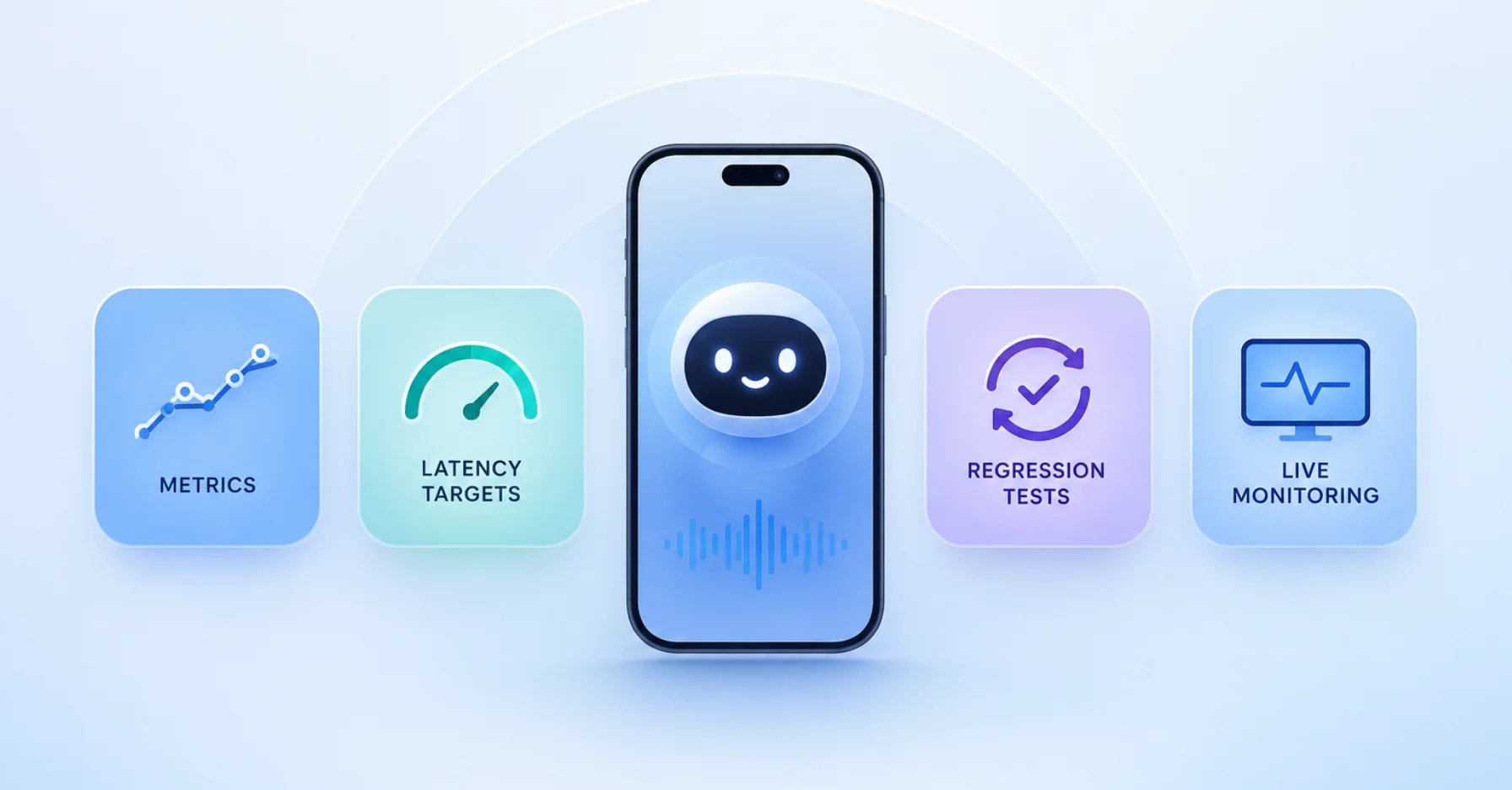
L'utilisation productive d'agents vocaux impose des exigences élevées en matière de qualité, de fiabilité et d'évolutivité. Même des modifications mineures apportées aux prompts, aux appels d'outils ou aux configurations peuvent avoir des effets inattendus sur les conversations réelles. C'est précisément là qu'intervient l'intégration de Famulor et Cledon : elle permet de tester les agents vocaux de manière systématique, reproductible et réaliste, de la logique textuelle pure jusqu'à la téléphonie vocale complète.
Dans cet article, nous expliquons en détail comment fonctionne l'ensemble du processus, quelles stratégies de test sont efficaces et quel bénéfice vous pouvez en tirer pour le développement et l'exploitation de vos assistants.
Pourquoi les tests automatisés sont cruciaux pour les agents vocaux
Les agents vocaux sont des systèmes complexes. Ils ne se limitent pas à un prompt LLM, mais se composent de plusieurs éléments interconnectés qui doivent fonctionner en parfaite harmonie pour permettre une conversation naturelle et efficace :
Speech-to-Text (STT) : La reconnaissance précise de la langue parlée par l'appelant, incluant divers accents et les bruits de fond potentiels.
Logique LLM : Le cœur de l'assistant, responsable de la prise de décision, de la gestion du dialogue et de la détection du moment où un outil externe est nécessaire.
Logique métier et API : La connexion aux systèmes tiers via des appels d'outils, par exemple pour réserver un rendez-vous dans un calendrier, récupérer des données client depuis un CRM ou vérifier le statut d'une commande.
Text-to-Speech (TTS) : La conversion de la réponse générée en une voix au son naturel, incluant le timing, l'emphase et les pauses appropriés.
Sans un processus de test structuré et automatisé, des risques importants peuvent compromettre le succès de votre projet :
Régressions : Des changements dans un domaine (par exemple, un ajustement de prompt) peuvent avoir un impact négatif imprévu sur d'autres cas d'usage déjà fonctionnels.
Erreurs en exploitation réelle : Des problèmes tels que des réponses API incorrectes ou des boucles logiques dans le dialogue n'apparaissent que lors d'interactions avec de vrais clients, entraînant frustration et, dans le pire des cas, perte de leads ou de clients.
Manque d'objectivité : Sans critères mesurables, la qualité d'un agent vocal ne peut être évaluée ou comparée objectivement. Le changement était-il réellement une amélioration ? Les tests manuels effectués par quelques personnes ne fournissent qu'une impression subjective.
Problèmes d'évolutivité : Les tests manuels sont chronophages et non extensibles. Il est impossible de vérifier manuellement des centaines de variantes de conversation avant la mise en ligne d'une nouvelle version.
La combinaison de la plateforme d'IA vocale flexible Famulor avec le framework de test spécialisé Cledon offre une solution professionnelle et établit un processus d'assurance qualité robuste.
L'anatomie d'un agent vocal Famulor : que teste-t-on réellement ?
Pour comprendre la nécessité des tests, il faut examiner les différentes couches d'un assistant Famulor. Sur la plateforme Famulor, vous pouvez affiner chaque aspect de votre agent, ce qui signifie également que chacun de ces composants doit être validé.
1. La logique conversationnelle (Prompt et Flow)
Le cœur réside souvent dans le prompt système ou dans un flux visuel dans le Flow Builder de Famulor. C'est ici que le comportement de l'agent est défini. Ce qui doit être testé :
Atteinte des objectifs : L'agent guide-t-il l'appelant de manière fiable vers son objectif (par exemple, prise de rendez-vous, qualification de lead) ?
Gestion du dialogue : L'agent pose-t-il les bonnes questions ? Peut-il gérer des réponses inattendues ou des interruptions ?
Robustesse : Que se passe-t-il si l'appelant fait une digression ou fournit des informations non pertinentes ? L'agent revient-il sur le sujet ?
2. Intégrations et appels d'outils
Un agent vocal incapable d'effectuer des actions n'est qu'un partenaire de conversation. La véritable valeur provient d'intégrations profondes dans vos processus métier. Les tests doivent garantir :
Transfert correct des données : Les informations extraites par l'agent (nom, date, motif) sont-elles correctement transmises à l'API ?
Gestion des erreurs : Comment l'agent réagit-il si une API connectée (par exemple, votre CRM) est indisponible ou renvoie une erreur ? Informe-t-il clairement l'appelant ?
Traitement des données : L'agent comprend-il la réponse de l'API et peut-il l'intégrer correctement dans sa réponse vocale (par exemple, « Le prochain rendez-vous disponible est le... ») ?
3. La couche auditive (STT et TTS)
Il s'agit ici de l'expérience d'écoute et de la précision de la reconnaissance lors d'un appel téléphonique réel.
Latence : À quelle vitesse l'agent répond-il ? Des pauses trop longues rendent les conversations peu naturelles.
Intelligibilité : La voix TTS est-elle claire et distincte ? Les termes techniques ou les noms sont-ils prononcés correctement ?
Précision de la reconnaissance : Dans quelle mesure le modèle STT fonctionne-t-il avec différents dialectes, environnements bruyants ou une mauvaise qualité de connexion ?
Étape par étape : tester un agent vocal Famulor avec Cledon
La combinaison de Famulor et Cledon permet un processus de test continu qui couvre tous les aspects mentionnés ci-dessus. Cledon agit comme un appelant automatisé qui exécute des scénarios de conversation prédéfinis et enregistre les réponses de l'agent Famulor.
Étape 1 : Définir la stratégie et les cas de test
Avant d'initier le premier appel de test, vous avez besoin d'une stratégie claire. Définissez les cas d'usage les plus importants (user stories) et dérivez-en des cas de test concrets. Un bon cas de test décrit toujours l'état initial, les actions à effectuer et le résultat attendu.
Exemples de cas de test :
Happy Path : L'appelant souhaite réserver un rendez-vous pour la semaine prochaine, fournit toutes les données correctement et le rendez-vous est saisi avec succès dans le calendrier.
Cas limite (correction) : L'appelant indique une date puis se corrige. L'agent reconnaît-il la correction et utilise-t-il la bonne date ?
Test négatif (données invalides) : L'appelant tente de réserver un rendez-vous un dimanche, bien que les heures d'ouverture ne le permettent pas. L'agent décline-t-il poliment et suggère-t-il une alternative ?
Test d'intégration (erreur API) : Le service de calendrier est indisponible. L'agent informe-t-il l'appelant que la réservation est actuellement impossible et propose-t-il de traiter la demande manuellement ?
Étape 2 : Configuration dans Famulor et Cledon
La configuration technique est simple. Dans Famulor, vous créez votre agent vocal comme d'habitude et lui attribuez un numéro de téléphone. Dans Cledon, vous créez un nouveau projet de test et définissez le numéro de téléphone de l'agent Famulor comme cible.
Ensuite, vous créez vos cas de test dans Cledon. Cela peut se faire de deux manières :
Tests basés sur le texte : Vous rédigez le dialogue du point de vue de l'appelant sous forme de texte. Cledon utilise ensuite sa propre voix TTS pour simuler l'appel. C'est excellent pour tester la logique LLM et les appels d'outils.
Tests basés sur l'audio : Vous téléchargez des fichiers audio prédéfinis. C'est idéal pour tester le composant STT dans des conditions réelles, par exemple avec des enregistrements incluant des bruits de fond ou différents accents.
Pour chaque étape de test, vous définissez dans Cledon la réponse que vous attendez de l'agent Famulor. Il peut s'agir d'une phrase spécifique ou de l'exécution d'un appel d'outil, dont vous vérifiez le succès.
Étape 3 : Exécution – Des tests de fumée aux tests de régression
Avec la suite de tests préparée, vous pouvez désormais effectuer différents types de tests :
Test de fumée (Smoke Test) : Après chaque petite modification du prompt ou de la configuration, exécutez une sélection restreinte des cas de test les plus importants pour vous assurer que les fonctionnalités de base sont toujours intactes.
Tests fonctionnels : Vous testez une zone fonctionnelle spécifique (par exemple, tout ce qui concerne la prise de rendez-vous) avec tous les cas de test associés.
Test de régression : Avant la mise en ligne d'une nouvelle version de l'agent, vous exécutez l'intégralité de la suite de tests. Cledon peut mener des centaines d'appels en parallèle et vous fournit une image complète du statut de votre agent en quelques minutes.
Étape 4 : Analyse, optimisation et boucle de rétroaction
Après chaque exécution de test, Cledon fournit un rapport détaillé. Vous pouvez voir exactement quels cas de test ont réussi et lesquels ont échoué. Pour chaque test échoué, vous obtenez la transcription complète et pouvez identifier le point exact où le dialogue a dévié du chemin attendu.
Cette approche basée sur les données permet un cycle d'optimisation rapide :
Identifier l'erreur : Le rapport de test montre que l'agent comprend souvent mal la demande d'adresse e-mail.
Formuler une hypothèse : « La formulation de la question est peut-être peu claire. »
Apporter une modification dans l'assistant Famulor : Vous ajustez le prompt pour formuler la question plus clairement. Par exemple : « Pourriez-vous m'épeler votre adresse e-mail, s'il vous plaît ? »
Lancer une nouvelle exécution de test : Vous exécutez à nouveau le même cas de test dans Cledon.
Valider le résultat : Le test est maintenant réussi. Le changement a corrigé le problème sans causer de nouvelles erreurs.
Ce processus transforme l'optimisation, passant de la conjecture à une procédure scientifique et mesurable, et garantit que la qualité de votre agent vocal s'améliore continuellement.
Bonnes pratiques pour tester les agents vocaux
Pour tirer le meilleur parti de la combinaison de Famulor et Cledon, vous devriez suivre ces bonnes pratiques :
Tester plus que le simple « Happy Path » : La plupart des erreurs se cachent dans les branches inattendues d'une conversation.
Automatiser vos tests de régression : Exécutez automatiquement toute votre suite de tests avant chaque mise en production. C'est votre assurance la plus importante contre les bugs inaperçus.
Versionner vos prompts et flux : Traitez votre configuration comme du code. Si un test échoue, vous pouvez facilement revenir à une version précédente fonctionnelle.
Mesurer la latence : Un agent qui met trop de temps à répondre ne sera pas accepté. Définissez des seuils clairs pour les temps de réponse.
Commencer les tests tôt : Intégrez les tests dans votre processus de développement dès le début, et pas seulement avant la mise en ligne.
Conclusion : la qualité comme avantage concurrentiel grâce aux tests professionnels
Construire un agent vocal impressionnant est une chose. S'assurer qu'il fonctionne de manière fiable, robuste et sans faille dans des conditions réelles en est une autre, et c'est souvent la partie la plus critique. Les tests manuels atteignent rapidement leurs limites et ne peuvent plus couvrir la complexité des systèmes d'IA modernes.
L'intégration de la plateforme d'IA flexible de Famulor avec un framework de test professionnel comme Cledon offre la solution. Elle permet aux développeurs et aux entreprises d'établir un processus d'assurance qualité systématique, automatisé et mesurable. Au lieu d'espérer que tout se passe bien en exploitation, vous pouvez valider les changements, mesurer objectivement les performances et garantir une qualité de service constamment élevée.
En fin de compte, investir dans les tests automatisés est un investissement dans la satisfaction client et le succès de votre entreprise. Un agent vocal auquel vos clients font confiance parce qu'il fonctionne tout simplement n'est pas un facteur de coût, mais un avantage concurrentiel inestimable.
Êtes-vous prêt à faire passer la qualité de vos agents vocaux au niveau supérieur ? Découvrez les possibilités de la plateforme Famulor et apprenez à développer des assistants IA robustes, fiables et évolutifs. Contactez-nous pour une démonstration !
Foire aux questions (FAQ)
Quel est l'avantage principal de combiner Famulor et Cledon ?
L'avantage principal réside dans l'assurance qualité de bout en bout. Alors que Famulor permet la création d'agents vocaux hautement flexibles et puissants, Cledon fournit les outils pour valider leur comportement automatiquement, de manière reproductible et dans des conditions réalistes avant qu'ils n'interagissent avec les clients.
Puis-je tester mes assistants Famulor sans Cledon ?
Oui, vous pouvez effectuer des tests manuellement via des appels ou en utilisant les outils de test intégrés à Famulor. C'est idéal pour des vérifications rapides et individuelles. Cependant, Cledon offre l'automatisation, l'évolutivité et des tests de régression systématiques pour des centaines de scénarios, ce qui est essentiel pour les applications professionnelles et critiques.
Quels types d'erreurs trouve-t-on généralement lors du test d'agents vocaux ?
Les erreurs typiques incluent des erreurs logiques dans le flux de dialogue, des appels d'API (tool calls) échoués ou mal interprétés, une reconnaissance vocale (STT) imprécise pour certains termes ou accents, des pauses non naturelles dues à une latence élevée et une gestion incohérente des entrées utilisateur inattendues.
Quel effort est nécessaire pour mettre en place un processus de test automatisé ?
La configuration initiale nécessite de définir et de créer les cas de test, ce qui demande un certain effort. Cependant, une fois cette suite de tests existante, l'exécution des tests est aussi simple qu'un clic. Les avantages à long terme en termes de gain de temps et d'erreurs évitées en exploitation compensent largement l'effort initial.

Rédacteur chez Famulor