Résumer le contenu avec:




Smart IVR : l'avenir de la téléphonie avec l'IA de Famulor
Vous connaissez ce sentiment ? Vous appelez une entreprise et êtes accueilli par une voix monotone : « Bienvenue. Tapez 1 pour le service commercial, 2 pour le support, 3 pour... » Ce labyrinthe de touches, connu sous le nom de SVI (Serveur Vocal Interactif), est synonyme de frustration et de boucles d'attente interminables pour de nombreux appelants. Mais que se passerait-il si votre système téléphonique pouvait comprendre et résoudre directement les demandes de vos clients sans qu'ils aient à appuyer sur une seule touche ? C'est précisément là qu'intervient le Smart IVR, la révolution conversationnelle pour votre communication client, propulsée par l'intelligence artificielle. Dans ce guide, nous vous montrons comment fonctionne un Smart IVR et comment Famulor peut transformer votre ancien menu à touches en un employé intelligent, autonome et disponible 24h/24 et 7j/7.
Qu'est-ce qu'un système SVI traditionnel et quelles sont ses limites ?
Un système SVI traditionnel est essentiellement un menu téléphonique automatisé qui guide les appelants à travers une structure prédéfinie en utilisant des tonalités DTMF (les sons produits lorsque vous appuyez sur les touches d'un téléphone). L'appelant sélectionne une option dans un menu pour classer globalement sa demande et être redirigé vers le bon service ou un message enregistré.
Bien que ces systèmes aient été conçus à l'origine pour accroître l'efficacité, ils atteignent rapidement leurs limites :
Menus rigides et inflexibles : Les parcours sont figés. Les demandes complexes ou imprévues ne correspondent souvent à aucune catégorie, conduisant à une « impasse » pour le client.
Expérience client médiocre : Les clients se sentent souvent incompris et sont contraints de naviguer dans des menus longs et non pertinents. Cela entraîne des taux d'abandon élevés et une baisse de la satisfaction client.
Absence de compréhension contextuelle : Le système ne sait pas qui appelle ni ce que l'appelant a demandé la dernière fois. Chaque appel repart de zéro.
Fonctionnalités limitées : En dehors du transfert d'appel, les SVI traditionnels ne peuvent pratiquement pas effectuer de tâches réelles. La prise de rendez-vous, les demandes de statut ou la collecte de données complexes sont impossibles.
En résumé : les systèmes SVI traditionnels sont une relique d'une époque où la technologie était plus une barrière qu'une aide. Dans le monde actuel, axé sur des solutions immédiates, ils constituent un net désavantage concurrentiel.
L'évolution : qu'est-ce qui rend un système SVI « intelligent » ?
Un Smart IVR, également appelé SVI conversationnel, remplace les menus à touches rigides par l'intelligence artificielle, en particulier la compréhension du langage naturel (NLU). Au lieu d'inviter l'appelant à appuyer sur des touches, un Smart IVR demande simplement : « Comment puis-je vous aider ? »
La différence cruciale réside dans la capacité à comprendre le langage humain en temps réel, à reconnaître l'intention de l'appelant et à exécuter des actions intelligentes en conséquence. Un Smart IVR n'est pas un menu, mais un partenaire de conversation.
Les fonctionnalités clés d'un Smart IVR sont :
Interface conversationnelle : L'appelant peut exprimer sa demande avec ses propres mots.
Reconnaissance d'intention : L'IA analyse ce qui est dit et comprend l'objectif de l'appelant (par exemple, « prendre un rendez-vous », « vérifier le statut d'une commande »).
Conscience contextuelle : En s'intégrant aux CRM et autres systèmes backend, le Smart IVR peut identifier l'appelant et accéder à son historique.
Résolution autonome des tâches : Au lieu de simplement transférer l'appel, un Smart IVR peut effectuer des tâches de manière autonome, comme prendre un rendez-vous, mettre à jour une adresse ou transmettre des informations de paiement.
Routage intelligent : Si un agent humain est toujours nécessaire, le système transfère l'appel, avec tout le contexte, au bon expert.
Avec des plateformes comme Famulor, cette technologie avancée devient accessible, permettant aux entreprises d'élever leur accessibilité et leur qualité de service à un niveau totalement inédit.
Comment Famulor apporte de l'intelligence à votre système téléphonique : les composants essentiels
Famulor est une plateforme d'IA spécifiquement conçue pour gérer de manière autonome les appels téléphoniques et les chats en direct. Elle offre tous les outils nécessaires pour transformer un système téléphonique traditionnel en un puissant Smart IVR. Cela est rendu possible grâce à l'interaction de plusieurs technologies clés.
IA conversationnelle plutôt que menu à touches
Le cœur du système Famulor est un agent vocal IA avancé basé sur des modèles de langage (LLM) de pointe. Lorsqu'un appel arrive, l'agent pose des questions ouvertes et analyse les réponses en temps réel. Il comprend les dialectes, les tics de langage et les structures de phrases complexes. Cela crée un dialogue naturel qui guide intuitivement l'appelant vers son objectif.
Visual Flow Builder pour des flux de conversation dynamiques
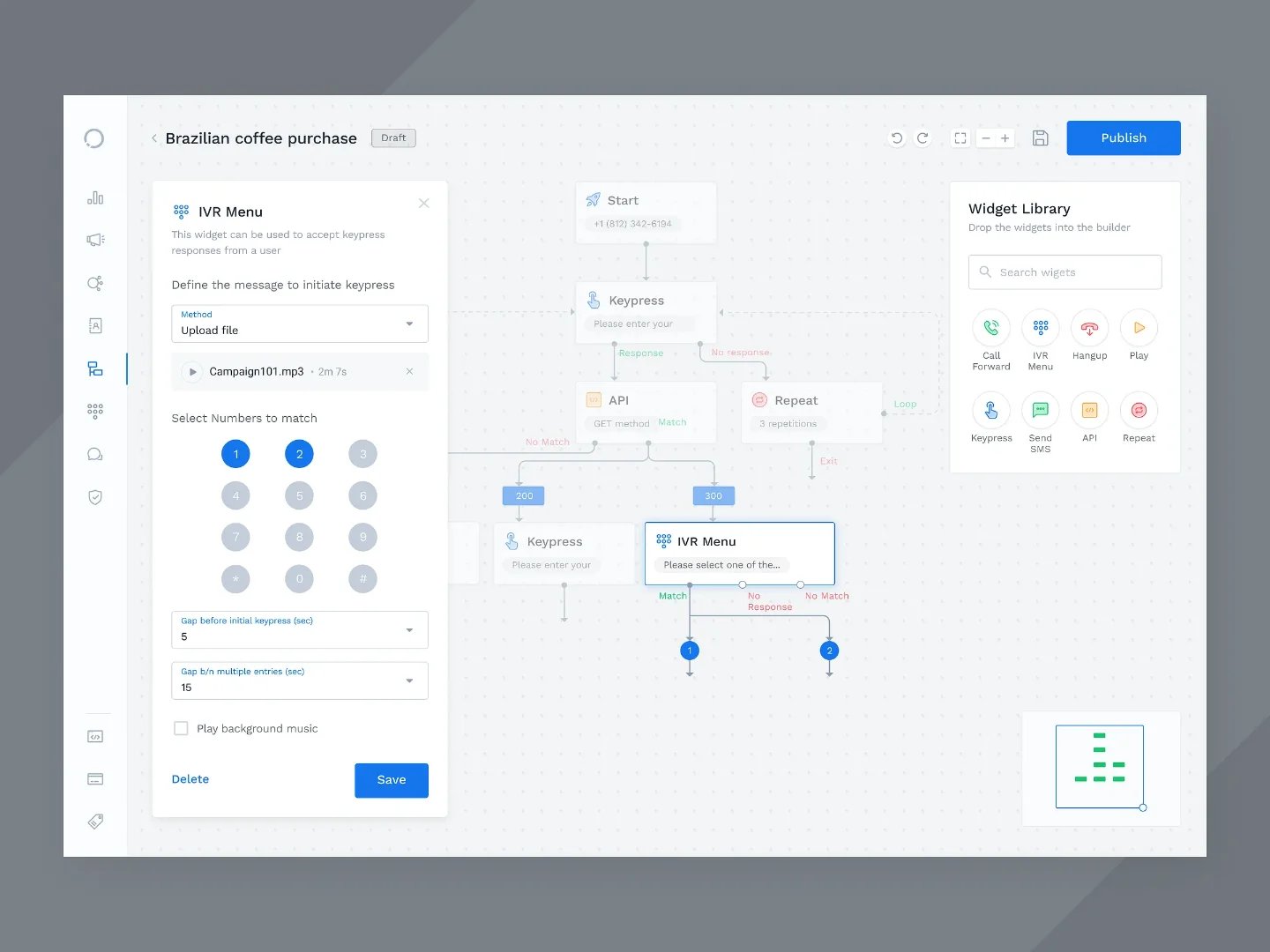
Un avantage clé de Famulor est son Flow Builder sans code. Grâce à cet éditeur visuel par glisser-déposer, vous pouvez créer des logiques de conversation complexes sans écrire une seule ligne de code. Vous définissez la manière dont l'agent doit réagir à des demandes spécifiques, les questions qu'il doit poser et les actions qu'il doit effectuer. Cela permet de créer des parcours dynamiques qui s'adaptent aux réponses de l'appelant, une différence fondamentale par rapport aux arbres de menus rigides des anciens systèmes SVI. Apprenez-en plus sur les avantages dans notre article « D'une commande unique à un dialogue intelligent ».
Intégrations profondes pour des actions contextuelles
Un Smart IVR n'est aussi intelligent que les données auxquelles il peut accéder. Famulor se distingue par sa capacité à s'intégrer profondément dans les processus métier existants. Avec plus de 300 intégrations disponibles, incluant des outils comme HubSpot, Salesforce, Zendesk, Calendly et des milliers d'autres via des plateformes comme Make.com, l'agent IA peut :
Récupérer des données client : Reconnaître qui appelle et personnaliser la conversation (« Bonjour Monsieur Smith, je vois que votre commande d'hier est déjà en route »).
Vérifier des données en temps réel : Interroger les niveaux de stock, les délais de livraison ou le statut d'un ticket de support en direct.
Déclencher des actions dans des systèmes tiers : Créer un nouveau prospect dans le CRM, prendre un rendez-vous dans le calendrier ou générer un ticket de support.
Cette capacité d'intégration profonde distingue un véritable agent autonome d'un simple bot.
SIP Trunking pour une connexion fluide
La transition vers un Smart IVR ne doit pas être compliquée. Famulor prend en charge le SIP Trunking, ce qui signifie que vous pouvez facilement connecter votre système téléphonique existant (VoIP/PBX) à la plateforme Famulor. Il vous suffit de rediriger votre numéro de service vers Famulor, et l'agent IA prend en charge les appels. Aucun nouveau matériel ni remplacement de votre infrastructure existante n'est requis.
Étape par étape : transformer un ancien SVI en Smart IVR avec Famulor
La mise en œuvre d'un Smart IVR avec Famulor est un processus structuré qui mène à un succès mesurable en quelques étapes seulement.
Analyse et définition des objectifs : Identifiez les raisons les plus fréquentes d'appels. Les candidats typiques à l'automatisation incluent la prise de rendez-vous, les demandes de statut de commande, les réponses aux FAQ et la qualification des prospects. Définissez des objectifs clairs, par exemple « réduire le temps d'attente de 80 % » ou « automatiser 50 % de toutes les demandes standard ».
Connexion téléphonique : Redirigez votre numéro de téléphone existant vers le numéro fourni par Famulor ou configurez une connexion SIP directe. Cette étape technique est souvent réalisée en quelques minutes.
Conception du flux de conversation dans le Flow Builder : Créez visuellement le flux de dialogue. Commencez par une salutation ouverte. Ajoutez des nœuds pour la reconnaissance d'intention (par exemple, « Rendez-vous », « Facture », « Support »). Pour chaque parcours, définissez les questions et actions nécessaires.
Intégration avec vos systèmes : Connectez Famulor via API ou la plateforme sans code à votre CRM, calendrier ou helpdesk. Configurez des actions telles que « Rechercher un contact dans HubSpot » ou « Créer un rendez-vous dans Calendly ».
Tests et ajustements : Effectuez des appels de test pour évaluer l'agent. Analysez les transcriptions et ajustez les invites et les instructions données à l'agent pour optimiser les taux de reconnaissance et la qualité de la conversation.
Mise en service et monitoring : Lancez le Smart IVR en direct, peut-être initialement pour une partie de vos appels ou en dehors des heures de bureau. Utilisez le tableau de bord Famulor pour surveiller les performances en temps réel et apporter des améliorations basées sur les données.
Exemples pratiques : Smart IVR avec Famulor dans divers secteurs
Les applications sont intersectorielles. Voici quelques scénarios typiques :
E-commerce : Un client appelle et demande : « J'aimerais savoir où se trouve mon colis. » L'agent Famulor demande le numéro de commande, le fait correspondre avec le système Shopify ou WooCommerce et fournit au client le statut de livraison exact en temps réel. Apprenez-en plus dans notre article sur les centres d'appels IA pour l'e-commerce.
Santé : Un patient souhaite prendre rendez-vous. L'agent IA demande le médecin souhaité et le motif, vérifie les rendez-vous disponibles via une intégration Doctolib et réserve directement le rendez-vous dans le calendrier du cabinet.
Artisanat et prestataires de services : Un appelant signale une urgence. Le Smart IVR reconnaît l'urgence, interroge les données pertinentes (adresse, description du problème) et crée automatiquement une commande prioritaire dans le système de tickets tout en notifiant simultanément le technicien d'astreinte par SMS.
Gestion immobilière : Un locataire signale un dégât des eaux. L'agent le guide à travers un protocole d'évaluation des dommages standardisé, demande des photos pouvant être téléchargées via un lien et transmet toutes les informations regroupées au concierge responsable.
Comparaison : SVI traditionnel vs Smart IVR Famulor
La comparaison montre clairement le changement de paradigme :
Critère | SVI traditionnel | Smart IVR Famulor |
|---|---|---|
Expérience utilisateur | Frustrante, impersonnelle, rigide | Naturelle, axée sur le dialogue, personnalisée |
Flexibilité | Structure de menu fixe, difficile à modifier | Parcours de conversation dynamiques, facilement personnalisables via Flow Builder |
Intégration | Principalement isolée ou seulement connectée de manière rudimentaire | Intégration profonde avec CRM, ERP, calendriers et plus de 300 autres outils |
Résolution des tâches | Limitée au transfert d'appel | Résolution autonome des tâches (réservation, interrogation, création) |
Efficacité | Taux d'abandon élevés, souvent transféré au mauvais endroit | Taux de résolution au premier appel élevé, routage précis avec transfert de contexte |
Évolutivité | Limitée par le nombre de lignes/canaux | Évolutivité pratiquement illimitée pour des milliers d'appels simultanés |
Conclusion : pourquoi votre prochain SVI devrait être un agent IA Famulor
Un Smart IVR est plus qu'une simple évolution du menu à touches : c'est une redéfinition fondamentale du service client téléphonique. Il transforme un canal passif et souvent frustrant en un outil proactif, efficace et convivial. Avec une plateforme comme Famulor, cette transformation devient tangible et facile à mettre en œuvre.
Estimez votre ROI en automatisant vos appels
Voyez combien vous pourriez économiser chaque mois grâce aux voice agents IA.
Résultat ROI
ROI 0%
Sans carte bancaire
Vous soulagez non seulement vos employés des tâches répétitives, mais vous offrez également à vos clients un service disponible 24h/24 et 7j/7, qui comprend leurs préoccupations et résout les problèmes directement. Au lieu de perdre des appelants dans une boucle d'attente, vous transformez chaque appel en une interaction positive. Si vous êtes prêt à surmonter les limites de votre ancien système téléphonique et à exploiter toute la puissance de l'IA conversationnelle, il est temps de passer à un Smart IVR avec Famulor.
Découvrez les possibilités et réservez une démo dès aujourd'hui pour voir comment Famulor peut révolutionner votre communication client.
FAQ - Questions fréquentes sur le Smart IVR
Qu'est-ce qu'un Smart IVR ?
Un Smart IVR (Serveur Vocal Interactif) est un système téléphonique propulsé par l'IA qui comprend le langage naturel. Au lieu de guider les appelants à travers des menus à touches, il mène un dialogue intelligent, reconnaît la préoccupation de l'appelant et peut résoudre des tâches de manière autonome grâce à des intégrations avec d'autres systèmes.
Un Smart IVR peut-il remplacer complètement un agent humain ?
Un Smart IVR est conçu pour gérer de manière autonome une variété de demandes standard (par exemple, prises de rendez-vous, demandes de statut, FAQ). Pour les problèmes complexes, émotionnels ou imprévus, il peut transférer l'appel de manière transparente avec tout le contexte nécessaire au bon agent humain. Il sert donc principalement d'ajout extrêmement puissant et de soulagement pour votre équipe.
Combien de temps faut-il pour mettre en œuvre un Smart IVR avec Famulor ?
Grâce au Flow Builder sans code et aux intégrations pré-construites, des applications Smart IVR simples peuvent être mises en service en quelques jours, voire quelques heures. Les projets plus complexes avec des intégrations backend profondes sont généralement réalisables en quelques semaines.
L'utilisation d'un système SVI propulsé par l'IA est-elle conforme au RGPD ?
Oui, des plateformes comme Famulor accordent une grande importance à la protection des données. Avec un hébergement dans l'UE et un strict respect des directives du RGPD, le traitement des données d'appel est juridiquement sécurisé. Apprenez-en plus dans notre article sur les assistants téléphoniques IA conformes au RGPD.
Quelles langues le Smart IVR de Famulor prend-il en charge ?
La plateforme Famulor prend en charge plus de 40 langues. Cela vous permet d'offrir un service téléphonique cohérent et intelligent à une clientèle internationale sans avoir à constituer une équipe distincte pour chaque langue.

Rédacteur chez Famulor