Resumir contenido con:




Muchos proyectos de IA de voz comienzan con una pregunta sencilla: ¿puede un agente telefónico de IA responder o realizar llamadas de forma fiable? Para los equipos empresariales, esa es solo la primera capa. El valor operativo real aparece cuando el agente consulta datos, prepara decisiones y activa flujos de trabajo de seguimiento mientras la conversación aún está en curso.
Aquí es donde entran en juego las acciones durante la llamada de Famulor y la plataforma de automatización de Famulor. Convierten a un agente de voz de un canal de conversación aislado en una interfaz controlada para CRM, calendarios, servicios de asistencia, WhatsApp, SMS y sistemas internos.
Por qué el no-code necesita una definición más estricta en la IA de voz
El no-code en telefonía no significa que los procesos complejos desaparezcan. Significa que los equipos de negocio y operaciones pueden modelarlos de forma visible: qué información debe recopilar el asistente, qué sistema es la fuente de verdad, cuándo se permite la reserva automatizada y cuándo necesita un humano aprobar el siguiente paso.
Por lo tanto, un agente telefónico de IA listo para producción necesita algo más que prompts. Necesita un modelo de acción claramente delimitado. El asistente solo puede ejecutar las acciones que se le asignen, utiliza parámetros definidos y devuelve resultados estructurados a la conversación. Esto hace que la automatización sea auditable, comprobable y esté lista para la gobernanza.
El modelo operativo: de la llamada al flujo de trabajo completado
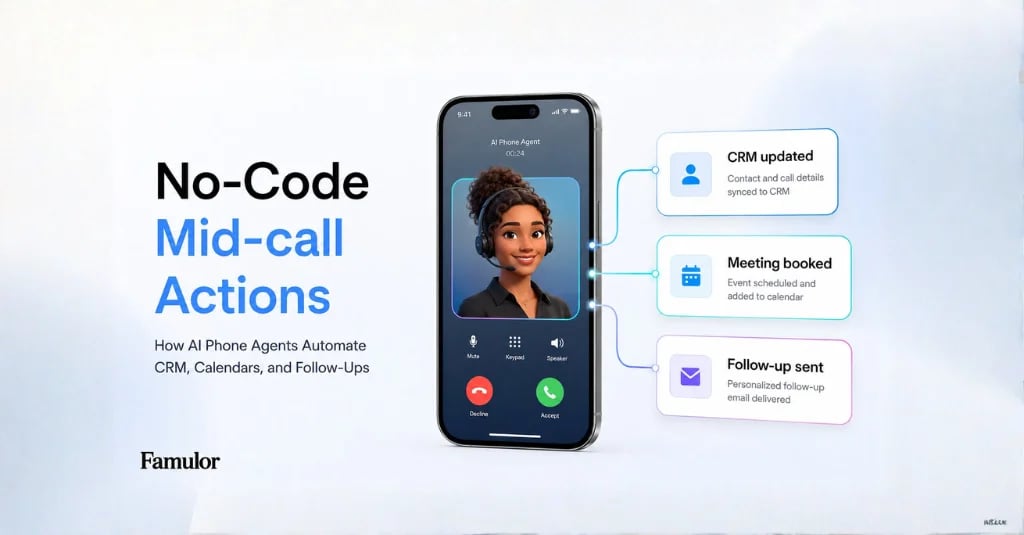
Un flujo de trabajo empresarial típico tiene este aspecto: un cliente potencial llama, el asistente identifica la intención y la urgencia, consulta los datos existentes del CRM, califica la solicitud, comprueba la disponibilidad en el calendario, reserva una reunión, registra el resultado y envía una confirmación por WhatsApp o SMS. La llamada no termina con una nota. Termina con un estado del sistema actualizado.
Para este tipo de procesos, la combinación de una acción durante la llamada y la plataforma de automatización es más potente que una cadena suelta de Zapier o Make. La acción está disponible en el contexto de la conversación en directo. La automatización que hay detrás puede orquestar múltiples sistemas, transformar datos y devolver un resultado claro al asistente.
¿Qué sistemas debe conectar Voice AI?
Selecciona tus herramientas y recibe una ruta de integración.
Famulor
Voice AI
Integraciones seleccionadas: 4
¿Qué acciones deberían automatizarse primero?
El mejor punto de partida no es el proceso más amplio, sino el más medible. En la práctica, cuatro tipos de acciones son especialmente eficaces para un primer despliegue:
- Consulta y actualización de CRM: buscar contactos, evitar duplicados, cambiar el estado de los leads y escribir notas o resultados de llamadas.
- Lógica de programación: consultar calendarios, ofrecer franjas horarias, reservar citas o enviar enlaces de reserva.
- Seguimiento de mensajería: enviar confirmaciones por WhatsApp o SMS, enlaces a documentos, enlaces a presupuestos o detalles para una devolución de llamada.
- Enrutamiento y escalado: transferir llamadas a equipos, crear tickets o marcar casos críticos con contexto.
Estas acciones generan un impacto medible rápidamente porque reducen los pasos manuales recurrentes: realizar seguimientos, copiar notas, solicitar información faltante y enrutar solicitudes. Al mismo tiempo, son lo suficientemente específicas como para validarlas con casos de prueba reales antes de la puesta en marcha.
Cómo preparar una acción durante la llamada para el entorno empresarial
Para un despliegue fiable, los equipos deben tratar cada acción como un pequeño proceso de negocio. Primero, define los datos que el asistente puede recopilar. Luego, decide qué sistema es la fuente de verdad. Prueba los casos de error: ¿qué ocurre si el CRM no responde, si una franja horaria del calendario ya está ocupada o si un número de teléfono no puede recibir mensajes de WhatsApp?
Famulor admite esta separación con una configuración de acciones clara, ejecuciones de prueba y la opción de colocar automatizaciones sin código detrás de una acción. Los equipos técnicos mantienen abierta la vía de la API y MCP: los sistemas internos pueden conectarse a través de Famulor MCP, webhooks o la API REST sin quitar el constructor operativo a los equipos de negocio.
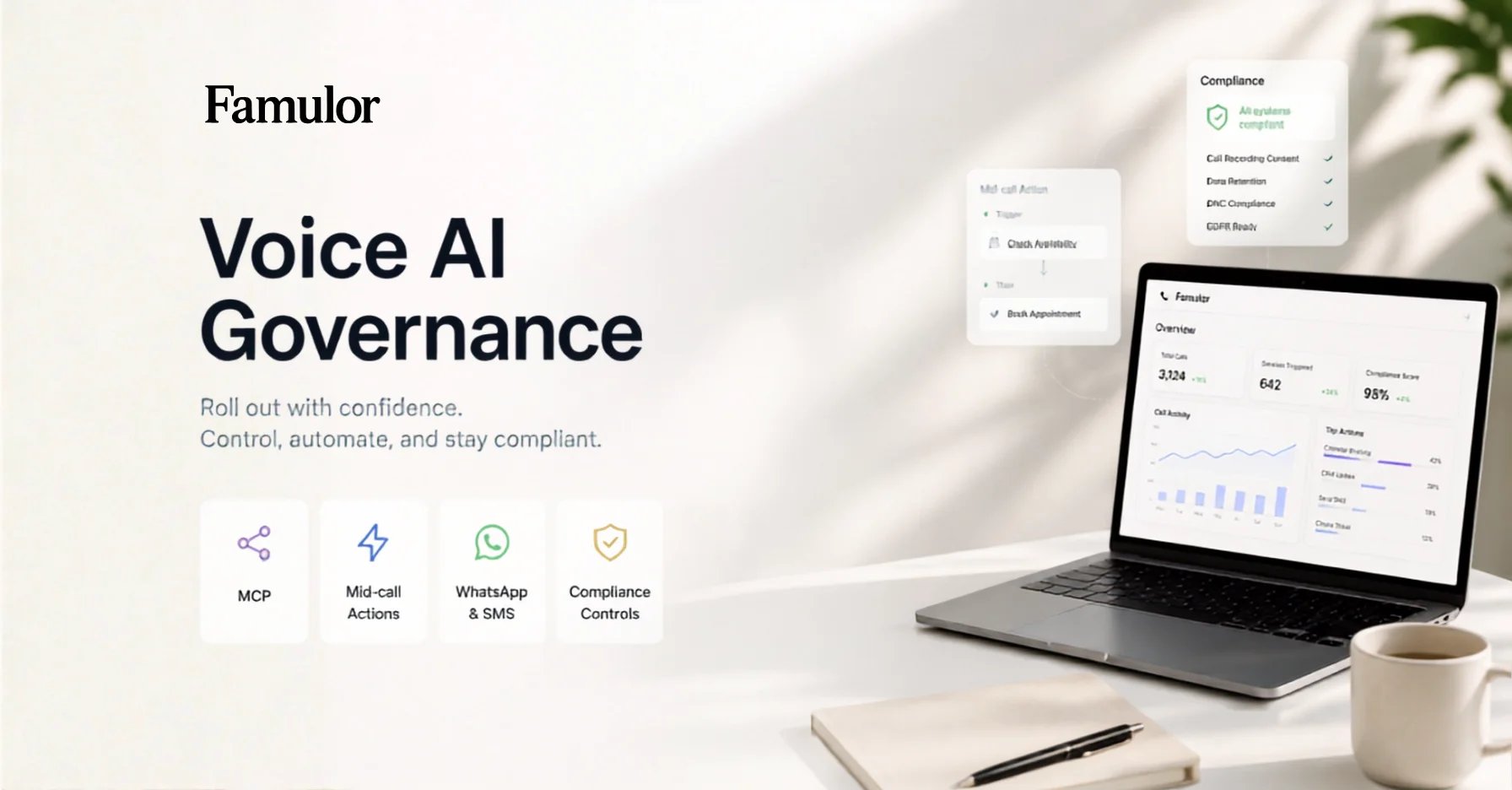
Gobernanza: empieza poco a poco y escala con limpieza
En la IA de voz, la gobernanza no es un complemento empresarial tardío. Pertenece a la primera fase piloto. Empieza con un proceso limitado, como la calificación de citas con consulta al CRM y mensajería de confirmación. Mide la tasa de finalización, la tasa de escalado, las escrituras incorrectas en el sistema y la limpieza manual. Solo entonces expande el alcance a más equipos, idiomas o canales.
El límite importante está entre la lógica de conversación y la lógica de proceso. El prompt decide cuándo una acción es útil. La acción decide qué es técnicamente posible hacer. Esta separación reduce el riesgo, ya que cambiar una conversación no amplía automáticamente los permisos en los sistemas backend.
Prueba nuestro Asistente de IA
Experimenta lo natural que suena nuestro asistente telefónico de IA.
Introduce tus datos y recibe una llamada de nuestro agente de IA en segundos.
El agente está entrenado para hablar sobre los servicios de Famulor y programar citas.

Agente IA de demo
Representante de Famulor
Conclusión: la IA de voz se vuelve valiosa cuando mueve sistemas
El siguiente paso después del primer agente telefónico de IA ya no es solo el volumen de llamadas. El siguiente paso es la automatización controlada de procesos durante la llamada. Con las acciones durante la llamada de Famulor, la plataforma de automatización, WhatsApp, SMS, MCP y las conexiones API, los equipos pueden empezar exactamente donde aparece el trabajo manual hoy en día: entre las llamadas, el CRM, los calendarios y el seguimiento.
Por tanto, los equipos que construyen IA de voz como capa operativa empresarial para la comunicación con el cliente deberían hacer algo más que preguntas sobre voces, latencia y prompts. La pregunta decisiva es: ¿qué acciones puede ejecutar el asistente en directo, cómo se supervisan y con qué rapidez pueden mejorarlas las operaciones sin abrir un nuevo proyecto de desarrollo?

Autor en Famulor