Résumer le contenu avec:




Tapez, ne parlez plus : la nouvelle fonctionnalité DTMF de Famulor révolutionne la saisie de données par téléphone
Imaginez qu'un client appelle pour vérifier le statut de sa commande. Votre assistant IA lui demande son numéro de commande : « Pourriez-vous m'indiquer votre numéro de commande ? » Le client répond : « Oui, c'est DE-8-Charlie-4-7-Apple-9-2. » Même ce court numéro fictif illustre le problème. Épeler des codes alphanumériques, de longues suites de chiffres ou des codes confidentiels (PIN) au téléphone est fastidieux, source d'erreurs et souvent frustrant. Dans les environnements bruyants, la reconnaissance vocale devient un défi, et pour des données sensibles comme un numéro de compte, de nombreux clients hésitent à les prononcer à voix haute.
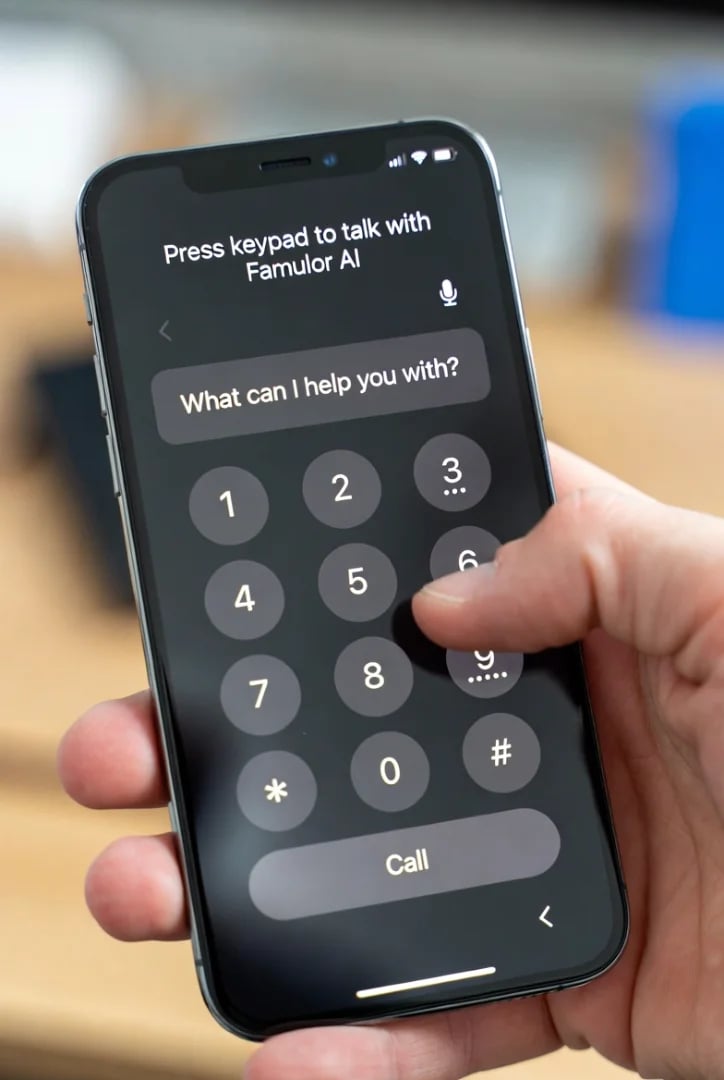
Famulor a développé une solution puissante et élégante pour ces défis quotidiens : la saisie des données client via le pavé numérique du téléphone, également connue sous le nom de DTMF (Dual-Tone Multi-Frequency). Cette mise à jour rend les interactions avec les assistants téléphoniques IA non seulement plus précises et sécurisées, mais aussi nettement plus humaines et fiables. C'est une étape cruciale pour rendre les assistants IA encore plus performants dans les environnements de support et de service exigeants.
Qu'est-ce que le DTMF et pourquoi est-il plus pertinent que jamais à l'ère de l'IA ?
La plupart d'entre nous connaissent le DTMF sans en connaître le terme technique. Il s'agit de la technologie derrière les tonalités que nous entendons lorsque nous composons un numéro sur un téléphone à touches. Chaque tonalité est une combinaison de deux fréquences représentant un chiffre ou un symbole unique (#, *). Pendant des décennies, ce fut la base des menus téléphoniques rigides (« Appuyez sur 1 pour le service commercial... »).
Cependant, dans le contexte des systèmes d'IA modernes à commande vocale, le DTMF connaît une renaissance. Au lieu de servir d'élément de contrôle unique et rigide, il devient une méthode de saisie optionnelle et contextuelle qui fonctionne en parallèle de la voix. Un assistant téléphonique IA bien conçu ne force plus l'utilisateur dans un cadre étroit, mais propose la méthode d'interaction la plus pratique à tout moment. La nouvelle fonctionnalité DTMF de Famulor est exactement cela : une extension intelligente du dialogue qui intervient lorsqu'elle est la plus pertinente.
La nouvelle fonction DTMF de Famulor : un bond en avant pour l'expérience utilisateur
L'implémentation de la saisie DTMF par Famulor va bien au-delà de la simple reconnaissance des touches. Elle est conçue pour s'intégrer de manière fluide et intelligente dans une conversation naturelle. Le résultat est une expérience client plus robuste, sécurisée et nettement plus agréable.
Intégration fluide dans le flux de conversation
Le système fonctionne discrètement en arrière-plan. Lorsque l'assistant IA demande des informations pouvant être saisies via le pavé numérique (par exemple, un numéro client), il n'a pas besoin de basculer vers un mode rigide « Veuillez saisir votre numéro maintenant ». Le client peut simplement commencer à taper. L'assistant reçoit les chiffres instantanément et peut poursuivre la conversation sans pauses gênantes. Cela maintient le flux naturel du dialogue et évite l'impression de parler à une machine rigide.
Saisie hybride : la liberté de choisir
Ce qui rend la solution de Famulor spéciale, c'est sa fonctionnalité multimodale. Les clients peuvent parler ou taper, voire combiner les deux. Un client peut dire « Mon numéro client est... » puis taper les chiffres parce qu'il ne souhaite pas les prononcer à voix haute dans un environnement bruyant. L'assistant IA comprend les deux formes de saisie en parallèle. Cette flexibilité est la clé d'une automatisation réellement centrée sur le client.
Contrôle intelligent et configurable
La fonctionnalité est configurée intelligemment par défaut, mais peut être personnalisée selon des besoins spécifiques. Voici comment fonctionne la reconnaissance de saisie :
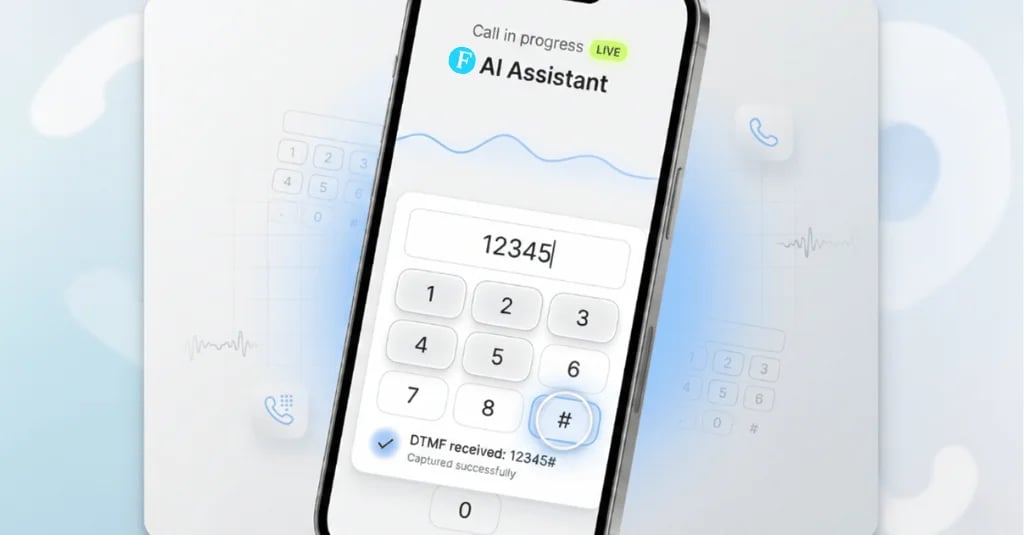
Validation automatique : Après une période d'inactivité configurable (5 secondes par défaut), le système reconnaît la saisie comme terminée et la traite. Cela évite à l'appelant d'attendre indéfiniment.
Validation manuelle : Pour un traitement immédiat, l'utilisateur peut confirmer la saisie avec la touche # ou *. C'est particulièrement utile pour les numéros de longueur variable (comme les numéros de commande) et donne un contrôle total à l'utilisateur.
Ces options de configuration permettent aux entreprises d'adapter parfaitement le flux de dialogue à leurs cas d'usage spécifiques.
Cas d'usage pratiques : là où la saisie DTMF excelle
La véritable force de cette fonctionnalité se démontre dans la pratique. Partout où la précision, la protection des données et une expérience utilisateur fluide sont cruciales, la saisie DTMF est la méthode supérieure.
E-commerce et service client
Recherche de numéro de commande : Au lieu d'épeler des codes de commande alphanumériques complexes (ex. « X5B7-9CDE-1A34 »), le client peut simplement taper les chiffres. C'est plus rapide et cela évite les erreurs.
Suivi de colis : La saisie du numéro de suivi via le pavé numérique est discrète et précise, que le client soit dans un train ou au bureau.
Codes postaux pour identification : Une requête rapide du code postal pour vérifier le client ou déterminer un lieu de livraison.
Banque, assurance et finance (FinTech)
Numéros de compte ou de police : La saisie de données sensibles comme un numéro de compte via le pavé numérique est plus sécurisée et discrète que de les dire à voix haute.
Vérification de code PIN : Pour accéder à des informations de compte protégées, l'assistant IA peut demander la saisie d'un code PIN, effectuée en toute sécurité via le pavé numérique.
Banque par téléphone : Les consultations de solde automatisées ou les virements peuvent être autorisés par des saisies sécurisées au clavier.
Santé et cabinets médicaux
Numéros de patient : Saisie rapide et sans erreur d'un numéro de patient pour identification au téléphone.
Numéros d'assurance : Au lieu de lire et d'épeler de longs numéros de carte de santé, le patient peut simplement les taper.
Identifiants de rendez-vous : Confirmer ou annuler un rendez-vous en saisissant un identifiant unique.
Secteur public et administration
Numéros de dossier : Les citoyens peuvent soumettre des numéros de dossier complexes sans erreur pour vérifier l'état d'une demande.
Numéros d'identification fiscale : Une méthode sécurisée pour transmettre des numéros d'identification personnels.
Recherche de plaque d'immatriculation : Pour les services d'immatriculation, les propriétaires peuvent saisir rapidement et facilement leur numéro de plaque (la partie numérique).
Logistique et transport
Numéros de lettre de voiture : Les chauffeurs ou les répartiteurs peuvent saisir rapidement et précisément de longs numéros de suivi pour des mises à jour de statut.
Identifiants d'employé ou de véhicule : Pour l'authentification ou l'attribution de tâches dans des systèmes automatisés.
Les avantages en un coup d'œil : pourquoi votre entreprise a besoin du DTMF
L'intégration de la saisie DTMF dans votre stratégie de téléphonie IA avec Famulor offre des avantages commerciaux clairs :
Précision accrue : Réduit considérablement le taux d'erreur lors de la saisie de données numériques ou alphanumériques par rapport à la seule reconnaissance vocale.
Confidentialité et sécurité améliorées : Les clients peuvent saisir des informations sensibles discrètement sans avoir à les prononcer à voix haute.
Expérience client optimisée : Offre aux clients une alternative rapide, facile et intuitive à la saisie vocale, réduisant la frustration et augmentant la satisfaction.
Taux d'automatisation plus élevé : Une saisie de données plus fiable signifie que l'assistant IA peut résoudre davantage de demandes de bout en bout sans avoir besoin d'impliquer un agent humain.
Efficacité accrue : Des durées d'appel plus courtes grâce à une saisie de données plus rapide entraînent des économies directes. Apprenez-en davantage sur la façon dont vous pouvez réaliser des économies avec les agents d'IA vocale.
Estimez votre ROI en automatisant vos appels
Voyez combien vous pourriez économiser chaque mois grâce aux voice agents IA.
Résultat ROI
ROI 0%
Sans carte bancaire
Conclusion : la symbiose parfaite entre l'humain et la machine
La nouvelle fonctionnalité DTMF de Famulor est plus qu'une simple mise à jour technique. C'est un témoignage de l'engagement à rendre la communication pilotée par l'IA réellement intelligente, flexible et centrée sur l'humain. En combinant les forces du traitement vocal avec la précision et la discrétion de la saisie au clavier, Famulor crée une plateforme plus robuste et fiable pour des tâches d'automatisation sophistiquées.
Les entreprises qui privilégient un excellent service client et des processus efficaces disposent désormais d'un outil puissant supplémentaire pour révolutionner leur téléphonie. L'époque où les clients devaient épeler maladroitement des codes ou crier des données sensibles est révolue. L'avenir de l'automatisation téléphonique est hybride, fluide et intelligent.
Êtes-vous prêt à faire passer vos interactions client au niveau supérieur ? Découvrez comment optimiser vos processus avec les assistants IA polyvalents de Famulor et la nouvelle fonctionnalité DTMF. Essayez Famulor dès aujourd'hui et découvrez l'avenir de la communication client.
Foire aux questions (FAQ)
Qu'est-ce que le DTMF ?
DTMF signifie « Dual-Tone Multi-Frequency » et est le terme technique pour les tonalités qu'un téléphone émet lorsque vous appuyez sur les touches du pavé numérique. Dans les systèmes d'IA comme Famulor, cela permet la saisie précise de chiffres pendant un appel.
Comment la fonctionnalité DTMF de Famulor améliore-t-elle la sécurité ?
Elle permet aux appelants de saisir discrètement des données sensibles telles que des codes PIN, des numéros de compte ou des identifiants client en utilisant le pavé numérique au lieu de les prononcer à voix haute. C'est un avantage de sécurité significatif, surtout dans les environnements publics ou bruyants.
Les clients peuvent-ils toujours dicter leurs informations au lieu d'utiliser le pavé numérique ?
Oui, absolument. La force de la solution Famulor réside dans sa fonctionnalité hybride. L'assistant IA peut écouter simultanément la voix et les saisies au clavier, permettant au client de choisir la méthode la plus pratique pour sa situation.
Est-il compliqué d'intégrer la saisie DTMF dans un assistant Famulor ?
Non, l'intégration est très simple grâce au no-code Flow Builder de Famulor. La fonctionnalité peut être insérée comme un nœud de saisie spécifique dans le flux de conversation, avec des options comme le délai d'expiration ou les touches de confirmation (#/*) facilement configurables.
Pour quels secteurs la fonctionnalité DTMF est-elle particulièrement utile ?
La fonctionnalité est précieuse dans tous les secteurs. Cependant, les secteurs qui traitent fréquemment des données numériques sensibles ou longues, comme l'e-commerce, la banque et l'assurance, la santé, la logistique et le secteur public, en bénéficieront le plus.

Rédacteur chez Famulor