Inhoud samenvatten met:




Een AI-voice agent is slechts zo waardevol als het CRM waarin hij schrijft. Als je inkomende gesprekken of uitgaande campagnes automatiseert met kunstmatige intelligentie en vervolgens alsnog handmatig transcripties in HubSpot moet plakken, heb je de ROI al verloren. Het directe antwoord op de vraag "Kan HubSpot uitgaande gesprekken voeren met een AI-voice agent?" is ja — met Famulor in minder dan 30 minuten, zonder Zapier-middleware en zonder dat je je HubSpot-licentie hoeft te upgraden.
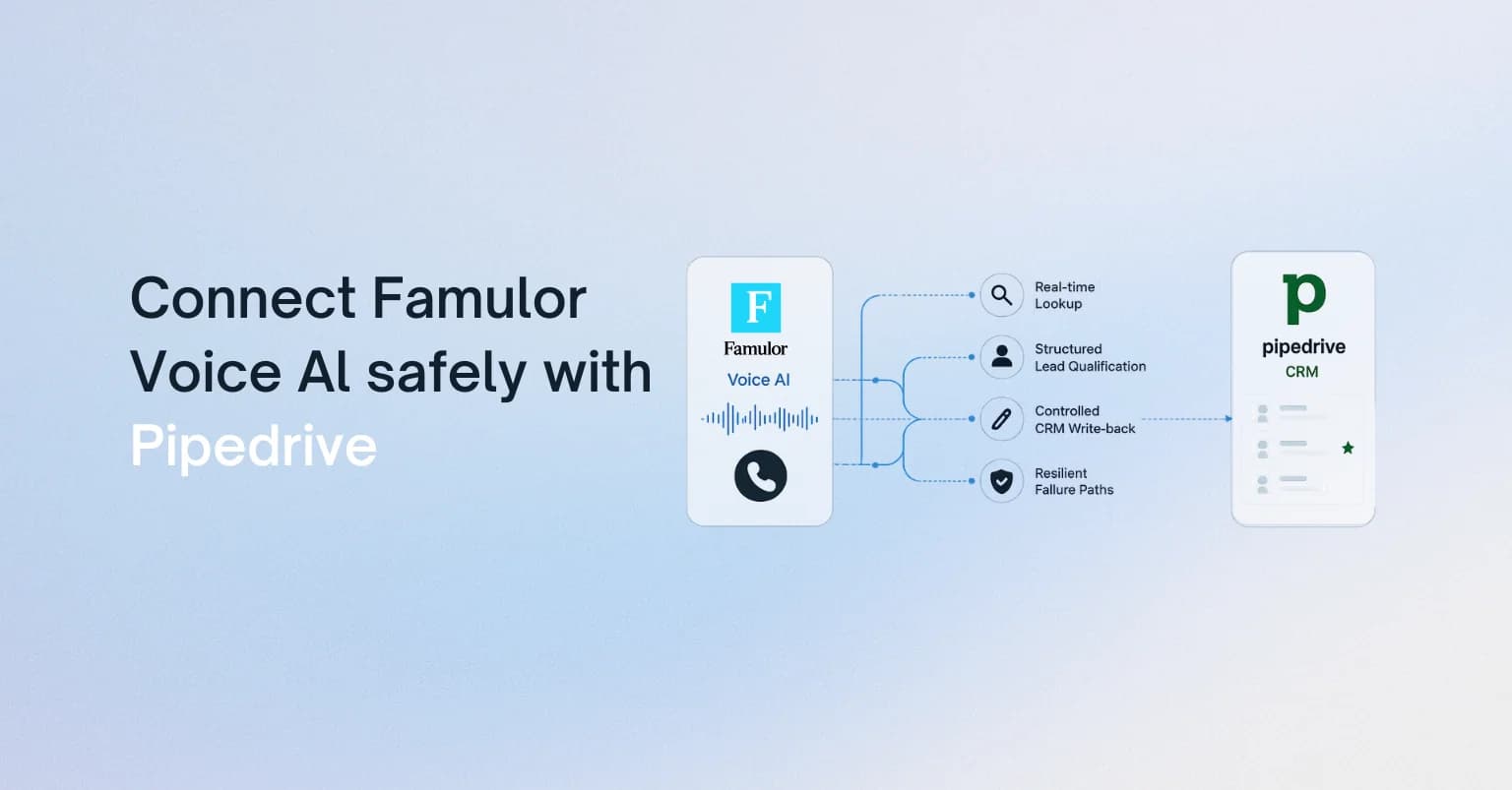
Famulor is een Europees SaaS-platform voor AI-voice agents met een native HubSpot-integratie, meer dan 300 extra connectoren, een eigen visuele flow-builder en SIP-trunking. Gesprekken worden in real-time gesynchroniseerd met HubSpot: contacten worden aangemaakt of gematcht, het gesprek wordt gelogd als activiteit, de transcriptie wordt in een notitie geschreven, de dealfase wordt bijgewerkt, taken worden aangemaakt en workflows worden getriggerd. Deze gids legt uit hoe dit technisch werkt, welke use cases het snelst rendement opleveren en waar HubSpot alleen tegen zijn grenzen aanloopt.
Waar een HubSpot voice-AI-integratie aan moet voldoen
HubSpot levert eigen telefoniefuncties via HubSpot Calling en Mobile Calling. Maar er ontbreken drie zaken voor professioneel gebruik: een autonome AI-agent die inkomende gesprekken opneemt en proactief uitbelt, meertalige spraaksynthese in real-time van Cartesia- of ElevenLabs-kwaliteit, en een industriële SIP-trunk voor hogere gespreksvolumes. Dit zijn precies de drie gaten die Famulor dicht.
Een zuivere integratie bestaat uit vijf componenten: telefonie (inkomend en uitgaand), de voice-AI-pipeline (STT, LLM, TTS), bidirectionele CRM-synchronisatie, dataverrijking via variabelen en een kennisbank, en trigger-logica in beide richtingen — HubSpot kan Famulor-gesprekken starten en Famulor kan HubSpot-workflows aansturen.
Famulor versus stand-alone HubSpot Calling: de directe vergelijking
Om te laten zien waar de integratie echte waarde creëert, helpt een nuchtere vergelijking van de functies. Beide systemen voeren gesprekken — maar op heel verschillende niveaus.
Functie | HubSpot Calling alleen | HubSpot + Famulor |
|---|---|---|
Inkomende gesprekken 24/7 | Alleen tijdens kantooruren via medewerkers | Volledig geautomatiseerd door de AI-agent |
Uitgaande campagnes | Handmatige click-to-call | Uitgaande campagnes via leadlijsten |
Talen | Voornamelijk Engels | 40+ talen, lokale stemmen |
Transcripties | HubSpot AI-transcriptie (beperkt) | Woordnauwkeurige real-time transcripties |
Dealfase-updates | Handmatig | Automatisch op basis van gespreksresultaat |
SIP-trunk keuze | HubSpot-eigen providers | Twilio, Telnyx, Plivo, BYO-trunk |
Compliance | US-hosting | EU-hosting, AVG-verwerkersovereenkomst |
Kennisbank | Artikel-koppeling | Vector-kennisbank, FAQ-embedding |
Kosten per minuut | Gebundelde licenties | Vanaf 5 cent per minuut, transparant |
Het doorslaggevende verschil zit niet in individuele functies, maar in het onderliggende model. HubSpot is een CRM dat telefonie als extra functie heeft toegevoegd. Famulor is een voice-AI-platform dat HubSpot als CRM-consument gebruikt. Door beide krachten te combineren, krijg je gespreksautomatisering van SaaS-niveau, terwijl alle contact-, deal- en rapportagedata in de vertrouwde HubSpot-omgeving blijven staan.
Hoe de integratie onder de motorkap werkt
Famulor maakt verbinding met HubSpot via drie wegen, afhankelijk van de diepgang en vereisten. De meeste klanten beginnen met de native integratie; webhooks en MCP-tools komen later.
1. Native HubSpot-integratie via OAuth
In de Famulor-integratiebibliotheek selecteer je HubSpot. Het OAuth-venster opent, je bevestigt de rechten voor contacten, deals, gesprekken, engagements en workflows, en je bent klaar. Famulor heeft nu lees- en schrijftoegang tot de relevante HubSpot-objecten. De HubSpot-integratiepagina documenteert elke ondersteunde actie.
2. Webhook-gebaseerde event-routing
Voor complexere flows maakt Famulor gebruik van de HubSpot webhooks API. Voorbeeld: zodra een lead in HubSpot naar de "SQL"-fase verplaatst, stuurt HubSpot een webhook naar Famulor, die vervolgens een uitgaand kwalificatiegesprek start. Omgekeerd kan een succesvol gekwalificeerd Famulor-gesprek een HubSpot-workflow triggeren die een afspraak in Outlook inplant. De webhook-documentatie legt de payload-structuur uit.
3. MCP-server voor agent-tool-aanroepen
Famulor ondersteunt het Model Context Protocol. Met MCP kan de AI-agent tijdens een gesprek HubSpot-records opzoeken, nieuwe contacten aanmaken of aangepaste eigenschappen instellen — zonder dat de logica vooraf hard gecodeerd hoeft te zijn. De agent beslist contextueel of hij "zoek contact", "update deal" of "maak notitie" aanroept. Dat maakt voice agents echt agentisch in plaats van alleen script-gestuurd.
Stap voor stap: Famulor en HubSpot koppelen in 30 minuten
De onderstaande walkthrough is gebaseerd op een productie-setup voor een B2B SaaS-salesteam dat ongeveer 40 uitgaande gesprekken per dag voert. Het is één-op-één reproduceerbaar.
Maak een Famulor-account aan. Kies een plan op famulor.io/pricing — Pay-as-you-go is voldoende om te testen.
Stel een telefoonnummer in. Ofwel via Famulor-nummers (direct beschikbaar) of via je eigen SIP-trunk op Twilio of Telnyx.
Maak de assistent aan. Stel in het Famulor-dashboard een nieuwe assistent in, kies een taal (bijv. Engels met de "Cartesia Sonic 3.5"-stem) en plak je systeem-prompt.
Koppel HubSpot. Selecteer onder Integraties HubSpot, doorloop de OAuth-flow en bevestig de scope-rechten.
Map je variabelen. Bepaal welke HubSpot-eigenschappen als input in het gesprek worden gebruikt (naam, bedrijf, laatste deal) en welke outputs terugvloeien (gespreksresultaat, score, volgende stap).
Configureer de flow-builder. Definieer in de visuele post-call-actions-editor je voorwaarden — bijvoorbeeld: "Als resultaat gelijk is aan gekwalificeerd, zet de dealfase op SQL en boek een afspraak in HubSpot Meetings".
Upload de kennisbank. Productinformatie, prijzen, FAQ's — de agent citeert live tijdens het gesprek uit dit materiaal.
Voer een testgesprek uit. Gebruik een persoonlijke telefoon om inkomend en uitgaand te testen, en verifieer daarna de activiteit in HubSpot.
Start de uitgaande campagne. Exporteer of synchroniseer een HubSpot-lijst, plan de campagne in Famulor en de gesprekken worden gevoerd.
Teams die al Make.com of n8n gebruiken, kunnen de Famulor Make-connector of de n8n-integratie toevoegen — handig voor Slack-notificaties, lead-scoring of parallelle CRM-updates.
Best practices: wat maakt een HubSpot voice-AI echt winstgevend
De installatie is snel. Om die installatie om te zetten in omzet, zijn vijf operationele beslissingen het belangrijkst.
Variabele-hygiëne. Elk veld waar de agent tijdens een gesprek naar vraagt of dat hij bevestigt, moet gekoppeld zijn aan een HubSpot-eigenschap. Vermijd vrije tekstnotities voor gestructureerde data — deze kunnen later niet worden gefilterd. Voorbeeld: modelleer "budgetbereik" als een HubSpot-dropdown-eigenschap, niet als notitie.
Dispositiecodes, geen onderbuikgevoel. Definieer 5 tot 7 duidelijke gespreksresultaten (gekwalificeerd, terugbelverzoek, niet geïnteresseerd, verkeerd nummer, geen contact, concurrent, spam) en koppel elk resultaat aan een unieke dealfase of workflow. Dat houdt de HubSpot-funnelrapportages schoon.
Documenteer toestemming voor gespreksopname. Famulor legt de toestemming vast in de transcriptie en schrijft deze terug als een HubSpot-eigenschap. Dat maakt de AVG-verwerkingsketen aantoonbaar — cruciaal voor DACH-bedrijven die gesprekken met bestaande klanten analyseren.
Respecteer werktijden. De engine voor uitgaande campagnes controleert het HubSpot-tijdzoneveld per contact en kalibreert automatisch de beltijden. Een Amerikaanse lead wordt niet om 4 uur 's ochtends lokale tijd gebeld.
A/B-test je openers. Famulor ondersteunt meerdere prompt-varianten per assistent. Door twee openers tegen elkaar uit te spelen voor een campagne, zie je na 200 gesprekken — statistisch significant — welke opener meer afspraken boekt. De data belandt direct in de HubSpot-rapportages.
Use cases waar HubSpot plus Famulor uitblinkt
Drie toepassingsgebieden domineren in de praktijk. Ze passen bij verschillende sectoren, maar volgen hetzelfde integratiepatroon.
Demo no-show rescue voor B2B SaaS. Een LinkedIn- of betaalde-advertentie-lead boekt een demo en komt niet opdagen. Na 15 minuten triggert HubSpot Famulor; de agent belt proactief, vraagt naar de reden en biedt een nieuw tijdslot aan via Cal.com of Calendly. Resultaat van een pilot: 38 procent van de no-shows werd teruggewonnen.
Leadkwalificatie voor vaklieden en zonnepaneelinstallateurs. Inkomende aanvragen uit advertenties landen in HubSpot, Famulor kwalificeert ze binnen een uur (dakgrootte, energieverbruik, eigendom), boekt de afspraak op locatie en schrijft alles terug. De verkoper werkt alleen nog aan hot leads.
Client intake voor juridische dienstverlening en belastingadvieskantoren. Eerste gesprekken worden afgehandeld door de AI-agent — stamgegevens vastgelegd, AVG-toestemming verzameld, het klantrecord automatisch aangemaakt in HubSpot. Kantoren besparen 4 tot 6 uur receptiewerk per week.
Echte cijfers: wat twee middelgrote klanten bereikten met Famulor en HubSpot
Twee echte pilotprojecten uit het eerste kwartaal van 2026 laten zien wat de integratie in de praktijk oplevert. Namen zijn geanonimiseerd, maar de ordegrootte is accuraat.
B2B SaaS, 80 medewerkers, HubSpot Professional. Voorheen: 12 handmatige uitgaande gesprekken per medewerker per dag, 7 afspraken per week geboekt. Drie weken na het inschakelen van Famulor: 90 geautomatiseerde uitgaande gesprekken per dag per campagne, 23 gekwalificeerde afspraken per week. De medewerker focust nu op de gesprekken zelf. Famulor-kosten: ongeveer 380 euro per maand aan minuten — tegenover een gemiddelde dealwaarde van 4.800 euro ARR.
Een tandartspraktijkgroep, 60 medewerkers, HubSpot Starter met een aangepaste pipeline. Voorheen kwam 35 procent van de inkomende gesprekken buiten kantooruren op de voicemail terecht, met een terugbelpercentage van 60 procent. Nadat Famulor live ging, handelt de AI-agent nu 100 procent van de gesprekken buiten kantooruren af, boekt afspraken direct in Cal.com en schrijft het patiëntcontact naar HubSpot. Het no-show-percentage daalde met 18 procent omdat de agent nu de dag van tevoren een automatische herinnering stuurt.
Veelgemaakte fouten die HubSpot voice-AI-setups vertragen
Teams die de setup zonder eerdere ervaring bouwen, lopen vaak tegen vier voorspelbare problemen aan. Ze zijn makkelijk te vermijden als je ze kent.
Te veel variabelen tegelijk mappen. HubSpot stelt honderden eigenschappen bloot — wat teams verleidt om de agent naar alles te laten vragen. Dat rekt het gesprek en verlaagt de conversie. Begin met vijf tot zeven variabelen per use case.
Onderhoudsarme kennisbank. De agent citeert de kennisbank letterlijk. Verouderde prijzen eindigen aan de telefoon. Stel een wekelijkse synchronisatie in, idealiter via de Google Sheets-integratie.
Geen escalatiepad. Elke voice-agent bereikt zijn grenzen. Definieer een live overdracht in de flow-builder — SIP-transfer naar een menselijke medewerker — anders verlies je de meest waardevolle leads die een menselijk gesprek nodig hebben.
Ongewijzigde HubSpot-rapportage. De nieuwe gespreksresultaten hebben hun eigen rapportages nodig. Bouw een aangepast dashboard rond de vijf tot zeven dispositiecodes; anders kan het management de ROI niet zien.
Architectuurnotities voor IT-teams
Voor IT-teams die beveiliging en schaalbaarheid beoordelen, zijn drie technische punten van belang. Famulor draait op AWS Frankfurt met ISO 27001-gecertificeerde datacenters. HubSpot OAuth-tokens worden versleuteld opgeslagen, refresh-tokens roteren automatisch elke zes uur. Webhook-endpoints zijn beveiligd met HMAC-handtekeningen, zodat elk verzoek cryptografisch wordt geverifieerd. IP-whitelists voor HubSpot webhook-bronnen worden op verzoek ondersteund — Famulor stelt een stabiel IP-bereik bloot.
Teams die hun eigen telefonieproviders gebruiken, kunnen de SIP-trunk vrij kiezen: Twilio, Telnyx, Plivo of een lokale Europese provider werken allemaal als bring-your-own-carrier-setups. HubSpot-synchronisatie blijft onafhankelijk — deze loopt via HTTP, niet via het spraakpad.
Bereken je ROI met geautomatiseerde gesprekken
Ontdek hoeveel je per maand bespaart via AI voice agents.
ROI Resultaat
ROI 0%
Geen creditcard nodig
Conclusie: Famulor is de snelste brug tussen HubSpot en productieve voice-AI
Als je HubSpot al als CRM gebruikt en telefonie wilt automatiseren, laat 2026 drie opties over: doorgaan met handmatige click-to-call, je eigen voice-AI-platform bouwen (12 tot 18 maanden, zescijferige investering vooraf), of Famulor koppelen en binnen een half uur live gaan. De native integratie dekt 80 procent van de standaard use cases, webhooks en MCP handelen de resterende 20 af — inclusief complexe agentische workflows. Famulor biedt EU-hosting, transparante minuutprijzen vanaf 5 cent en meer dan 40 talen, zonder dat een HubSpot-licentie-upgrade nodig is.
De volgende concrete stap: start de Famulor-trial, stel een test-assistent in met een Engelse prompt, koppel HubSpot via OAuth en voer een eerste uitgaand gesprek tegen een testlijst. Binnen één middag kun je verifiëren of de agent je gesprekken netjes voert en de HubSpot-synchronisatie stabiel blijft.
Probeer onze AI-assistent
Ervaar hoe natuurlijk onze AI-telefoonassistent klinkt.
Vul je gegevens in en ontvang binnen enkele seconden een oproep van onze AI-agent.
De agent is getraind om over Famulor-diensten te praten en afspraken te maken.

Demo AI-agent
Famulor medewerker
FAQ
Kan HubSpot zelfstandig bellen als een AI-voice agent?
Nee. HubSpot Calling is een click-to-call-tool ontworpen voor menselijke medewerkers. Het heeft geen autonome AI-agent, geen engine voor uitgaande campagnes en slechts beperkte taalondersteuning. Famulor dicht precies die gaten.
Heb ik een HubSpot Enterprise-plan nodig voor de integratie?
Nee. De Famulor-integratie werkt vanaf HubSpot Starter omdat deze gebruikmaakt van de standaard API's. Workflows en aangepaste eigenschappen zijn makkelijker op Professional, maar niet strikt vereist.
Hoe snel kan de integratie live gaan?
Een standaard setup is in 30 minuten geconfigureerd: OAuth, variabele-mapping, een testgesprek. Een professionele uitgaande campagne met aangepaste prompt, kennisbank en rapportage duurt doorgaans 2 tot 4 uur.
Blijft de setup AVG-compliant?
Ja. Famulor host in de EU, tekent een verwerkersovereenkomst met de klant en logt toestemming voor gespreksopname in de transcriptie. HubSpot-data blijft in het HubSpot-account; Famulor slaat alleen de variabelen op die nodig zijn voor het gesprek.
Wat zijn de kosten per minuut?
Famulor-minuutprijzen beginnen bij 5 cent en bundelen STT, LLM en TTS. HubSpot API-aanroepen zijn inbegrepen in je normale HubSpot-plan. De kosten per gekwalificeerde lead liggen doorgaans tussen de 1 en 3 euro.
Kunnen Cal.com of Calendly parallel draaien?
Ja. De AI-agent kan tijdens het gesprek afspraken boeken in Cal.com of Calendly en de boeking loggen in zowel HubSpot als de agenda — allemaal binnen één gesprek.
Kan de agent tijdens het gesprek nieuwe HubSpot-contacten aanmaken?
Ja. Via MCP-tooling kan de agent contextueel "maak contact", "zoek contact" of "zet eigenschap" aanroepen zonder een vooraf gedefinieerde flow voor elke vertakking.
Hoeveel parallelle gesprekken kan Famulor voeren met HubSpot?
Famulor schaalt horizontaal: 50 tot 500 parallelle gesprekken werken in een standaard productie-configuratie. De HubSpot API verwerkt ongeveer 100 verzoeken per seconde — nooit een knelpunt bij realistische gespreksverdelingen.
Welke talen ondersteunt de integratie?
Famulor ondersteunt meer dan 40 talen met natuurlijk klinkende stemmen, waaronder Engels, Duits, Frans, Spaans, Italiaans, Nederlands, Pools, Turks en Arabisch. HubSpot geeft transcripties ongewijzigd weer.
Wat gebeurt er als een gesprek halverwege wegvalt?
Famulor markeert het gesprek als "onderbroken", schrijft de gedeeltelijke transcriptie naar HubSpot en kan optioneel een terugbel-workflow triggeren. Geen dataverlies, geen handmatige opschoning voor het salesteam.

Auteur bij Famulor