Resumir contenido con:




Agente de voz con IA para empresas de control de plagas: La guía de 2026 para no perder ni una sola llamada de trabajo
Para una empresa de control de plagas, el teléfono es la caja registradora. Cuando un propietario ve un nido de avispas junto a la puerta trasera o el gerente de un restaurante encuentra excrementos antes de la hora punta, llama a la primera empresa que contesta, y reserva con quien le responde. Un agente de voz con IA para control de plagas responde a todas esas llamadas al instante, de día o de noche, cualifica el problema, reserva la cita y asigna al técnico, para que un teléfono sonando nunca se convierta en un cliente perdido. Esta guía explica exactamente cómo funciona, cuánto cuesta y cómo configurarlo con Famulor.
La versión corta: el control de plagas es un negocio de llamadas perdidas, y las llamadas perdidas son ingresos perdidos. Un agente de voz con IA cierra la brecha entre "el teléfono sonó" y "el trabajo está en la agenda", automáticamente, a cualquier hora y en cualquier temporada.
Por qué el control de plagas pierde tanto dinero por culpa del teléfono
La demanda de control de plagas es irregular y sensible al tiempo. Un cliente que encuentra chinches o un roedor en la cocina quiere una solución hoy, no una llamada de vuelta mañana. Los datos de los servicios de atención telefónica del sector muestran constantemente el mismo patrón: la empresa media de control de plagas pierde aproximadamente entre una quinta y una cuarta parte de sus llamadas entrantes, y la gran mayoría de los clientes simplemente pasan a la siguiente empresa cuando llegan al buzón de voz. La velocidad de respuesta decide la venta: los contratistas que responden en menos de cinco minutos tienen muchas más probabilidades de conseguir el trabajo que aquellos que tardan treinta minutos o más.
Si sumas esos factores, las cuentas duelen. Una operación con varios vehículos que pierde una cuarta parte de sus llamadas fuera de horario y de desbordamiento puede dejar sobre la mesa una suma de seis cifras al año, si cuentas tanto los tratamientos puntuales como los contratos trimestrales recurrentes que nunca llegaron a firmarse. El valor perdido no es solo el nido de avispas que no eliminaste, es el plan de servicio anual, la recomendación y la reseña que ahora se lleva la competencia.
Las soluciones clásicas tienen todas sus fallas. El buzón de voz pierde a la mayoría de los clientes directamente. Un servicio de atención humana es caro por llamada, sigue dejando a los clientes en espera en momentos de alta demanda y rara vez conoce tu área de servicio, niveles de precios o reglas de programación. Contratar a un recepcionista dedicado cubre aproximadamente cuarenta horas a la semana, pero los insectos no respetan el horario de oficina, y las llamadas tampoco.
Qué hace realmente un agente de voz con IA en una llamada de control de plagas
Un agente de voz con IA moderno no es un menú telefónico. Es un asistente telefónico de lenguaje natural que mantiene una conversación real, entiende la intención y toma medidas en tus sistemas. En una llamada entrante típica de control de plagas:
- Responde al primer tono, 24/7, incluyendo noches, fines de semana, festivos y en el momento en que entran tres llamadas a la vez durante la temporada de insectos.
- Triaje del problema de plagas: hormigas, avispas, roedores, cucarachas, chinches, termitas, mosquitos, y marca las emergencias reales (un nido en enjambre, una cuenta comercial, una infestación con niños o mascotas en casa).
- Cualifica al cliente potencial: captura nombre, dirección, tipo de propiedad (unifamiliar, apartamento, restaurante, almacén), si es un cliente nuevo o existente y la urgencia.
- Verifica el área de servicio: confirma que el código postal está cubierto antes de prometer una visita.
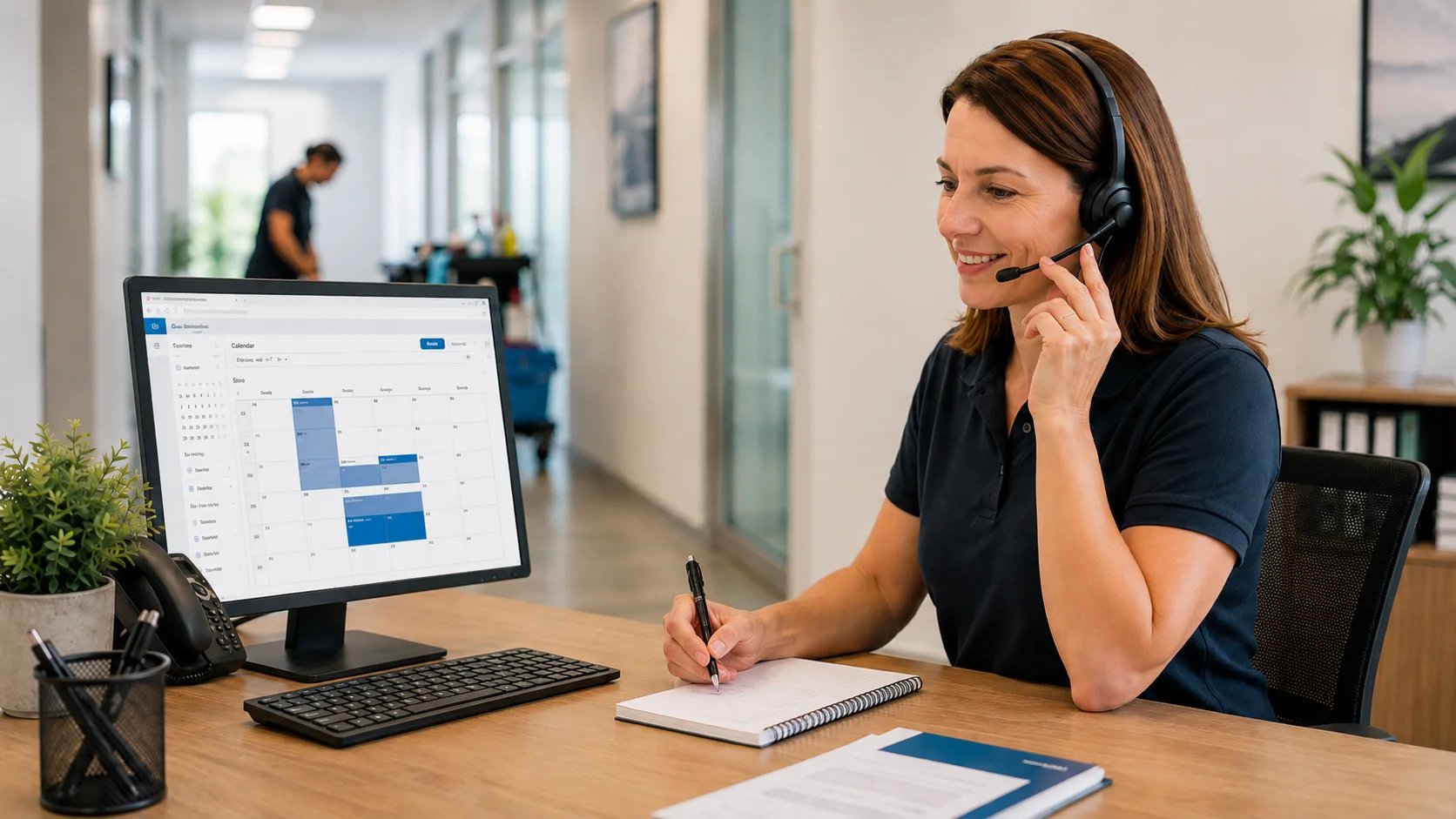
- Reserva la cita: ofrece espacios libres reales de tu calendario y confirma la reserva en el acto.
- Asigna y notifica: envía el trabajo a tu CRM o herramienta de servicio de campo y alerta al técnico de guardia para emergencias reales.
- Escala a un humano: transfiere llamadas complejas de presupuestos comerciales o clientes molestos a una persona real cuando sea necesario.
Como el agente trabaja desde tu base de conocimientos, puede responder a las preguntas que realmente frenan una reserva: "¿Es el tratamiento seguro para mi perro?", "¿Tengo que salir de casa?", "¿Cuánto cuesta una eliminación puntual de avispas frente a un plan trimestral?". Responder a esto con confianza en la primera llamada suele ser la diferencia entre un trabajo reservado y un cliente que sigue marcando otros números. Para los oficios en general, se aplica el mismo patrón: consulta nuestra guía sobre el agente de voz con IA para climatización y oficios con despacho de trabajos 24/7.
Entrante y saliente: ambas caras del teléfono en el control de plagas
La mayoría de las empresas piensan primero en las llamadas entrantes: responder a la avalancha de llamadas de "tengo un problema". Pero el control de plagas también es un negocio de llamadas salientes, y un agente de voz con IA también maneja ese lado:
- Recordatorios de citas que reducen las ausencias en los tratamientos programados, para que el camión nunca se envíe a una casa vacía.
- Renovaciones de servicios recurrentes: llamar proactivamente a los clientes de planes trimestrales y anuales para volver a reservar la próxima visita antes de que caduque el contrato.
- Campañas estacionales: un impulso saliente antes de la temporada de mosquitos o termitas para llenar el calendario con antelación.
- Llamadas de reseña y seguimiento después de completar un trabajo para proteger tu reputación online.
Si no quieres que se te escape ninguna llamada de trabajo nunca más, vale la pena leer nuestro artículo complementario sobre el agente de voz con IA para oficios y el análisis profundo sobre cómo capturar cada llamada fuera de horario.
Agente de voz con IA frente a las alternativas para el control de plagas
Así es como un agente de voz con IA de Famulor se compara con las opciones que sopesan la mayoría de los propietarios de empresas de control de plagas.
| Capacidad | Buzón de voz | Servicio de atención humana | Recepcionista interno | Agente de voz con IA de Famulor |
|---|---|---|---|---|
| Disponibilidad 24/7 | Solo pasiva | A menudo horario comercial | ~40 hrs/semana | Siempre activo |
| Maneja picos de llamadas (temporada de plagas) | No | Colas de espera | Una línea a la vez | Llamadas paralelas ilimitadas |
| Reserva directamente en tu calendario | No | A veces | Sí | Sí, automáticamente |
| Conoce área de servicio y precios | No | Raramente | Sí | Sí, desde base de conocimientos |
| Asigna emergencias | No | Relevo manual | Manual | Alertas automáticas |
| Coste por llamada | Bajo pero con pérdidas | Alto | Salario fijo | Céntimos por minuto |
| Idiomas | — | Limitado | 1–2 | 40+ |
Un servicio de atención humana es un paso adelante respecto al buzón de voz, pero cobra por llamada, sigue poniendo a los clientes en espera en momentos punta y trabaja con un guion limitado en lugar de con tu lógica real de precios y programación. Un agente de voz con IA te ofrece conversaciones con calidad de recepcionista a una fracción del coste por llamada, sin tiempos de espera y sin horario de cierre. Para un desglose completo de la economía, consulta nuestra guía de costes de agente de voz con IA frente a recepcionista humano.
Calcula tu ROI automatizando llamadas
Descubre cuánto podrías ahorrar al usar voice agents con IA.
Resultado ROI
ROI 0%
Sin tarjeta de crédito
Cómo configurar un agente de voz para control de plagas con Famulor: paso a paso
No necesitas ser un experto técnico para lanzarlo. La configuración sigue cinco pasos claros.
- Define el trabajo del agente. Decide qué debe manejar primero: solo fuera de horario, desbordamiento durante el día o todas las llamadas. La mayoría de las empresas de control de plagas comienzan con fuera de horario y desbordamiento, y luego se expanden una vez que confían en él.
- Construye la base de conocimientos. Carga tu área de servicio, tipos de plagas que tratas, niveles de precios (puntuales frente a recurrentes), información de seguridad para mascotas y niños, y tus reglas de programación. Esto es lo que permite al agente responder preguntas reales de los clientes y reservar con confianza.
- Conecta tu número de teléfono. Famulor admite trunking SIP con cualquier proveedor de VoIP o PBX, por lo que puedes dirigir tu línea comercial existente al agente sin cambiar de operador. Consulta la guía de integración de trunking SIP para obtener los detalles.
- Conecta tus herramientas. Conecta tu calendario y CRM o software de servicio de campo para que los datos de reservas y clientes potenciales fluyan automáticamente. Con más de 300 integraciones y un constructor de automatización sin código, Famulor se conecta a las herramientas que ya usas; por ejemplo, nuestra guía de integración con HubSpot muestra cómo los clientes potenciales llegan directamente a tu embudo.
- Establece reglas de escalado. Decide cuándo el agente debe transferir a un humano: presupuestos comerciales grandes, clientes enfadados o escenarios que quieras que gestione una persona. Nuestra guía de transferencia de llamadas detalla las opciones.
Como Famulor habla más de 40 idiomas, un solo agente puede atender a una base de clientes multilingüe sin que tengas que contratar personal adicional, algo útil para empresas de control de plagas que operan en mercados urbanos diversos.
Mejores prácticas y errores comunes
Las empresas que sacan el máximo provecho de un agente de voz con IA tienden a hacer bien algunas cosas y a evitar algunas trampas predecibles.
- Mantén la base de conocimientos actualizada. Actualiza los cambios de precios y áreas de servicio rápidamente; un agente que cita precios de la temporada pasada erosiona la confianza.
- Define las emergencias con claridad. Dile al agente exactamente qué cuenta como urgente (nido de insectos picadores cerca de una entrada, cuenta comercial, hogar vulnerable) para que las emergencias reales se asignen, no se pongan en cola.
- Empieza poco a poco y luego amplía. Pruébalo primero en llamadas fuera de horario, revisa las transcripciones y luego cede el desbordamiento diurno.
- No lo conviertas en un menú telefónico robótico. El valor es la conversación natural; deja que haga preguntas aclaratorias en lugar de forzar opciones de menú.
- No omitas las rutas de escalado. Un gran agente conoce sus límites; dale siempre a los clientes una ruta hacia un humano para los casos complejos poco frecuentes.
- No lo configures y te olvides. Revisa las transcripciones de llamadas semanalmente durante el primer mes y refina las instrucciones y la base de conocimientos según lo que pregunten los clientes reales.
Ejemplos del sector: dónde merece la pena
Considera una empresa de control de plagas residencial de cinco camiones en un mercado suburbano. Durante el pico del verano, las llamadas por avispas y hormigas se disparan y la línea de la oficina se desborda cada tarde. Al enrutar las llamadas de desbordamiento y fuera de horario a un agente de Famulor, cada uno de esos clientes recibe ahora una respuesta instantánea y profesional, una respuesta real a "¿es seguro para mis hijos?" y una reserva, en lugar de un buzón de voz que nunca dejan.
O toma un proveedor de control de plagas comercial que atiende restaurantes y almacenes. La urgencia del código de salud significa que un gerente que encuentra excrementos antes del servicio necesita una respuesta el mismo día. El agente de IA reconoce las cuentas comerciales, marca la urgencia y asigna al técnico de guardia inmediatamente mientras confirma la visita, convirtiendo un pánico de cumplimiento en un trabajo de emergencia reservado.
Un tercer caso: un operador regional en crecimiento que realiza campañas estacionales de termitas y mosquitos utiliza llamadas de IA salientes para volver a reservar a clientes trimestrales antes de la temporada, manteniendo los camiones llenos sin añadir personal de oficina.
Conclusión: convierte cada llamada en un trabajo reservado
El control de plagas vive y muere por el teléfono. Las llamadas perdidas no son una molestia menor: son la mayor fuga de ingresos en la mayoría de las empresas, y empeoran exactamente cuando la demanda alcanza su punto máximo. Un agente de voz con IA sella esa fuga: responde al instante las 24 horas, cualifica y reserva el trabajo, asigna emergencias y hace seguimiento, sin tiempos de espera, horarios de cierre ni el coste de personal adicional.
Famulor es la plataforma de elección para hacer que eso suceda. Con llamadas entrantes y salientes 24/7, trunking SIP para cualquier proveedor, más de 40 idiomas, más de 300 integraciones y un constructor sin código, está diseñado específicamente para adaptarse a cómo funcionan realmente las empresas de control de plagas. El siguiente paso es sencillo: mapea tus llamadas fuera de horario y de desbordamiento, construye una base de conocimientos a partir de tu área de servicio y precios, y deja que un agente de Famulor empiece a reservar los trabajos que estabas perdiendo. Reserva una demo y escúchalo manejar una llamada de control de plagas en vivo.
Prueba nuestro Asistente de IA
Experimenta lo natural que suena nuestro asistente telefónico de IA.
Introduce tus datos y recibe una llamada de nuestro agente de IA en segundos.
El agente está entrenado para hablar sobre los servicios de Famulor y programar citas.

Agente IA de demo
Representante de Famulor
Preguntas frecuentes
¿Puede un agente de voz con IA reservar citas de control de plagas automáticamente?
Sí. Lee los espacios libres de tu calendario conectado, los ofrece al cliente y confirma la reserva durante la llamada, luego la sincroniza con tu CRM o herramienta de servicio de campo.
¿Responderá a las llamadas fuera de horario y los fines de semana?
Sí. El agente está disponible 24/7, incluyendo noches, fines de semana y festivos, por lo que las llamadas durante la temporada alta de plagas o después del cierre nunca se pierden en el buzón de voz.
¿Cómo maneja las situaciones de emergencia de plagas?
Tú defines qué cuenta como urgente, como un nido de insectos picadores cerca de una entrada o un problema de código de salud comercial. El agente marca esas llamadas y asigna o alerta a tu técnico de guardia inmediatamente.
¿Puede responder preguntas de los clientes sobre seguridad y precios?
Sí. Trabajando desde tu base de conocimientos, responde preguntas comunes sobre la seguridad del tratamiento para mascotas y niños, si el cliente debe salir de casa y precios puntuales frente a recurrentes.
¿Tengo que cambiar mi número de teléfono o mi operador?
No. Famulor admite trunking SIP con cualquier proveedor de VoIP o PBX, por lo que diriges tu línea comercial existente al agente sin cambiar de operador.
¿Cuánto cuesta un agente de voz con IA para control de plagas?
El precio se basa en el uso, normalmente unos pocos céntimos por minuto, lo cual es mucho menor que el coste por llamada de un servicio de atención humana. Utiliza la calculadora de ROI anterior para estimar los ahorros para tu volumen de llamadas.
¿Puede hacer llamadas salientes también?
Sí. Además de responder, puede llamar a los clientes para recordatorios de citas, reservas estacionales, renovaciones de contratos y seguimientos posteriores al servicio.
¿Qué pasa si un cliente necesita hablar con una persona real?
El agente transfiere la llamada a un miembro del equipo en vivo para presupuestos comerciales complejos o llamadas difíciles, según las reglas de escalado que establezcas.

Autor en Famulor