Resumir contenido con:




Redacción de PII para agentes de voz con IA: transcripciones, grabaciones y registros conformes al RGPD
Respuesta corta: no tienes que elegir entre observabilidad y protección de datos. Los datos personales pueden redactarse automáticamente de transcripciones, grabaciones de audio, trazas y registros antes de que nada se almacene de forma permanente. La capa analítica sobrevive, los valores brutos no.
Lograrlo depende de tres palancas: una fase de redacción en el momento de la ingesta, un periodo de retención breve y documentado, y una base legal clara que incluya una divulgación al inicio de la llamada. Con Famulor puedes configurar la retención, el modo de consentimiento y el comportamiento de la memoria por cuenta, sin renunciar a la capacidad de analizar tus llamadas.
El detonante de este artículo: el 20 de agosto de 2026, LiveKit lanzó la Redacción de PII para su producto de Observabilidad de Agentes y explicó en detalle por qué las conversaciones habladas deben tratarse de forma distinta a los datos de formularios. Los mecanismos que describen constituyen un modelo de referencia útil, independientemente de la plataforma que ejecute tus agentes telefónicos.
Por qué las conversaciones habladas son el problema de PII más difícil
En un formulario web, el número de teléfono se encuentra en un campo llamado phone. En una llamada, no está en ninguna parte. Surge a lo largo de varios turnos, con correcciones, letras deletreadas y preguntas aclaratorias. Ahí es exactamente donde fallan los enfoques clásicos.
LiveKit menciona tres patrones que aparecen constantemente en las conversaciones telefónicas y que invalidan la coincidencia de patrones: la gente deletrea cosas en voz alta, divide un valor único entre varios turnos y se corrige a sí misma a mitad de turno. Una expresión regular para un número de tarjeta no se activará cuando los dígitos se repartan en cuatro enunciados y uno de ellos sea retractado.
Un segundo ejemplo práctico: el interlocutor dice "Smith, no, con Y, así que S de Sierra, M, Y, T, H". Una búsqueda en el diccionario de apellidos encuentra el primer token en el mejor de los casos. El resto deletreado permanece en texto plano y, por tanto, en tu almacenamiento.
Tercero: el reconocimiento automático de voz no produce marcas de tiempo a nivel de palabra perfectamente fiables. Cualquiera que crea que puede cortar quirúrgicamente palabras individuales de un archivo de audio está sobreestimando la precisión de los modelos STT actuales. LiveKit extrae la conclusión conservadora y elimina el turno de conversación completo de la grabación en lugar de recortar ventanas de palabras. Un tono suave suena en lugar del discurso original.
Las cuatro capas donde se acumulan los datos personales
Un error común en los diseños de privacidad para telefonía con IA: solo se presta atención a la transcripción. En realidad, los datos personales se crean en al menos cuatro lugares, y cada uno requiere su propia decisión.
| Capa | Contenido típico | Medida recomendada | Riesgo si se ignora |
|---|---|---|---|
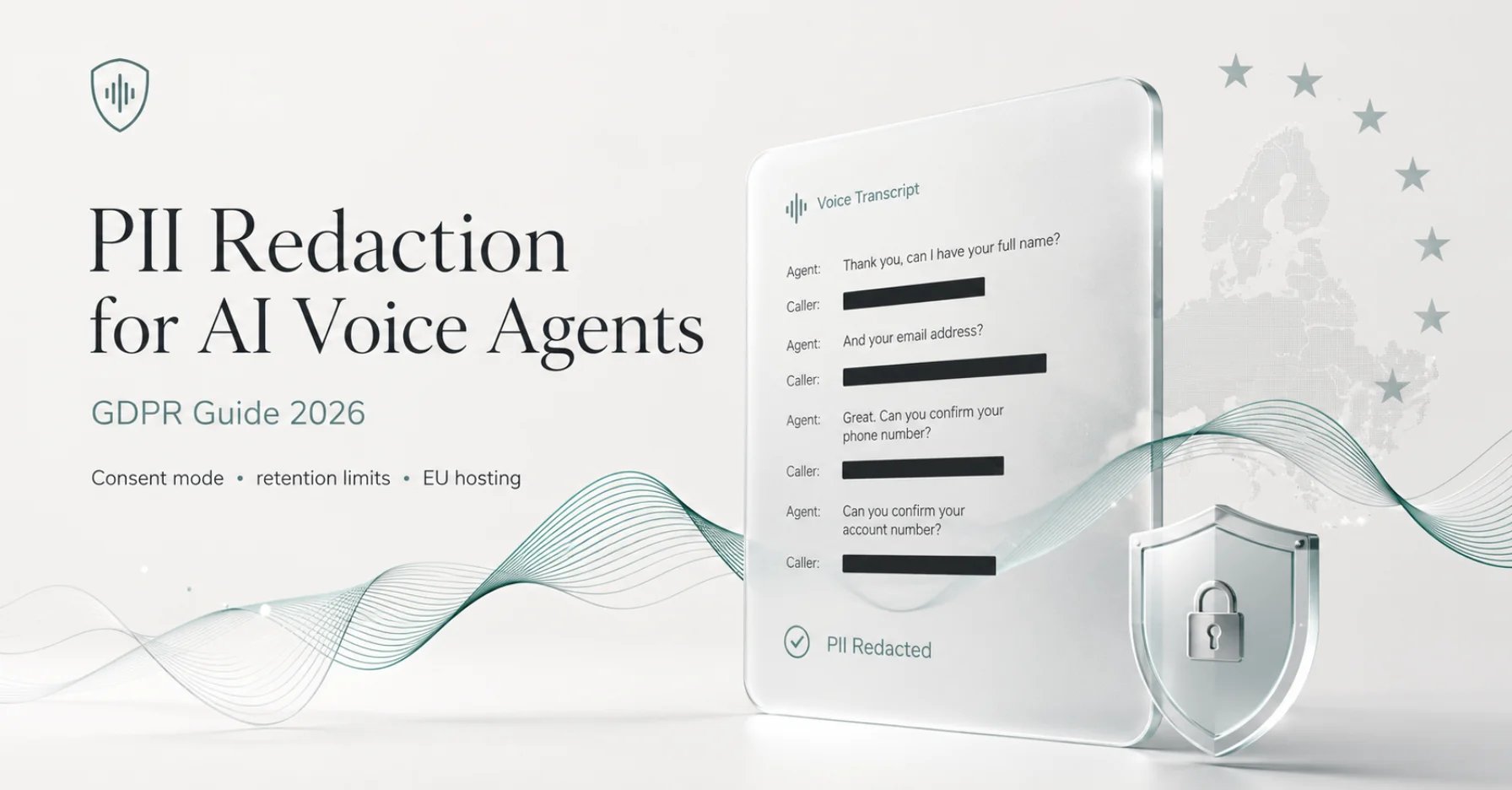
| Transcripción | Nombre, dirección, fecha de nacimiento, número de cuenta | Reemplazar con marcadores tipificados, mantener legible el contexto circundante | Datos brutos buscables a texto completo durante meses |
| Grabación de audio | Voz más cada detalle hablado | Eliminar los turnos afectados por completo, o no grabar en absoluto | Identificador biométrico y contenido en un solo archivo |
| Trazas y registros | Parámetros de herramientas, payloads, campos de depuración | Eliminar campos sensibles en lugar de enmascararlos | La PII se propaga silenciosamente a los sistemas de monitorización |
| Sistemas downstream | Registros de CRM, cuerpos de webhook, ejecuciones de automatización | Definir mapeo de campos, pasar solo lo necesario | Divulgación a terceros sin base legal |
La tercera fila es la que los equipos subestiman. Cuando tu agente llama a una función a mitad de conversación (una consulta de inventario, una reserva de cita), los parámetros que pasa suelen aterrizar sin filtrar en el registro. Cómo definir y limitar esos parámetros se cubre en la documentación sobre herramientas y funciones.
Comparativa de enfoques de redacción
Existen tres formas comunes de eliminar datos personales de los registros de conversación. Difieren drásticamente en recuperación, esfuerzo y auditabilidad.
| Criterio | Expresiones regulares | Modelo NER | LLM en contexto de conversación |
|---|---|---|---|
| Detecta patrones estructurados | Bueno | Bueno | Bueno |
| Detecta valores deletreados | No | Raramente | Sí |
| Detecta valores divididos entre turnos | No | Limitado | Sí |
| Maneja autocorrecciones | No | No | Sí |
| Latencia y coste | Muy bajo | Bajo | Más alto, pero puede ejecutarse de forma asíncrona |
| Esfuerzo de mantenimiento | Alto, las reglas caducan | Medio, necesita reentrenamiento | Bajo |
| Modo de fallo | Omite variantes | Omite contexto | Puede sobre-redactar |
La evaluación honesta: la redacción basada en LLM no está libre de errores, y tiende a sobre-redactar en lugar de sub-redactar. Para un control de cumplimiento, esa es la dirección correcta en la que fallar. El compromiso pragmático al que llegan la mayoría de los equipos es seguir capturando formatos estructurados con reglas y añadir un paso basado en modelos sobre el contexto conversacional.
La implementación de LiveKit cubre 41 tipos de PII en diez grupos: nombres, datos de contacto, demografía, credenciales, identificadores de red, organizaciones, datos financieros, ubicaciones, fechas de calendario e identificadores gubernamentales. Esa agrupación sirve también como una lista de verificación viable para tu propio diseño, independientemente del proveedor que utilices.
Lo que realmente exige el marco legal
Para la telefonía con IA, la protección de datos no es una ocurrencia tardía: determina la arquitectura. Cuatro requisitos impulsan el diseño.
Minimización de datos. El artículo 5 del RGPD exige procesar solo lo que el propósito demanda. Si analizas llamadas para mejorar tu agente, necesitas el flujo conversacional, no los datos bancarios del interlocutor. Eso es precisamente lo que ofrece la redacción: separa la parte analíticamente valiosa de la legalmente arriesgada.
Limitación de almacenamiento. Se debe definir, justificar y aplicar técnicamente un periodo de retención. LiveKit elimina los datos de observabilidad automáticamente después de 30 días. Si 30, 60 o 90 días se ajustan a tu caso depende de tu propósito; lo que importa es que el periodo aparezca en tu registro de actividades de tratamiento y que el sistema lo aplique genuinamente.
Transparencia al inicio de la llamada. El interlocutor debe saber que está hablando con un sistema de IA y si la llamada está siendo grabada. Eso pertenece al saludo, no a la letra pequeña. Cómo anclar esa redacción correctamente se describe en la documentación sobre el system prompt.
Acuerdos de tratamiento y ubicación del tratamiento. Cada servicio en tu cadena (telefonía, reconocimiento de voz, modelo de lenguaje, síntesis de voz, almacenamiento) procesa potencialmente datos personales. Necesitas un acuerdo de tratamiento de datos con cada uno y claridad sobre dónde ocurre el procesamiento. Esa cadena es la verdadera razón por la que los operadores europeos insisten en el alojamiento en la UE.
Un error frecuente: que la retención de datos cero en el proveedor del modelo reemplaza la redacción. No es así. La retención de datos cero significa que el proveedor del modelo no persiste tu contenido. No dice nada sobre lo que termina en tu almacén de observabilidad, tu CRM y tus registros. Las dos medidas se complementan; ninguna sustituye a la otra.
Lo que cuesta la observabilidad, y lo que ahorra
La economía rara vez se analiza correctamente. La observabilidad sin un diseño de privacidad no es un ahorro, es una factura diferida. Tres bloques de costes se contraponen.
Primero, operaciones. El almacenamiento para transcripciones y grabaciones es barato; la redacción en sí cuesta cómputo. Ambos se sitúan en el rango de fracciones de céntimo por minuto de conversación y son insignificantes al lado de los costes de telefonía y modelos. Un desglose de los costes por minuto está en la página de precios.
Segundo, el beneficio. Los equipos que pueden analizar llamadas encuentran los puntos donde los interlocutores abandonan, donde el agente transfiere incorrectamente o donde falla una llamada a una herramienta. En la práctica, esos son los puntos porcentuales de tasa de finalización que deciden si un proyecto se paga solo. Sin observabilidad, estás optimizando a ciegas.
Tercero, el riesgo. Un almacén lleno de datos de conversación sin redactar es un problema de solicitudes de acceso y borrado, un problema de notificación tras un incidente y, en el peor de los casos, una multa. El coste es raro pero ilimitado, exactamente el perfil contra el que te aseguras.
Compara ambos lados antes de decidir si habilitar la grabación y el análisis:
Calcula tu ROI automatizando llamadas
Descubre cuánto podrías ahorrar al usar voice agents con IA.
Resultado ROI
ROI 0%
Sin tarjeta de crédito
Implementar esto en Famulor: paso a paso
La siguiente secuencia ha demostrado su eficacia en proyectos de despliegue. Nada de esto requiere recursos de ingeniería.
- Define el propósito. Escribe en una frase por qué analizas las transcripciones: garantía de calidad, optimización de prompts, obligaciones probatorias. Sin propósito no hay base legal ni periodo de retención sensato.
- Configura la retención. Establece el periodo de retención para grabaciones y transcripciones al valor más corto que aún sirva a tu propósito. La eliminación automática es mucho más fiable que cualquier proceso que dependa de que una persona se acuerde.
- Elige el modo de consentimiento. Decide si se captura el consentimiento para la grabación y cómo, y ancla la divulgación en el mensaje de apertura del asistente.
- Limita los campos de datos. Revisa cada función que tu agente llama a mitad de conversación en busca de sus parámetros. Pasa una referencia de caso en lugar de un registro de cliente completo siempre que sea posible.
- Controla la memoria conversacional. Si tu agente debe reconocer a los interlocutores que regresan, decide deliberadamente qué atributos se almacenan, y asegúrate de que una solicitud de borrado elimine realmente la entrada.
- Define qué sale de la plataforma. Los datos salen a través de integraciones y webhooks. Define por destino qué campos se pasan en lugar de reenviar todo el registro de la conversación.
- Prueba en lugar de esperar. Realiza llamadas de prueba en las que indiques deliberadamente un nombre, una dirección, una fecha de nacimiento y un detalle de pago: una vez de golpe, una vez deletreado, una vez con una corrección. Luego inspecciona la transcripción, la grabación y el registro. Cómo configurar esto sistemáticamente se cubre en pruebas.
- Documéntalo. Registra el propósito, la retención, los servicios involucrados y los controles aplicados en tu registro de actividades de tratamiento. El esfuerzo es único; el beneficio aparece en la primera auditoría.
Mejores prácticas y errores comunes
Redacta antes de almacenar, no después. Si los valores brutos llegan primero al almacenamiento y se sobrescriben después, existieron mientras tanto: en copias de seguridad, en réplicas, en índices de búsqueda. LiveKit resuelve esto con un servicio de ingesta upstream que ejecuta la redacción antes de que los artefactos lleguen al almacén real. Aplica el mismo principio a tu propia cadena.
Mantén el contexto, elimina el valor. Una transcripción a la que le falta cada segunda línea es inútil para la optimización. Una transcripción con marcadores como [phone_number] o [address] permanece legible y muestra simultáneamente lo que se eliminó. Los marcadores tipificados incluso te permiten analizar en qué puntos de una conversación aparecen normalmente los datos sensibles.
Decide sobre la grabación y la transcripción por separado. Para muchos casos de uso, la transcripción redactada es totalmente suficiente. El archivo de audio contiene además la voz como identificador biométrico y es, por tanto, el activo mucho más sensible. Pregúntate por caso de uso si realmente necesitas la grabación.
No olvides los otros canales. Si tu agente telefónico es parte de una configuración omnicanal, los mismos datos aparecen en chat, en el widget web y en hilos de mensajería. Un diseño que cubre solo la telefonía está incompleto. Esto importa especialmente para configuraciones construidas alrededor de un centro de llamadas con IA que abarca varios canales.
Audita tus propias rutinas de análisis. Alimentar transcripciones redactadas en un modelo adicional para su resumen crea una nueva actividad de procesamiento. Necesita ser documentada como cualquier otra.
El error más común en la práctica, sin embargo, no es técnico. Los equipos desactivan la grabación por completo por incertidumbre, pierden toda vía de mejora y se preguntan seis meses después por qué la tasa de abandono no se ha movido. La elección no es "almacenar todo" frente a "almacenar nada": es "almacenar lo correcto".
Tres ejemplos de la industria
Una consulta dental que maneja 80 contactos de pacientes al día. Las llamadas muestran nombres, fechas de nacimiento, números de seguro y, a menudo, síntomas: datos de salud bajo el Artículo 9 del RGPD. La configuración correcta aquí suele ser: sin grabación de audio, transcripción redactada con un periodo de retención corto, reserva de cita a través de una función que transmite solo una referencia de caso y una franja horaria. La consulta mantiene la capacidad de verificar que el agente entiende correctamente las solicitudes de programación.
Una agencia inmobiliaria con 30 listados activos y 15 primeras consultas al día. La motivación difiere: el agente pre-cualifica a los prospectos. Los nombres, las cifras de presupuesto y el estado de financiación son altamente sensibles, pero el patrón conversacional es el objeto real de optimización. Las transcripciones redactadas son totalmente suficientes para ver qué pregunta hace que los prospectos abandonen.
Una asesoría fiscal durante la temporada de declaraciones. Un agente de IA toma solicitudes de devolución de llamada y consultas de documentos. Los datos del cliente y los números fiscales deben redactarse sin excepción, y el secreto profesional endurece aún más los requisitos. Al mismo tiempo, saber qué preguntas se repiten vale dinero real: muestra lo que debe incluirse en el próximo boletín para clientes.
En los tres casos la decisión es la misma: no si analizar, sino desde qué analizar. Si quieres comparar ajustes de la industria, los ejemplos se recopilan en industrias.
Conclusión
La protección de datos y la observabilidad no están en conflicto en la telefonía con IA: simplemente necesitan el orden correcto de operaciones. Redacta los datos personales antes de que se almacenen. Establece un periodo de retención corto y técnicamente aplicado. Limita lo que tus funciones y webhooks envían hacia afuera. Y prueba el resultado con llamadas que deletreen cosas y se corrijan deliberadamente.
La industria se está moviendo claramente en esta dirección: los proveedores ahora ofrecen la redacción como una capacidad estándar en lugar de un producto adicional. Para los operadores europeos, la ubicación del procesamiento añade una segunda dimensión, razón por la cual el alojamiento en la UE en Famulor es la configuración predeterminada en lugar de un extra de pago.
Siguiente paso concreto: crea un asistente de prueba, realiza cinco llamadas con detalles personales dispersos deliberadamente, luego inspecciona la transcripción, la grabación y el registro. Media hora te dirá dónde tiene fugas tu cadena. Puedes empezar directamente con el agente de voz no-code.
Prueba nuestro Asistente de IA
Experimenta lo natural que suena nuestro asistente telefónico de IA.
Introduce tus datos y recibe una llamada de nuestro agente de IA en segundos.
El agente está entrenado para hablar sobre los servicios de Famulor y programar citas.

Agente IA de demo
Representante de Famulor
FAQ
¿Qué es la redacción de PII para agentes de voz con IA?
La redacción de PII es la eliminación automática de datos personales de las transcripciones, grabaciones de audio y registros de un agente telefónico. Los valores detectados se reemplazan con marcadores tipificados antes de que los datos se almacenen permanentemente.
¿Es suficiente una expresión regular para redactar transcripciones?
No. En una llamada, los valores se deletrean, se dividen entre turnos y se corrigen a mitad de frase. Los métodos basados en patrones omiten exactamente esos casos y solo deberían complementar la detección consciente del contexto, nunca reemplazarla.
¿Por qué se elimina todo el turno de una grabación de audio?
Porque los modelos de reconocimiento de voz no producen marcas de tiempo a nivel de palabra perfectamente fiables. Un corte preciso podría dejar fragmentos del valor sensible atrás. Eliminar todo el turno es la opción segura.
¿Cuánto tiempo puedo conservar las grabaciones de llamadas?
Mientras tu propósito documentado lo requiera. En la práctica, la retención para garantía de calidad suele oscilar entre 30 y 90 días. Lo que importa es que el periodo esté justificado, documentado y aplicado automáticamente por el sistema.
¿La retención de datos cero reemplaza la redacción?
No. La retención de datos cero solo regula si el proveedor del modelo persiste tu contenido. Tus propias transcripciones, registros y registros de CRM no se ven afectados. Los dos controles se complementan.
¿Debo decir a los interlocutores que están hablando con una IA?
Sí. La divulgación sobre el sistema de IA, y sobre la grabación cuando corresponda, pertenece al inicio de la llamada. Anclalo en el mensaje de apertura del asistente en lugar de en documentos posteriores.
¿Puedo seguir analizando llamadas si todo está redactado?
Sí. Solo se eliminan los valores personales, no la estructura conversacional. Los puntos de abandono, las transferencias incorrectas y las llamadas a herramientas fallidas permanecen totalmente visibles y medibles.
¿Qué sucede cuando un interlocutor solicita el borrado?
Debes eliminar cada copia: transcripción, grabación, memoria conversacional y registros en sistemas downstream. Es exactamente por eso que limitar lo que reenvías a sistemas de terceros vale la pena desde el primer día.
¿Esto se aplica también al chat y WhatsApp?
Sí. Los mismos requisitos se aplican a cada canal en el que tu agente habla con los clientes. Un diseño que cubra solo la telefonía deja la mitad de los datos sin gobernar en una configuración omnicanal.

Autor en Famulor