Inhoud samenvatten met:




Veel bedrijven zijn de eerste fase van voice-AI-adoptie inmiddels voorbij: één assistent die telefoontjes beantwoordt, leads kwalificeert of afspraken inplant. De volgende vraag is strategischer: hoe stuur je een volledig team van AI-telefoonagenten aan op een veilige, meetbare en snelle manier, zonder dat elke verbetering via een backlog van de IT-afdeling moet lopen?
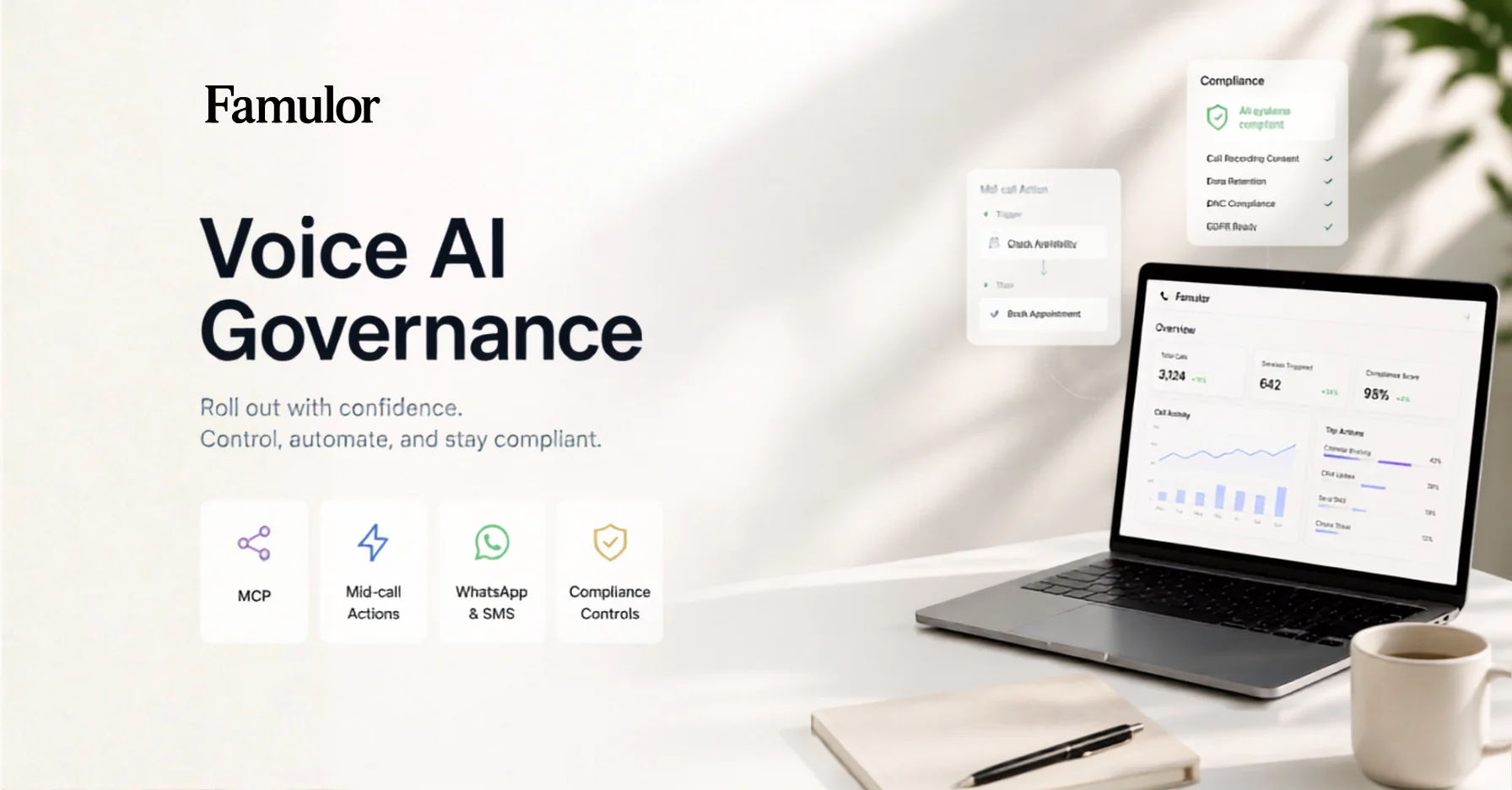
Governance voor AI-voiceagents brengt rollen, goedkeuringen, analyses en de dagelijkse operatie samen in één bedrijfsmodel.
Hier ontstaat een nieuwe zoek- en koopintentie. Teams zoeken niet langer alleen naar een no-code AI-voiceagent. Ze zoeken naar een operationeel model voor AI-agenten: assistenten configureren vanuit ChatGPT of Claude, campagnes analyseren, prompts verbeteren, leads opvolgen en tegelijkertijd de controle behouden over rechten, data, integraties en kwaliteit.
Waarom AI-agent-operaties verder gaan dan prompt engineering
Een AI-telefoonagent in productie is niet slechts één prompt. Het is een systeem van gesprekslogica, stemgebruik, kennis, telefoonnummers, campagnes, CRM-data, WhatsApp-gesprekken, webhooks en analyses. Zodra meerdere teams eraan werken, ontstaat er snel operationeel risico: sales wijzigt variabelen, support voegt nieuwe kennis toe, operations lanceert uitgaande campagnes en compliance wil inzicht in welke data de assistent verwerkt.
Famulor is gepositioneerd voor die operationele laag. Phone AI, WhatsApp AI, Live Voice en Chat AI draaien op één platform met één assistent, één kennisbank en gekoppelde bedrijfsprocessen. De openbare AI-contextbestanden benadrukken GDPR-compliance, hosting in Duitsland, 24/7 inkomende en uitgaande communicatie, een no-code builder en honderden integraties. Voor enterprise-teams is dat niet slechts positionering. Het is het fundament voor een gecontroleerd operationeel model.
De nieuwe werkwijze: ChatGPT of Claude als controlepaneel
Met de Famulor MCP-connector kunnen teams hun Famulor-account koppelen aan ChatGPT of Claude en operationeel werk uitvoeren in natuurlijke taal: assistenten aanmaken, bestaande prompts beoordelen, gesprekken analyseren, campagnes voorbereiden, leads beheren of kennisbanken bijwerken. Het cruciale punt is dat de AI-app de platform-governance niet vervangt. Het wordt een snellere interface voor acties die nog steeds via het Famulor-account, de bestaande rechten en de geconfigureerde workflows verlopen.
Een typische enterprise-workflow ziet er als volgt uit: een operations manager vraagt: “Analyseer de laatste 30 gesprekken van onze DACH-salesassistent, identificeer de drie meest voorkomende redenen voor afhaken en stel promptwijzigingen voor.” Het team publiceert niet blindelings. Ze beoordelen de aanbevelingen, testen de assistent en meten de verandering aan de hand van conversie, doorverwijzingspercentage, no-show-rate of de werkdruk bij support.
Een governance-playbook voor voice-AI-teams
Een betrouwbare opzet vereist expliciete regels. Deze vijf bouwstenen veranderen een experiment in een herhaalbaar proces:
Bouwsteen | Wat het reguleert | Waarom het belangrijk is |
|---|---|---|
Rollen | Wie mag assistenten, campagnes, nummers, kennis en integraties wijzigen? | Voorkomt ongecontroleerde wijzigingen in productie-belstromen. |
Wijzigingsproces | Hoe worden promptupdates, nieuwe Mid-call Actions en campagnes beoordeeld? | Houdt kwaliteitsborging snel zonder elke wijziging via IT te forceren. |
Datatoegang | Welke CRM-, kalender-, ERP- of supportdata mag de assistent lezen of schrijven? | Vermindert compliance-risico's en onnodige blootstelling van data. |
Metingen | Welke KPI's bepalen of de assistent verbetert? | Voorkomt optimalisatie op basis van onderbuikgevoel en toont ROI aan. |
Escalatie | Wanneer draagt de assistent over aan mensen, WhatsApp-overname of een ander team? | Beschermt de klantbeleving bij uitzonderingen, klachten en waardevolle leads. |
Mid-call Actions als de gecontroleerde actielaag
De grootste operationele winst wordt behaald wanneer de assistent niet alleen praat, maar ook handelt tijdens het gesprek. Famulor noemt deze mogelijkheden Mid-call Actions: een CRM-contact ophalen, een afspraak boeken, een ticket aanmaken, een sms sturen, een bestelling controleren of een automatisering triggeren. Voor governance is het belangrijk dat niet elke assistent automatisch alles mag doen.
Een goede standaard is simpel: elke actie heeft een duidelijk doel, gedefinieerde invoerparameters, veilige responselogica en een testcase. Voor gevoelige acties, zoals betalingsstatus, contractgegevens of annuleringen, moet de actie informatie uitlezen of een menselijke goedkeuring voorbereiden. Voor acties met een lager risico, zoals afspraakbevestigingen of een vervolg-sms, kan de assistent autonoom handelen.
Waar MCP, integraties en no-code automatisering samenkomen
De nieuwste documentatie van Famulor laat zien hoe drie lagen samenkomen: MCP verbindt externe toolsets, Mid-call Actions stellen specifieke acties binnen gesprekken beschikbaar en het Automation Platform bouwt workflows in meerdere stappen zonder code. Samen creëren ze een praktisch operationeel patroon:
De assistent luistert en beslist: De voice-agent detecteert intentie, context en benodigde data.
De actie leest of schrijft data: Bijvoorbeeld HubSpot, Salesforce, Pipedrive, Google Calendar, SAP, Slack of Microsoft Teams.
Automatisering orkestreert de opvolging: Maak een lead aan, update een deal, breng een team op de hoogte, stuur een e-mail en retourneer het resultaat.
Analytics verbetert de volgende run: Gesprekstranscripties, evaluaties en webhooks laten zien waar gesprekslogica of integratiegedrag verfijning behoeft.
Dit is vooral relevant voor bedrijven die al afhankelijk zijn van integraties en gestructureerde processen. De waarde zit niet in het toevoegen van nóg een tool. Het zit in het verbinden van telefoon, WhatsApp, website-chat en CRM-automatisering tot één meetbare procesketen.
Een praktische uitrol in 30 dagen
Voor een enterprise-team is de schoonste start geen 'big bang'-uitrol. Het is een smalle, meetbare use case met duidelijk eigenaarschap:
Week 1: Baken de use case af. Kies één stroom, zoals inkomende leadkwalificatie, afspraken boeken of support-triage. Definieer doel-KPI's: beschikbaarheid, kwalificatiegraad, geboekte afspraken, kosten per opgelost verzoek.
Week 2: Bouw de assistent en kennis op. Configureer de prompt, kennisbank, stem, telefoonnummer en testcases. Koppel alleen de integraties die nodig zijn voor die specifieke stroom.
Week 3: Test acties en escalatie. Valideer elke Mid-call Action met realistische scenario's. Bouw duidelijke overdrachten naar een mens, teamwachtrij of WhatsApp-overname.
Week 4: Meet de operatie. Analyseer transcripties, afhaakpunten, leadkwaliteit en handmatig opvolgwerk. Gebruik ChatGPT of Claude via MCP om sneller patronen te vinden, maar publiceer wijzigingen via een gecontroleerd proces.
Wat besluitvormers moeten controleren vóór de uitrol
Voordat je opschaalt, moet de aankoopchecklist niet stoppen bij “klinkt natuurlijk”. De betere vragen zijn: is er een DPA? Waar wordt data gehost? Kunnen business-teams zonder code werken terwijl de governance behouden blijft? Is er API- en MCP-toegang? Kunnen WhatsApp, sms, webhooks en CRM-workflows netjes worden gekoppeld? Zijn prijzen en minuutkosten transparant genoeg voor opschaling?
Famulor is het sterkst voor teams die voice-AI niet behandelen als een geïsoleerde telefoonbot. Het is een omnichannel automatiseringslaag waarbij telefoon, WhatsApp, Web Voice en chat dezelfde operationele logica delen. Dat vermindert fragmentatie en maakt optimalisatie meetbaar.
Conclusie: de beste agent is de best aangestuurde agent
In 2026 verschuift het gesprek over voice-AI van “Kan een AI-agent bellen?” naar “Kan ons bedrijf betrouwbaar AI-agenten aansturen?” Het verschil zit in governance, integraties, metingen en gecontroleerde snelheid. Met Famulor, MCP voor ChatGPT en Claude, Mid-call Actions en no-code automatisering kunnen teams dat operationele model bouwen: snel genoeg voor sales en support, gecontroleerd genoeg voor enterprise-eisen.
Probeer onze AI-assistent
Ervaar hoe natuurlijk onze AI-telefoonassistent klinkt.
Vul je gegevens in en ontvang binnen enkele seconden een oproep van onze AI-agent.
De agent is getraind om over Famulor-diensten te praten en afspraken te maken.

Demo AI-agent
Famulor medewerker

Auteur bij Famulor