Résumer le contenu avec:




A call assistant is any system that answers, sorts, responds to, or forwards phone calls. The term is broad. It can refer to a traditional voicemail box, a phone menu with keypad options, or a digital helper for incoming calls.
An AI phone assistant goes much further: it uses artificial intelligence to understand spoken language, respond naturally, and execute concrete tasks. Instead of relying on rigid menu structures, it can hold real conversations, answer questions, book appointments, qualify leads, or hand calls over to human staff intelligently.
That means every AI phone assistant is a type of call assistant, but not every call assistant is AI-powered.
For businesses, this distinction matters because it directly determines what is possible on the phone: simple call handling or true process automation. This is exactly where Famulor positions itself as a modern platform for AI-powered telephony, chat, and automation.
The one-sentence definition
A call assistant helps handle phone calls, while an AI phone assistant understands conversations, reacts dynamically, and can trigger actions in your business processes.
Why this topic matters right now
Many businesses face the same issues: missed calls, overloaded lines, repetitive questions, high staffing effort, and frustrated prospects or customers. Traditional phone processes only scale so far. An intelligent AI phone assistant can improve availability, service quality, and efficiency at the same time.
If you want a broader strategic perspective, see also how AI voice agent platforms automate communication.
Definition and classification
What is a call assistant?
A call assistant is fundamentally a helper for phone communication. Its purpose is to structure calls and reduce the workload for human teams. Depending on the technology, it can be very simple or fairly sophisticated.
Typical forms of a call assistant
Traditional voicemail: records messages when nobody is available
IVR system: guides callers through menus using keypad input
Digital phone switchboard: distributes calls to departments or teams
Software-based call assistant: combines routing, announcements, and simple automations
The key point: a standard call assistant does not necessarily have to understand what a person is saying. It can operate entirely on fixed rules.
What is an AI phone assistant?
An AI phone assistant is a voice-based digital agent that automates phone interactions using natural language processing. It listens, detects intent, asks follow-up questions, responds to requests, and can connect with other business systems.
It is therefore not just a phone interface, but an operational component in your business processes.
What the AI does technically
It converts speech into text
It interprets the meaning of the request in context
It formulates an appropriate response
It turns that response back into spoken language
It can read, validate, store, and update data or trigger connected systems
If you want to understand how modern systems move beyond rigid menus into real conversation, this overview of the new generation of voice AI is useful.
The most important practical difference
Feature | Call Assistant | AI Phone Assistant |
|---|---|---|
Speech understanding | Usually no or very limited | Yes, natural language based |
Conversation flexibility | Low | High |
Answering questions | Only predefined | Dynamic and contextual |
Appointment booking | Often indirect only | Direct with calendar integration |
CRM integration | Rarely deep | Highly integrable |
Lead qualification | Hardly | Yes |
24/7 service with real dialogue capability | Limited | Yes |
What an AI phone assistant can actually do
Answer calls and classify them intelligently
An AI phone assistant can identify whether someone wants to book an appointment, check an order, report a support issue, or speak to sales. Instead of hearing “Press 1 for …”, the caller can simply say what they need.
Answer repetitive questions automatically
Business hours, shipping status, addresses, availability, process explanations, or common support questions can all be automated. That reduces team workload and wait times.
Estimez votre ROI en automatisant vos appels
Voyez combien vous pourriez économiser chaque mois grâce aux voice agents IA.
Résultat ROI
ROI 0%
Sans carte bancaire
Book and reschedule appointments
With calendar integration, an AI phone assistant can check available slots, book appointments, reschedule them, or cancel them. This is especially useful for practices, law firms, trades, and service businesses.
Related reading: how AI-driven scheduling works across channels.
Qualify leads
In sales, the AI can collect essential information in advance: Who is calling? What is the request about? How urgent is it? Is there a budget, region, object type, company size, or buying intent? This ensures that only relevant cases reach the right team.
Document conversations
After a call, the AI can create summaries, save information to the CRM, create helpdesk tickets, or trigger follow-up tasks.
See also how post-call actions automate downstream processes.
Hand over to humans when needed
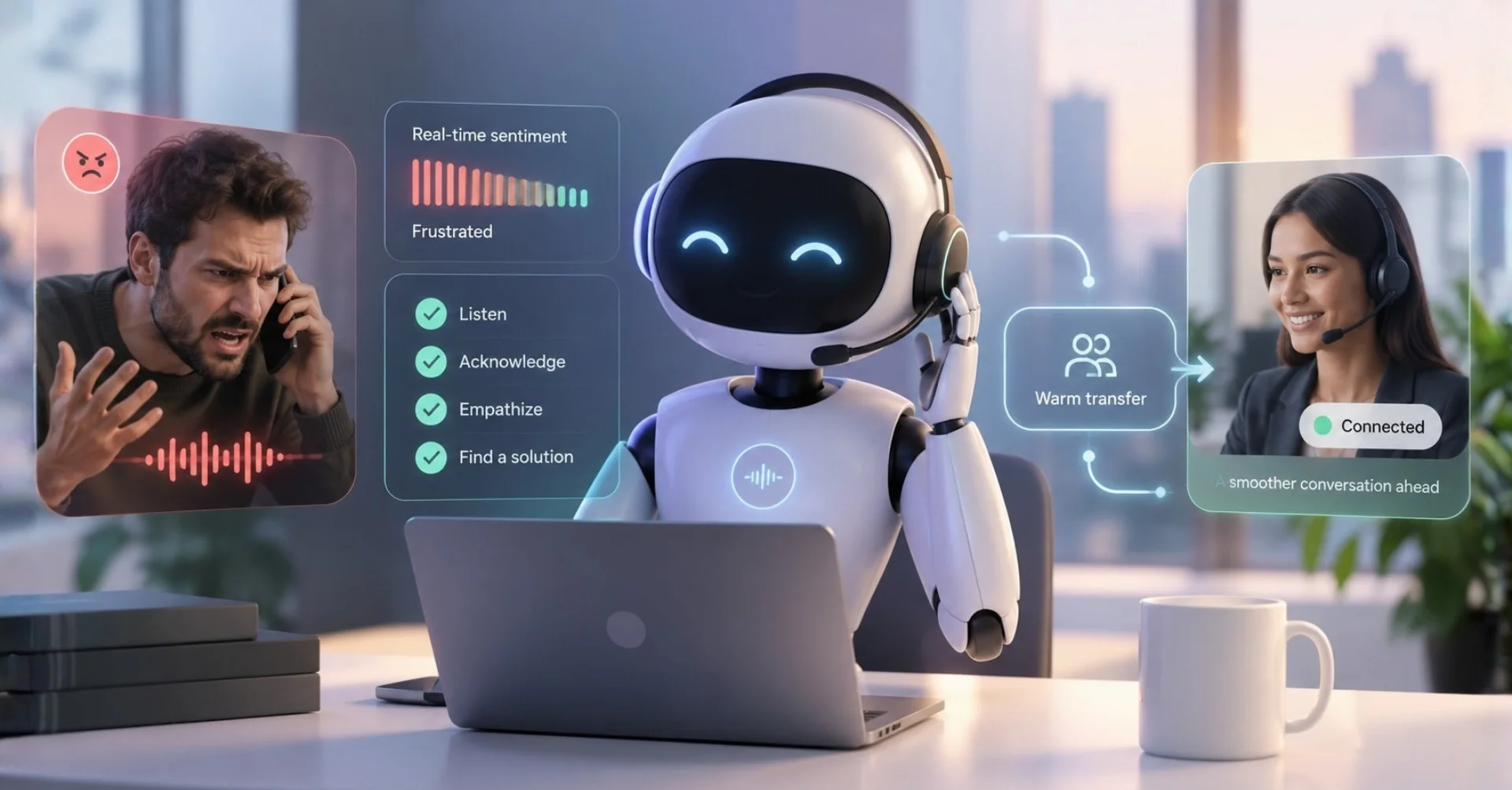
Important conversations do not need to be fully automated. Good systems recognize their limits and transfer calls cleanly to human staff, ideally with context so the caller does not have to repeat everything.
When is a simple call assistant enough—and when do you need AI?
A simple call assistant is often enough if …
you only need to capture calls outside opening hours
you just want to record messages
your call distribution logic is extremely simple
there are hardly any recurring processes worth automating
An AI phone assistant makes sense if …
you receive many recurring calls
availability directly affects revenue
employees are constantly interrupted by phone calls
leads must be handled quickly
appointment booking is frequent
multilingual communication matters
phone workflows should connect to CRM, helpdesk, or calendars
Practical example: trades business
A classic call assistant records a message. The problem: the customer waits for a callback, employees review messages later, and opportunities are lost.
An AI phone assistant can immediately ask what the issue is, capture the ZIP code, identify the trade, assess urgency, and prepare a callback or appointment. That saves time and improves conversion.
Practical example: doctor’s office or pharmacy
A simple assistant only helps to a limited extent. AI can answer frequent questions, prioritize requests, and reduce the burden of standardized call flows. Famulor already covers this use case in more detail here: how an AI call assistant relieves pharmacy teams.
How does an AI phone assistant work inside a business?
Step 1: A call comes in or is triggered
The assistant can answer inbound calls or initiate outbound calls, for example for reminders, follow-ups, or campaigns.
Step 2: The AI understands the request
The caller speaks freely. The AI analyzes language, context, and intent. That is the decisive difference compared with menu systems.
Step 3: The AI uses knowledge and systems
This is where the real business value appears. The assistant accesses FAQs, internal knowledge, calendars, CRM data, or other connected tools. In Famulor’s case, a broad integration ecosystem and no-code automation approach are especially relevant for operational teams.
For an overview, see Famulor integrations.
Step 4: Response or action
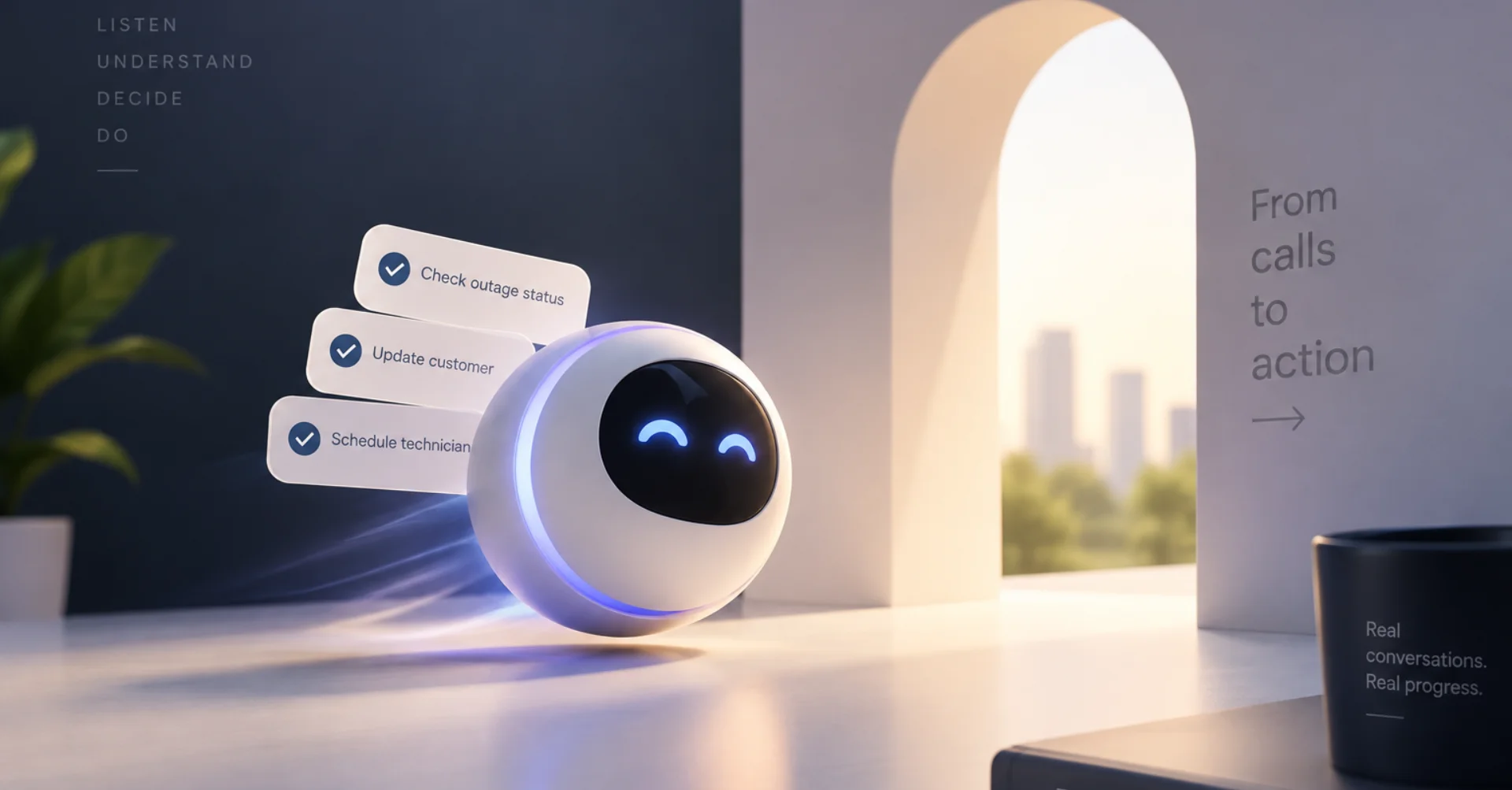
The AI answers the question, books an appointment, updates records, creates a ticket, or routes the call onward.
Step 5: Documentation and follow-up
After the conversation, information can be stored in structured form and follow-up processes can be launched automatically.
What to look for when choosing a solution
1. Voice quality and naturalness
An AI phone assistant must sound clear and pleasant. If the voice feels artificial or response times are too slow, adoption will suffer.
2. Low latency
Response speed matters on the phone. Long pauses feel unprofessional. Modern platforms are heavily optimized for this.
3. System integration
Without integrations, the AI remains isolated. The actual value only emerges when it is connected to CRM systems, calendars, helpdesks, webhooks, or internal data sources.
4. No-code or low-code usability
Many companies do not want long custom development projects. A visual and practical setup is often more useful than a full DIY approach.
5. Privacy and hosting
Especially in Europe, GDPR compliance is critical. If personal data is processed over the phone, hosting, processing terms, and access control should be clearly structured.
6. Human handoff
A good solution does not automate blindly. It recognizes when a person should take over.
7. Multilingual support
For international teams or diverse customer groups, multilingual support is a real advantage. Famulor supports multiple languages, which is important for scalable international operations.
Common misunderstandings about AI phone assistants
“It’s just a modern voicemail”
No. An AI phone assistant is not a digital tape recorder. It is a conversational agent that actively handles requests.
“Customers always want to speak to humans”
Not necessarily. Customers mainly want fast, clear, and helpful answers. If the AI resolves simple requests immediately and transfers complex cases smoothly, it is often well received.
“This only makes sense for large call centers”
Small and mid-sized businesses also benefit, especially if missed calls are expensive or teams are constantly interrupted.
“You need a development team”
Not necessarily. Modern platforms like Famulor are designed to implement workflows without major engineering projects.
Which industries benefit most from an AI phone assistant?
Trades
Pre-qualify requests
Detect emergencies
Prepare appointments
Create callback lists automatically
Healthcare
Appointment management
Standard information
Front desk relief
better availability
Real estate
Capture property inquiries
Pre-qualify prospects
Coordinate viewings
E-commerce
Order status
Returns questions
Availability
Automated intake of support cases
Law firms and consultancies
Initial client intake
Classify requests
Capture appointment needs in structured form
Agencies and service providers
Lead intake
Briefing capture
Appointment scheduling
Relief in day-to-day operations
Why Famulor is especially relevant here
The existing content on the Famulor site already shows that topics such as AI phone assistants, voice agents, AI call centers, appointment booking, GDPR, and integrations are central. To avoid content overlap, this article intentionally focuses on the precise distinction between a call assistant and an AI phone assistant.
Famulor becomes especially relevant when telephony is meant to become a real business process channel, not just a way to answer calls. That means:
handling inbound and outbound use cases
working with natural language
scaling across multiple languages
using SIP trunking
connecting with CRM, calendars, helpdesks, and automations
including live chat and other channels in the same setup
For a product overview, start with Famulor AI Phone Assistant and Famulor AI Call Center.
Conclusion
A call assistant is the general category for systems that support or automate calls. An AI phone assistant is the much more capable version: it understands speech, responds flexibly, automates processes, and connects telephony with your business systems.
If you only need to capture messages, a simple assistant may be enough. But if you want to improve availability, reduce team workload, qualify leads, automate appointments, and scale customer service, an AI phone assistant is the better choice.
That is exactly what Famulor is built for: a modern platform for AI-powered telephony, inbound and outbound automation, live chat, and deep integrations. If you want to turn your phone channel into a productive, scalable business process, Famulor is a strong first option.
Next step: If you want to see how an AI phone assistant could fit your workflows, start with the AI phone assistant overview or explore how an AI call center with Famulor can be structured.
FAQ
What is a call assistant?
A call assistant is a system that answers, routes, records, or structures phone calls.
What is an AI phone assistant?
An AI phone assistant is a voice-based assistant that understands natural language, responds to it, and can execute tasks such as appointment booking or lead qualification.
What is the difference between a call assistant and an AI phone assistant?
A standard call assistant is often rule-based, while an AI phone assistant understands meaning and supports dynamic conversations.
Is an AI phone assistant just voicemail?
No. An AI phone assistant can do much more than record messages. It can answer questions, collect data, and trigger business processes.
Can an AI phone assistant book appointments?
Yes. With calendar integration, it can check available slots, create appointments, reschedule, or cancel them.
Who benefits from an AI phone assistant?
Especially businesses with many calls, repetitive questions, frequent appointments, or high requirements for availability.
Can an AI phone assistant transfer calls to humans?
Yes. Good systems recognize complex cases and transfer them to staff together with context.
Can an AI phone assistant be GDPR compliant?
Yes, if the platform, hosting, and data processing are set up in a privacy-compliant way.
Can an AI phone assistant speak multiple languages?
Yes. Modern platforms like Famulor support multilingual phone automation.
What is the best solution for businesses?
For companies that want to move beyond answering calls and instead automate telephony intelligently, a platform like Famulor is a particularly strong fit.
Rédacteur chez Famulor