Inhoud samenvatten met:




AI Outbound Voice Campaigns for Customer Win-Back: The 2026 Playbook
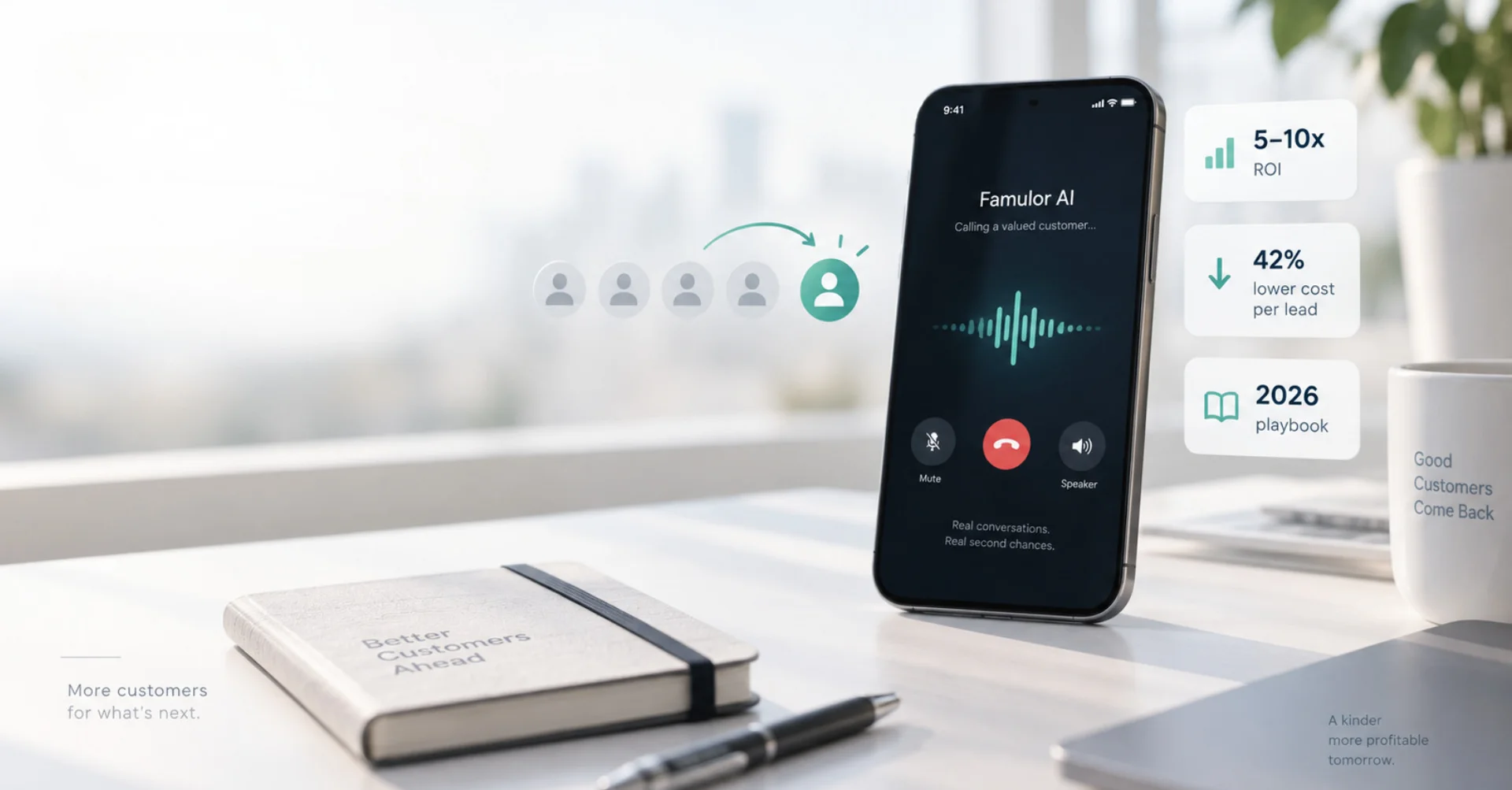
Winning back a lapsed customer costs roughly one-fifth of acquiring a new one — and delivers a five-to-ten-times return on investment. Yet most businesses let churned contacts gather dust in their CRM. Companies that deploy AI-powered outbound voice campaigns turn those dormant records into predictable revenue. This guide walks you through the complete win-back workflow: how to segment, script, launch, and measure an AI voice campaign that brings customers back — and why Famulor is the platform built to do it.
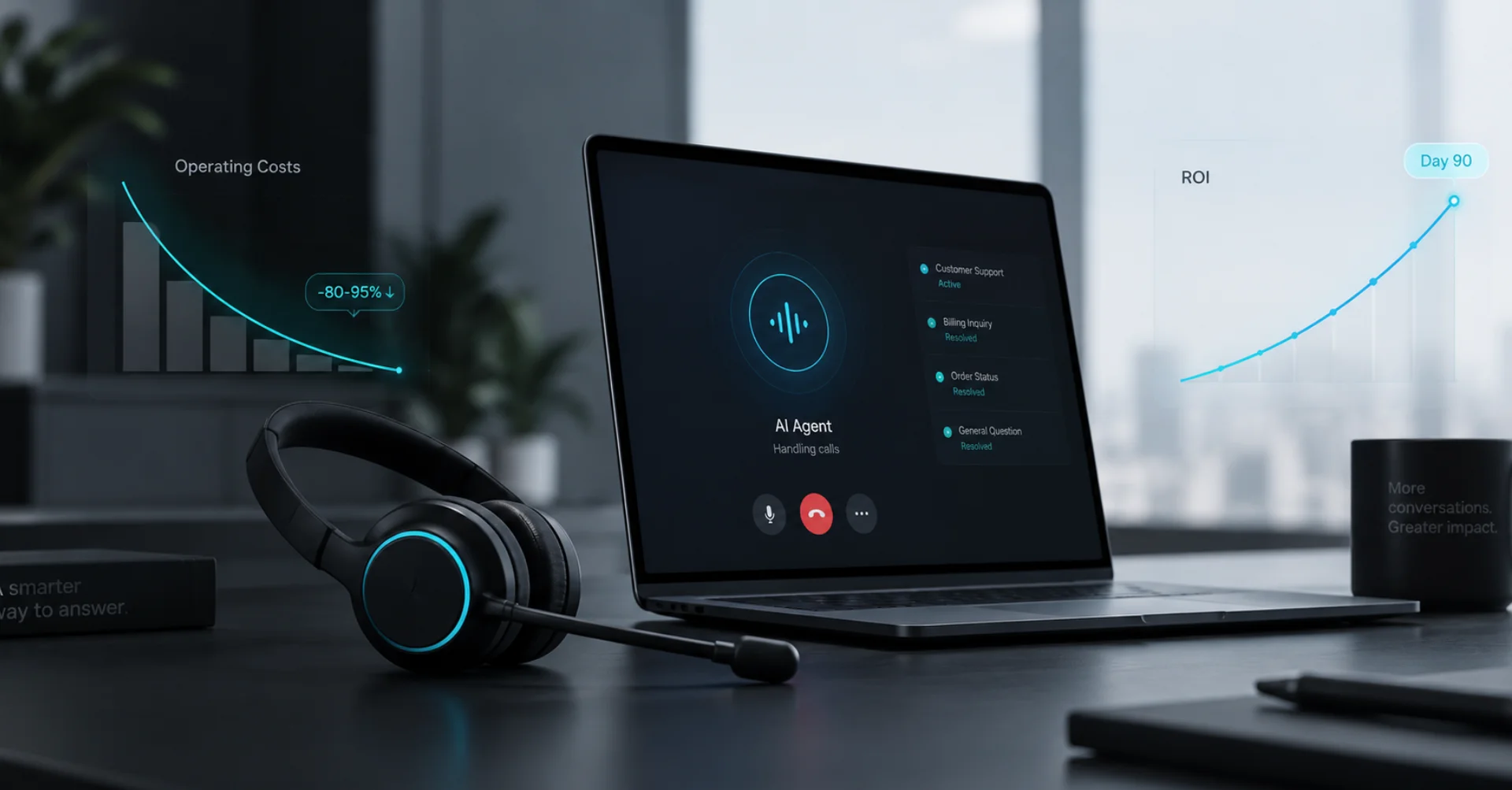
The headline number: organizations running AI voice agent campaigns for customer reactivation report up to 42 percent lower cost per qualified lead and a 30 to 50 percent uplift in meeting-booking rates compared to manual SDR teams. Meanwhile, the cost per productive minute drops from roughly $0.57 (human SDR, fully loaded) to $0.20–$0.30 for an AI agent — with zero ramp time, no PTO, and no attrition.
What Is an AI-Powered Win-Back Campaign?
A win-back campaign targets former customers or inactive leads to re-engage them. The traditional toolkit includes email drip sequences, manual call blitzes, and retargeting ads. Each has limits: emails land in spam, retargeting is expensive, and manual calls do not scale. An AI phone assistant solves the scaling problem by placing hundreds or thousands of personalized calls per day — at the right time, in the customer's language, with real conversational ability.
Unlike robocalls, modern AI voice agents conduct genuine two-way conversations. They detect objections, respond empathetically, adapt their script in real time, and book appointments directly into your calendar or CRM. Famulor delivers all of this in a no-code platform with over 300 integrations into the tools you already use.
Why Win-Back Is Your Cheapest Revenue Channel
The economics are compelling. While new-customer acquisition costs range from $50 to $500 per converted lead depending on the industry, reactivation costs a fraction of that. The reason: the former customer already knows your product, has a purchase history, and often has a specific churn reason you can address directly.
| Metric | New Acquisition | AI Win-Back Campaign |
|---|---|---|
| Cost per contact attempt | $15–$50 | $0.50–$2.00 |
| Average ROI | 1.5–3x | 5–10x |
| Conversion rate | 2–5% | 5–12% (leads dormant 90+ days) |
| Time per contact (manual) | 15–30 min | 3–5 min (automated) |
| Scalability | Linear with headcount | Virtually unlimited |
There is also a psychological advantage at play. Former customers already have an emotional connection to your brand. A personalized call that references their individual history creates a fundamentally different dynamic than a cold call to a stranger. Data shows that average call duration in win-back campaigns runs 40 percent longer than in cold outreach — a clear signal that recipients are open to the conversation.
The math becomes especially compelling when you factor in customer lifetime value. A reactivated customer with an annual spend of $2,000 and an average retention of three more years yields a CLV of $6,000 — at reactivation costs often under $10. No performance marketing channel offers that kind of leverage.
Gartner projects that AI agents will outnumber human sellers 10-to-1 by 2028. Businesses that automate their win-back processes now gain a structural cost advantage that compounds over time.
How to Build a Win-Back Campaign with Famulor: Step by Step
Setting up an automated reactivation campaign with the Famulor outbound platform follows a clear five-step process:
Step 1: Segmentation and scoring. Export your inactive customers from your CRM, filtered by inactivity period (90, 180, or 365+ days), revenue history, and churn reason. Famulor's webhook integrations pull this data directly from HubSpot, Salesforce, Pipedrive, or any platform with an API.
Step 2: Build your conversation script. Use Famulor's no-code flow builder to create a dynamic call script with personalization variables. Example for a dental practice with 60 staff, Dr. Miller Dentistry in Portland: "Good morning, Mrs. Johnson — this is Dr. Miller's office. We noticed your last checkup was over 18 months ago. Would you like us to find a convenient time for you?" The script adapts automatically based on the patient's last visit date, treatment history, and preferred language.
Step 3: Configure campaign settings. Set calling hours (Famulor automatically respects legal calling windows per jurisdiction), select your TTS voice from over 40 languages, and define escalation rules for when the agent should hand off to a human.
Step 4: CRM writeback and follow-up. After every call, the agent writes the outcome back to your CRM automatically: appointment booked, callback requested, or no interest. For warm leads, a WhatsApp or live chat follow-up triggers automatically — all orchestrated within the Famulor platform.
Step 5: Measure and optimize. Famulor's real-time dashboard shows you reachability rate, call duration, appointment booking rate, and cost per reactivated customer. A/B test different scripts and call times with a few clicks to find your highest-converting combination.
Predictive Scoring: Call the Right Customers First
Not every inactive customer is equally valuable. Intelligent scoring prioritizes contacts by reactivation probability and expected CLV. Key factors for an effective scoring model include duration of inactivity (shorter is better), historical revenue, churn reason (price vs. service vs. passive drift), email engagement in the last 30 days, and seasonal patterns.
With Famulor's webhook logic, you can import these scores directly from your CRM or data warehouse and let the system determine call order automatically. High scorers get called first; low-priority contacts receive a WhatsApp message instead. This segmented approach increases campaign efficiency by 25 to 40 percent compared to random call ordering.
Real-world example: A SaaS company with 2,000 churned accounts sorted its contacts into three tiers — High (last activity under 90 days, ARR above $5,000), Medium (90–180 days, ARR $1,000–$5,000), and Low (over 180 days or ARR under $1,000). High-tier contacts received a personalized AI call with direct handoff to an account manager. Medium-tier got a standard AI call with demo booking option. Low-tier received an automated WhatsApp message only. Result: 18 percent win-back rate in the high tier, 7 percent in medium, and 2 percent in low — with optimal resource allocation.
Best Practices and Common Mistakes
Best Practice 1: Timing is everything. The highest reactivation rates occur when you contact customers between 90 and 180 days after their last interaction. Beyond that window, the probability of re-engagement drops significantly. Famulor supports time-triggered campaigns that launch automatically once a contact enters a defined inactivity segment.
Best Practice 2: Personalize, don't mass-dial. Use purchase history to make the call relevant: "You were on our Premium plan last year — we've since added three features that match your exact use case." Generic messages yield 60 to 70 percent lower conversion rates compared to personalized outreach.
Best Practice 3: Multichannel follow-up. A single call is rarely enough. Top-performing campaigns combine an initial voice call with a WhatsApp message (if unreached) and a follow-up email with a concrete offer. Famulor's automation platform orchestrates all channels from one interface, with no need for Zapier or Make in between.
Common Mistake 1: Overly aggressive scripting. Win-back is not cold calling. The customer knows you — but they left for a reason. An empathetic opener with an open question ("Is there anything we could have done better?") outperforms an immediate discount offer every time.
Common Mistake 2: No opt-out option. Always provide a simple way to stop future calls. This is legally required under GDPR and TCPA, and it protects your brand reputation. Famulor manages suppression lists automatically.
Common Mistake 3: One-off campaign instead of a continuous process. Win-back works best as an always-on automation that contacts customers as soon as they enter a defined inactivity segment — not as a one-time seasonal push.
Best Practice 4: Use seasonal hooks. Reactivation rates increase noticeably when you tie your call to a relevant occasion. "Winter is coming" for an HVAC company, "Your annual checkup is overdue" for a medical practice, or "Black Friday is around the corner — as a former customer, you get early access" for an online retailer. These contextual hooks boost appointment booking rates by 20 to 35 percent compared to generic scripts.
Best Practice 5: Conversation analytics for continuous improvement. Every AI call is recorded and transcribed. Analyze the most common objections systematically: if 40 percent of customers cite price as their churn reason, your script should proactively include a special offer. If 30 percent mention lack of support, point them to your new live chat channel. Famulor provides post-call evaluations that automatically detect these patterns and surface actionable recommendations.
Industry Examples: Who Benefits Most?
Healthcare — Dr. Miller Dentistry, Portland, 60 staff. Out of 3,200 patients on file, 840 had not visited in over 12 months. After a four-week AI outbound campaign: 380 reached, 127 appointments booked — a 33 percent reactivation rate. Cost per booked appointment: under $2. A manual calling campaign by the practice manager would have taken six weeks for the same volume.
E-Commerce — Fashion retailer with 15,000 inactive customers. Segmented by last purchase (180+ days) and average order value (over $80). The AI voice agent called the top 2,000: "We just launched our fall collection — as a loyal customer, you get 15 percent off your next order." Result: 8 percent conversion, average order value $112.
SaaS — B2B software vendor with 600 expired trials. Outbound campaign 14 days post-trial: "Did you run into any setup issues? Our team can show you how to get full value from the platform in 15 minutes." Twelve percent booked a demo, 4 percent converted to paid. The AI agent handled first-touch qualification; complex technical questions were automatically escalated to a solution engineer.
Trades — Schneider Heating, 45 employees, Germany. 1,100 existing customers who had not booked a maintenance appointment in over two years. AI outbound campaign with a seasonal hook: "Winter is coming — we still have open slots for boiler maintenance in October." 290 appointments in three weeks, completely filling the October capacity gap.
Bereken je ROI met geautomatiseerde gesprekken
Ontdek hoeveel je per maand bespaart via AI voice agents.
ROI Resultaat
ROI 0%
Geen creditcard nodig
Famulor vs. Manual Win-Back: The Cost Comparison
| Factor | Manual SDR Team | Famulor AI Voice Agent |
|---|---|---|
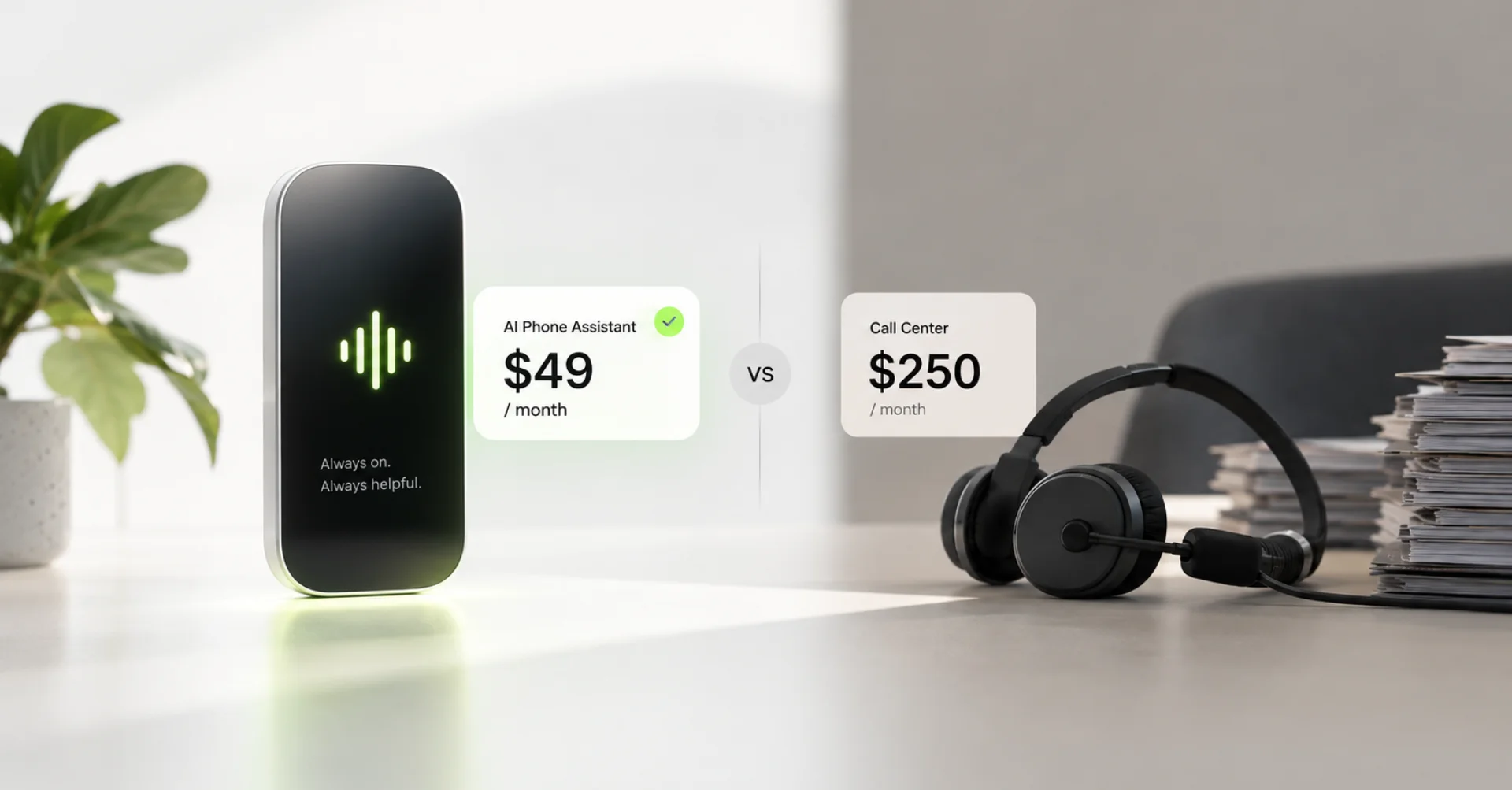
| Cost per call minute | ~$0.50 (fully loaded) | $0.18–$0.27 |
| Calls per day (per agent) | 40–60 | 500–2,000+ |
| Availability | Mon–Fri, 9–5 | 24/7, 365 days |
| Languages | 1–2 per rep | 40+ out of the box |
| CRM update | Manual, error-prone | Automatic, real-time |
| Scale-up time | Weeks (hiring + onboarding) | Minutes (campaign setup) |
| Payback period | 6–12 months | 3–6 months |
The key advantage of Famulor over standalone outbound dialers: the platform combines the AI call with automated post-call nurture via WhatsApp, live chat, and email — all from a single interface, no Zapier or Make required. With SIP trunking, you keep your existing phone numbers and VoIP infrastructure, and no-code automations eliminate the need for developers.
Conclusion: Win-Back as a Strategic Revenue Lever
AI-powered win-back campaigns are not a nice-to-have — they are one of the most cost-efficient growth levers a business can activate today. The combination of low contact costs, deep personalization, and unlimited scalability makes voice AI outbound the ideal weapon against customer churn.
Famulor provides the complete infrastructure: outbound campaign engine, 40+ languages, 300+ integrations into your existing stack, automatic CRM writeback, and multichannel follow-up — all without writing a single line of code. Start your free trial today and win back your first customers within 48 hours.
Next step: Set up your first win-back campaign in under 10 minutes using the Famulor outbound dashboard. Import your inactive contacts, choose a script template, and launch a test run with 50 contacts — for free.
Probeer onze AI-assistent
Ervaar hoe natuurlijk onze AI-telefoonassistent klinkt.
Vul uw gegevens in en ontvang binnen enkele seconden een oproep van onze AI-agent.
De agent is getraind om over Famulor-diensten te praten en afspraken te maken.
Demo AI agent
Famulor representative
FAQ
What is an AI win-back campaign?
An AI win-back campaign uses a voice agent to automatically call former or inactive customers, re-engage them with personalized messaging, and drive them back to your business — at scale and around the clock.
How much does an AI call cost compared to a manual call?
An AI-powered call costs between $0.18 and $0.30 per minute. A human SDR costs roughly $0.50 per productive minute fully loaded — before factoring in recruiting, training, and downtime.
What reactivation rates can I expect?
For customers dormant 90 to 180 days, typical reactivation rates range from 5 to 12 percent. With personalized scripting and optimal timing, top campaigns achieve up to 33 percent.
Is an AI outbound campaign GDPR-compliant?
Yes, provided you have valid consent or legitimate interest. Famulor includes built-in suppression lists, automatic opt-out management, and recording controls to meet GDPR and TCPA requirements.
Which CRM systems does Famulor integrate with?
Famulor supports over 300 integrations including HubSpot, Salesforce, Pipedrive, Zoho, Monday.com, and many more. Connections are set up via no-code automation or webhook.
How quickly can I launch a win-back campaign?
With Famulor, you can set up a test campaign in under 10 minutes. Import your contacts, select a script template, and run a pilot with 50 contacts to validate your approach.
Does win-back work for small businesses?
Absolutely. Automated reactivation is especially valuable for small businesses like dental practices, trades companies, and local service providers, where manual calling is not feasible with limited staff.
What languages can the AI voice agent use?
Famulor supports over 40 languages including English, German, French, Spanish, Turkish, Arabic, and Mandarin. Multilingual campaigns can be set up without hiring additional staff.
What happens if the customer does not answer?
Famulor automatically detects voicemail and can trigger a follow-up via WhatsApp or SMS. The contact is scheduled for a retry at an optimal time window.
Can I use my existing phone numbers for the campaign?
Yes. Famulor's SIP trunking lets you connect your existing numbers and VoIP provider, so customers see a familiar caller ID on their screen.
Auteur bij Famulor