Inhoud samenvatten met:




AI Voice Agent voor self-storage: Automatiseer je verhuurgesprekken
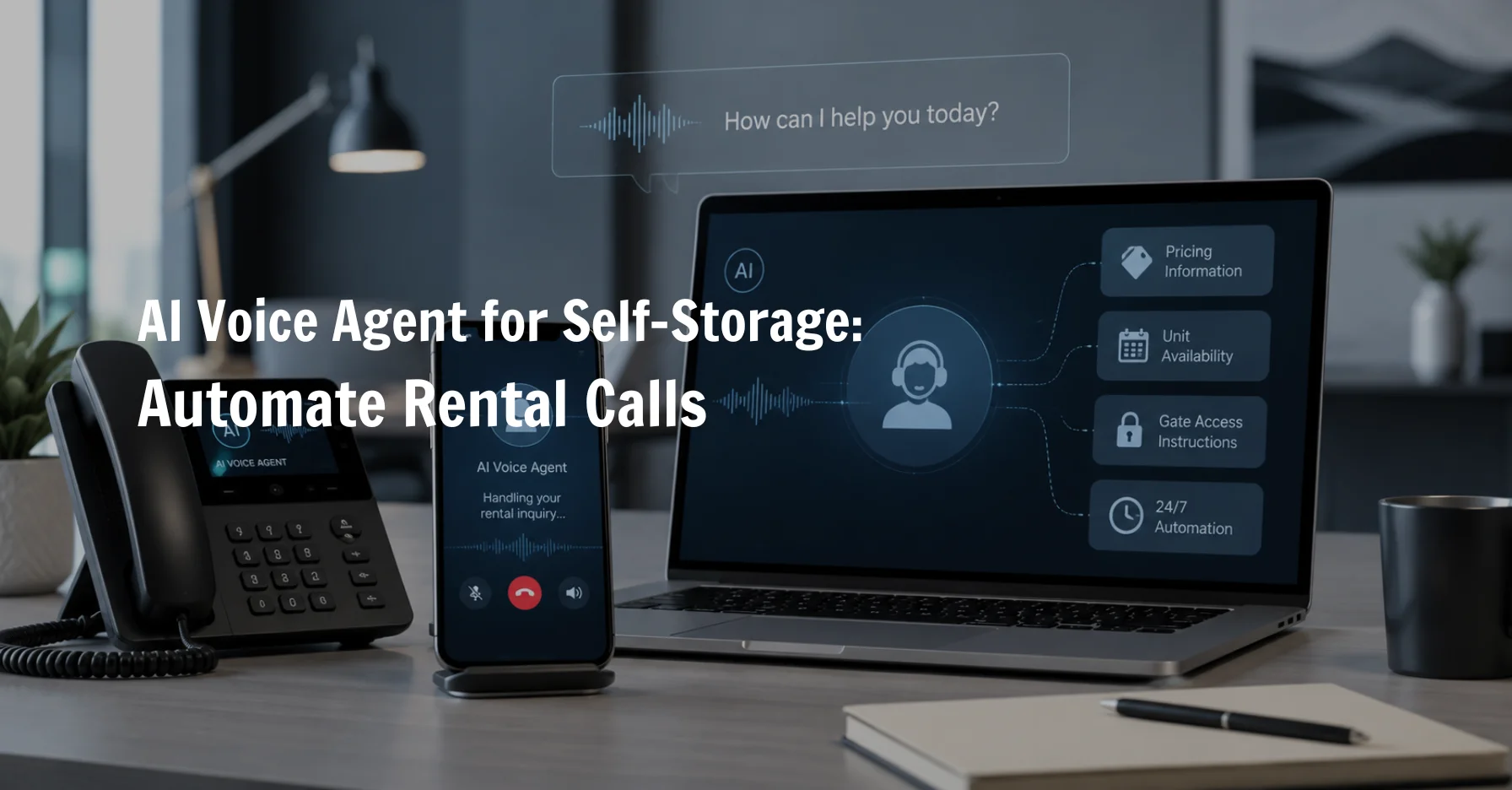
Self-storage is een business die aan de telefoon wordt beslist: potentiële huurders bellen doorgaans meerdere locaties achter elkaar en huren bij degene die als eerste opneemt. Dat is precies de blinde vlek van de sector — een groot deel van de gesprekken komt buiten kantooruren binnen en bellers die de voicemail krijgen, bellen zelden terug. Een AI voice agent lost dit op door 24/7 in real-time vragen over prijzen, beschikbaarheid en toegang te beantwoorden, units te reserveren en alleen de echt complexe zaken door te zetten naar je team.
Voor exploitanten die één of meerdere locaties beheren, is dit geen luxe meer, maar een financiële noodzaak. Elke gemiste oproep is een potentieel misgelopen huurcontract dat maanden of jaren aan terugkerende inkomsten had kunnen genereren.
Wat is een AI voice agent voor self-storage locaties?
Een AI voice agent is een spraakgestuurd systeem dat inkomende en uitgaande gesprekken voor een self-storage locatie volledig of gedeeltelijk afhandelt. Het systeem koppelt aan je bestaande telefoonnummer, kent de beschikbaarheid en prijzen van elke unit uit het facility management systeem (FMS), kan reserveringen maken, toegangscodes vrijgeven na verificatie en vragen beantwoorden over openingstijden, opzegtermijnen of facturatie. In tegenstelling tot een klassiek keuzemenu (IVR) voert de agent een natuurlijk gesprek, begrijpt hij vervolgvragen en reageert hij dynamisch op wat de beller daadwerkelijk zegt.
Technisch gezien bestaat zo'n agent uit vier componenten: spraakherkenning die audio omzet naar tekst, een taalmodel dat de intentie van de beller begrijpt en het gesprek stuurt, spraaksynthese die natuurlijk klinkende antwoorden produceert, en integraties met de systemen van de locatie — FMS, agenda, facturatie — zodat de agent niet alleen praat, maar ook actie onderneemt.
Waarom self-storage exploitanten nu in actie moeten komen
Een groot deel van de aanvragen voor self-storage komt buiten kantooruren binnen — 's avonds, in het weekend of tijdens de lunchpauze wanneer er niemand bij de receptie zit. Tegelijkertijd wordt een aanzienlijk deel van de gesprekken niet beantwoord omdat het personeel net een unit laat zien, een vrachtwagen aan het instrueren is of papierwerk afhandelt. Wanneer een beller de voicemail krijgt, belt het merendeel niet terug; ze bellen de volgende aanbieder op hun lijstje. Met een gemiddelde klantwaarde die oploopt tot honderden of zelfs duizenden euro's per jaar, loopt dit snel op tot een van de duurste blinde vlekken in de bedrijfsvoering.
Er is nog een factor: bellers die van plan zijn een unit te huren, beslissen vaak aan de telefoon, niet pas na een fysiek bezoek. Wie op dat moment niet bereikbaar is, verliest de klant aan een concurrent die wel direct opneemt. Aanvragen voor toegangscodes zijn, hoewel minder frequent, extra tijdsgevoelig: een huurder die 's avonds voor een gesloten hek staat, verwacht binnen seconden een oplossing, niet pas de volgende werkdag.
Daarnaast is het voor kleine en middelgrote locaties financieel zelden rendabel om de receptie 24/7 te bemannen. Een AI voice agent schaalt daarentegen mee met het belvolume zonder dat er extra personeel nodig is voor daluren.
De 5 meest voorkomende gesprekstypes — en hoe een AI agent ze afhandelt
De meeste gesprekken met self-storage locaties komen neer op een handvol terugkerende vragen. Die herhaalbaarheid maakt de sector uitermate geschikt voor voice AI:
| Gesprekstype | Typisch aandeel | Hoe de AI agent reageert |
|---|---|---|
| Prijsinformatie | Zeer gebruikelijk | Geeft actuele prijzen per unitgrootte door vanuit de kennisbank, inclusief lopende acties |
| Beschikbaarheid | Zeer gebruikelijk | Checkt live in het FMS welke units vrij zijn en stelt alternatieven voor |
| Reservering / huur | Gebruikelijk | Noteert contactgegevens, maakt een reservering en boekt optioneel een bezichtiging via de agenda |
| Toegangscode / openingstijden | Tijdskritiek, het hele jaar door | Verifieert de huurder (naam, unitnummer, beveiligingsvraag) voordat de code wordt vrijgegeven |
| Facturatie / betaling | Regelmatig, vooral rond vervaldata | Legt openstaande bedragen uit, verwerkt betalingen of verbindt door met de administratie |
Deze vijf categorieën kunnen volledig of grotendeels worden geautomatiseerd zonder verlies van servicekwaliteit. Sterker nog, de reactietijd daalt van minuten of uren naar seconden, ongeacht hoeveel gesprekken er tegelijkertijd binnenkomen.
Traditionele receptie vs. AI voice agent
Het verschil wordt duidelijk wanneer je een traditionele receptie of voicemail vergelijkt met een AI voice agent:
| Criterium | Traditionele receptie / voicemail | AI voice agent |
|---|---|---|
| Beschikbaarheid | Alleen tijdens kantooruren | 24/7, inclusief weekenden en feestdagen |
| Reactietijd | Minuten tot uren (terugbellen) | Direct, in real-time |
| Gelijktijdige gesprekken | Beperkt tot beschikbaar personeel | Onbeperkt, parallel afgehandeld |
| Data-actualiteit | Afhankelijk van kennis personeel | Live opvraging uit het FMS |
| Schalen over locaties | Extra personeel nodig per locatie | Eén platform, kennis per locatie |
Selectiecriteria: wat een self-storage AI agent moet kunnen
Niet elk voice AI-platform is even geschikt voor een self-storage locatie. De belangrijkste eigenschappen:
- SIP-integratie: je bestaande telefoonnummer en systeem moeten koppelen zonder gedoe met nummerbehoud — SIP-integratie laat je vrijwel elke VoIP- of PBX-aanbieder direct aansluiten.
- Kennisbank: unitgroottes, prijzen, acties, huisregels en opzegtermijnen moeten als gestructureerde, altijd aanpasbare kennis beschikbaar zijn, meestal via een kennisbank.
- Mid-call tools voor live data: beschikbaarheid, huurdersstatus en saldo veranderen constant — de agent moet tijdens het gesprek het FMS kunnen raadplegen in plaats van antwoorden met verouderde informatie. Dat is precies waar mid-call tools voor zijn.
- Veilige overdracht naar mensen: geschillen, incassoprocedures of gefrustreerde bellers horen bij een mens thuis. Een betrouwbare gespreksoverdracht met een samenvatting van het gesprek is onmisbaar.
- Meertalige ondersteuning: in stedelijke gebieden met een diverse klantenkring betaalt het vermogen om in meerdere talen te communiceren zich snel terug.
- Agenda- en CRM-integratie: bezichtigingen en reserveringen moeten automatisch in de agenda landen, bijvoorbeeld via de Google Calendar-integratie, in plaats van dat ze achteraf handmatig moeten worden ingevoerd.
- No-code configuratie: exploitanten zijn zelden IT-teams. Een visuele flow-builder zonder code maakt het mogelijk dat personeel zelf snel prijzen of scripts kan aanpassen.
Scenario uit de praktijk: een keten met drie locaties
Een exploitant met drie locaties — bijvoorbeeld één in een grote stad en twee in nabijgelegen middelgrote steden — kent dit probleem: een locatiemanager pendelt tussen locaties, de telefoon gaat op alle drie de plekken tegelijk en tijdens piekperiodes aan het begin van de maand, wanneer veel huurcontracten starten of eindigen, is de beschikbaarheid onoverzichtelijk. Met een AI voice agent krijgt elke locatie een eigen kennisbank met lokale prijzen, unitgroottes en beschikbaarheid, terwijl de kernlogica — verificatie, escalatieregels, betalingsafhandeling — centraal wordt beheerd. Bellers worden automatisch doorverbonden naar de juiste locatie zonder een ander nummer te hoeven bellen. De locatiemanager ontvangt op zijn beurt alleen de gesprekken die echt menselijk oordeel vereisen.
Implementatie, stap voor stap
Het uitrollen van een AI voice agent voor een self-storage locatie verloopt in een aantal duidelijke stappen:
- Koppel het telefoonnummer: verbind het bestaande vaste of VoIP-nummer via een SIP-trunk, zonder nummerbehoud-gedoe en zonder downtime. De locatie blijft bereikbaar op het vertrouwde nummer.
- Vul de kennisbank: importeer unitgroottes, prijzen, locatiedetails, huisregels, opzegtermijnen en veelgestelde vragen — idealiter direct uit bestaande prijslijsten en FAQ-documenten.
- Bouw de gespreksflow: gebruik een visuele flow-editor om de standaardpaden te definiëren — prijzen, beschikbaarheid, reservering, toegangscode, facturatie — en stel per pad in wanneer de agent zelfstandig beslist en wanneer hij escaleert.
- Koppel het FMS: gebruik mid-call tools om beschikbaarheid en huurdersgegevens uit het FMS live opvraagbaar te maken, in plaats van te vertrouwen op een statische snapshot.
- Configureer verificatie: definieer regels voor wanneer en hoe een toegangscode alleen na succesvolle identiteitsverificatie wordt vrijgegeven, inclusief logboekregistratie van elke verstrekte code.
- Testen: voer interne testgesprekken uit met realistische scenario's, inclusief lastigere gevallen zoals geschillen, vage verzoeken of meertalige gesprekken.
- Livegang en evaluatie: lanceer locatie voor locatie en evalueer regelmatig gespreksverslagen om de flow te blijven verbeteren en terugkerende kennishiaten te dichten.
Beveiliging van toegangscodes — best practices
Aanvragen voor toegangscodes behoren tot de meest tijdskritische en tegelijkertijd meest gevoelige gesprekken die een self-storage locatie ontvangt: een huurder staat voor het hek en komt er niet in. Daarom heeft dit gebruiksscenario duidelijke beveiligingsregels nodig:
- Een toegangscode wordt alleen vrijgegeven na succesvolle verificatie — minimaal naam plus unitnummer, idealiter aangevuld met een tweede beveiligingsvraag.
- Elke vrijgave van een code wordt gelogd, inclusief tijdstip en het nummer van de beller, zodat het controleerbaar blijft bij een geschil.
- Als verificatie mislukt, escaleert de agent automatisch naar een medewerker of beveiliging in plaats van het gesprek simpelweg te beëindigen.
- Openstaande saldi of geblokkeerde accounts worden gecontroleerd voordat een code wordt vrijgegeven, zodat toegang altijd overeenkomt met de contractstatus.
- Codes worden nooit ongevraagd via sms naar niet-geverifieerde nummers gestuurd — de vrijgave blijft gekoppeld aan het live, geverifieerde gesprek.
Uitgaande gesprekken: betalingsherinneringen en contractverlengingen
Een AI voice agent voert niet alleen inkomende gesprekken, maar kan ook proactief uitgaande gesprekken voeren. Veelvoorkomende toepassingen zijn vriendelijke betalingsherinneringen voor de vervaldatum, herinneringen aan aflopende contracten met een verlengingsaanbod, of een korte tevredenheidscheck kort na de verhuizing. Deze gesprekken kunnen als campagne worden ingepland en automatisch op de achtergrond draaien terwijl het team zich richt op de operatie en persoonlijk klantcontact. Dezelfde zorgvuldigheid als bij inkomende gesprekken geldt hier: duidelijke opt-out opties, redelijke beltijden en een directe overdracht naar een mens zodra de huurder daarom vraagt.
Kosten en ROI — wat loont voor exploitanten
Voor de meeste locaties is de rekensom simpel: een AI voice agent kost een fractie van een extra receptionist, maar dekt veel meer uren — 24 uur per dag in plaats van 8 tot 10, zeven dagen per week in plaats van vijf of zes. Zelfs als slechts een klein deel van de voorheen gemiste gesprekken converteert naar een daadwerkelijk huurcontract, verdient de investering zich vaak binnen enkele maanden terug. Een betrouwbare berekening komt neer op drie getallen: hoeveel gesprekken worden er momenteel per maand gemist, wat is de gemiddelde waarde van een nieuw contract over de gehele looptijd en wat zijn de kosten van de gekozen AI voice agent per minuut of per maand.
Bereken je ROI met geautomatiseerde gesprekken
Ontdek hoeveel je per maand bespaart via AI voice agents.
ROI Resultaat
ROI 0%
Geen creditcard nodig
Best practices en veelgemaakte fouten
Exploitanten die een AI voice agent uitrollen, trappen vaak in dezelfde vermijdbare valkuilen:
- Te rigide gespreksflow: een agent die alleen vaste scripts volgt, voelt al snel als een slecht keuzemenu. Beter: sta open vragen toe en laat de agent flexibel reageren op wat de beller daadwerkelijk zegt.
- Verouderde kennisbank: wanneer prijzen of beschikbaarheid niet synchroon lopen met het FMS, doet de agent beloftes die hij niet kan waarmaken. Live datatoegang wint het altijd van een statische prijslijst.
- Ontbrekende escalatiepaden: niet elk gesprek kan worden geautomatiseerd. Een duidelijk gedefinieerd overdrachtspunt naar een mens — bijvoorbeeld voor klachten of incassozaken — voorkomt frustratie.
- Geen evaluatieproces: exploitanten die nooit gespreksverslagen evalueren, verspillen de meest waardevolle databron voor het continu verbeteren van de flow en het spotten van patronen in gemiste leads.
- Eén agent voor elke locatie zonder lokale nuance: locatiespecifieke prijzen, acties en beschikbaarheid moeten strikt gescheiden blijven — anders citeert de agent prijzen die op die specifieke locatie niet gelden.
Conclusie
Self-storage is een business die aan de telefoon wordt beslist — wie als eerste en competent antwoordt, wint het contract. Een AI voice agent handelt de vijf meest voorkomende gesprekstypes 24/7 af, verifieert bellers veilig voordat hij toegangscodes vrijgeeft en zet alleen de echt complexe zaken door naar een mens. Famulor combineert SIP-integratie, een live aanpasbare kennisbank, mid-call tools voor directe FMS-toegang en meer dan 300 integraties in een no-code platform — zonder dat exploitanten hun bestaande telefoonnummer of software hoeven te wijzigen. De logische volgende stap: voer een testgesprek met een bestaande locatie en krijg de eerste flow binnen een dag live.
Probeer onze AI-assistent
Ervaar hoe natuurlijk onze AI-telefoonassistent klinkt.
Vul je gegevens in en ontvang binnen enkele seconden een oproep van onze AI-agent.
De agent is getraind om over Famulor-diensten te praten en afspraken te maken.

Demo AI-agent
Famulor medewerker
FAQ
Kan een AI voice agent veilig toegangscodes voor self-storage units vrijgeven?
Ja, zolang het vrijgeven van de code gekoppeld is aan verificatie — doorgaans naam, unitnummer en een beveiligingsvraag. Elke vrijgave wordt gelogd en als de verificatie mislukt, escaleert de agent automatisch naar een medewerker.
Moet het bestaande telefoonnummer van de locatie veranderen?
Nee. SIP-integratie verbindt het bestaande nummer direct, ongeacht de huidige VoIP- of PBX-aanbieder, zonder nummerbehoud en zonder downtime.
Hoe actueel is de prijs- en beschikbaarheidsinformatie die de agent geeft?
Via mid-call tools raadpleegt de agent het facility management systeem live tijdens het gesprek, waardoor prijzen en beschikbaarheid altijd de actuele status weerspiegelen.
Wat gebeurt er bij complexe verzoeken zoals geschillen of incassoprocedures?
Die gevallen worden via gespreksoverdracht met een samenvatting doorgezet naar een medewerker, in plaats van dat de agent ze alleen afhandelt.
Kan één agent meerdere locaties van een self-storage keten dekken?
Ja. Elke locatie krijgt een eigen kennisbank met lokale prijzen en beschikbaarheid, terwijl de kernlogica centraal wordt beheerd.
Hoe lang duurt het om een AI voice agent voor een locatie in te stellen?
Een telefoonnummer, kennisbank en een eerste gespreksflow kunnen doorgaans binnen een dag worden opgezet en getest voordat de locatie live gaat.
Worden gesprekken buiten kantooruren ook gedekt?
Ja — dat is een van de kernvoordelen. De agent beantwoordt gesprekken 24/7, inclusief avonden, weekenden en feestdagen wanneer er geen personeel op locatie is.
Kan de agent koppelen met een bestaand boekhoudsysteem?
Ja. Via het no-code automatiseringsplatform met meer dan 300 integraties kunnen betalings- en facturatiegegevens worden gekoppeld aan gangbare boekhoud- en CRM-systemen.
Kan de agent ook uitgaande gesprekken voeren, zoals betalingsherinneringen?
Ja. Met campagnes kun je uitgaande gesprekken inplannen en automatiseren voor betalingsherinneringen, contractverlengingen of tevredenheidschecks.

Auteur bij Famulor