Inhoud samenvatten met:




Waarom je AI-voice-agent instructies niet opvolgt — en hoe je dit oplost
Je hebt de perfecte systeemprompt gebouwd. Je hebt elke regel, elk randgeval en elke verboden actie gedefinieerd. En toch boekte je AI-voice-agent een afspraak op zondag, gaf een prijs door die je nooit had goedgekeurd en schakelde midden in het gesprek over naar het Engels — op een lijn die uitsluitend voor Duits bedoeld was. Het probleem is niet je prompt. Het probleem is het opvolgen van instructies — en in 2026 blijft dit de grootste onopgeloste uitdaging voor voice-AI in productie.
Het opvolgen van instructies is het vermogen van een AI-model om betrouwbaar de regels uit de systeemprompt te gehoorzamen gedurende een volledig gesprek. Hoewel grote taalmodellen tekstgebaseerde benchmarks hebben verzadigd, falen de meeste in de praktijk zodra gesprekken langer duren dan vijf beurten, bellers onderbreken of er complexe functie-aanroepen nodig zijn. Dit artikel legt de technische oorzaken uit, onthult wat benchmarks missen bij voice-interacties en laat zien hoe platforms zoals Famulor dit probleem systematisch oplossen.
Het dilemma tussen snelheid en intelligentie: waarom je voice-agent de regels vergeet
De kernuitdaging van de voice-AI-industrie in 2026 laat zich in één zin samenvatten: de slimme modellen zijn te traag en de snelle modellen zijn te onbetrouwbaar. Kwindla Hultman Kramer, oprichter van Pipecat, zegt het onomwonden: de meeste voice-agents in productie draaien nog op 18 maanden oude modellen zoals GPT-4o en Gemini 2.5 Flash. Frontier-modellen zoals GPT-5, Claude Opus en Gemini 3 leveren superieure instructieopvolging, maar zijn simpelweg te traag voor real-time telefonie, waarbij bellers verwachten dat antwoorden binnen 500 milliseconden komen.
De gevolgen zijn meetbaar. Tests door Pipecat toonden aan dat functie-aanroepen — het vermogen om acties te triggeren zoals het boeken van afspraken of het bijwerken van CRM-records — merkbaar verbeterden in de eerste drie beurten van een gesprek. Maar functie-aanroepen na 20 beurten? Geen enkele verbetering. De trainingsdata van huidige modellen bevat simpelweg niet genoeg voorbeelden van lange gesprekken met veel beurten om betrouwbaarheid te garanderen.
Vijf waarschuwingssignalen dat je voice-agent moeite heeft met instructies opvolgen
Voordat je het opvolgen van instructies kunt repareren, moet je herkennen wanneer het misgaat. Deze vijf symptomen komen het vaakst voor in productieomgevingen:
- Regelamnesie na 5+ beurten: De agent volgt in het begin alle regels, maar "vergeet" gaandeweg beperkingen — hij noemt prijzen die hij nooit mocht noemen of biedt afspraken aan buiten openingstijden.
- Falen van functie-aanroepen: De agent triggert de verkeerde actie, geeft onjuiste parameters door aan een API of slaat de functie-aanroep volledig over ondanks duidelijke triggercondities.
- Taalverschuiving: In meertalige opstellingen schakelt de agent midden in het gesprek over naar een andere taal, ondanks de instructie om in één taal te blijven.
- Achteruitgang van toon: De agent begint professioneel, maar vervalt in de loop van een langer gesprek in een informele of ongepaste toon.
- Gehallucineerde informatie: De agent verzint openingstijden, prijzen of diensten die nooit in de systeemprompt of kennisbank zijn gedefinieerd.
Waarom standaardbenchmarks falen voor voice-AI
Zach Koch van Ultravox AI beschrijft het evaluatieprobleem met verfrissende eerlijkheid: "Ik ben een koning van de 'vibes'. Ik heb nog geen benchmark gevonden die ik meer vertrouw dan mijn AirPods in te doen en twintig minuten lang te praten." Dit is geen schuldbekentenis, maar een reflectie van een fundamentele kloof in hoe de AI-industrie de kwaliteit van modellen voor voice-toepassingen meet.
| Evaluatiedimensie | Standaardbenchmarks | De realiteit van voice-AI |
|---|---|---|
| Gesprekslengte | 1–5 beurten | 10–50+ beurten |
| Functie-aanroepen | Enkele aanroepen | Sequentiële ketens over vele beurten |
| Latentievereiste | Geen | Onder 500 ms |
| Backchannel-signalen | Niet gemeten | Cruciaal voor natuurlijkheid |
| Prosodie / toonafstemming | Niet gemeten | Bepaalt de gebruikerservaring |
| Coördinatie van meerdere modellen | Niet overwogen | Standaard in productie |
Het backchannel-probleem is veelzeggend. Natuurlijke tussenwerpsels zoals "hm-hm", "ik begrijp het" en "duidelijk" werken ofwel perfect, of ze falen catastrofaal — er is geen middenweg. Zoals Brooke Hopkins van Coval beschrijft: "Wanneer de timing er net een tel naast zit, creëert het een 'uncanny valley'-effect dat geen enkele benchmark kan vangen."
De verborgen kosten van het wisselen van modellen
Een veelvoorkomende impuls wanneer het opvolgen van instructies faalt: "Laten we upgraden naar het nieuwste model." In de praktijk is het wisselen van modellen in een voice-agent in productie wat Hopkins "uniek pijnlijk" noemt. De reden: een voice-agent is niet één enkel model, maar een orkest van Speech-to-Text (STT), Large Language Model (LLM) en Text-to-Speech (TTS). Het veranderen van het LLM kan de timing-kalibratie tussen alle drie de componenten verstoren.
Er is een versterkende factor: verschillende modellen reageren anders op identieke prompts. Een systeemprompt die vlekkeloos werkt op GPT-4o kan op Gemini 2.5 Flash tot totaal ander gedrag leiden. Elke modelwissel vereist daarom een volledige heroptimalisatie van de prompt — een duur en tijdrovend proces dat teams huiverig maakt voor upgrades.
De architectuurverschuiving: "Snel en langzaam denken" voor voice-agents
De industrie reageert met een nieuw architectuurpatroon dat directe voice-interactie scheidt van complexe achtergrondverwerking:
- Snelle lus: Verwerkt de real-time spraakinteractie — luisteren, begrijpen, reageren. Elke milliseconde telt. Hier draait alleen lichtgewicht, snelle inferentie.
- Langzame lus: Voert complexe taken parallel uit — functie-aanroepen, guardrail-checks, database-query's, tool-aanroepen. Resultaten worden asynchroon terug in de gesprekscontext geïnjecteerd.
Deze architectuur lost het dilemma tussen snelheid en intelligentie gedeeltelijk op, maar introduceert nieuwe coördinatie-uitdagingen. Hoe synchroniseer je de timing van resultaten uit de langzame lus met het lopende gesprek? Hoe voorkom je tegenstrijdigheden tussen wat de agent zegt en wat het achtergrondsysteem berekent? Dit zijn technische problemen die de volgende generatie voice-AI-platforms moet oplossen.
Waarom chat-agents recyclen voor voice niet werkt
Een van de meest gemaakte — en kostbaarste — fouten die bedrijven maken, is een bestaande chat-agent nemen en deze "omzetten naar telefoon". Zach Koch waarschuwt hier met klem tegen. Chat en voice vereisen fundamenteel verschillende redeneerstructuren. Een chat-agent kan een seconde pauzeren om na te denken voordat hij antwoordt. Een voice-agent moet direct reageren — stilte tijdens een telefoongesprek wordt ervaren als een technisch falen.
Naast timing zijn chat-agents geoptimaliseerd voor beknopte, gestructureerde antwoorden. Voice-agents moeten natuurlijke gespreksstromen beheersen — met overgangen, vervolgvragen, bevestigingen en situationele tooncorrecties. Een chatbot omzetten naar voice zal in productie gegarandeerd falen, ongeacht hoe goed het onderliggende model is.
Hoe Famulor instructieopvolging systematisch oplost
Dit is precies waar Famulor zich onderscheidt — met een drielaagse aanpak die de oorzaken van falende instructieopvolging aanpakt:
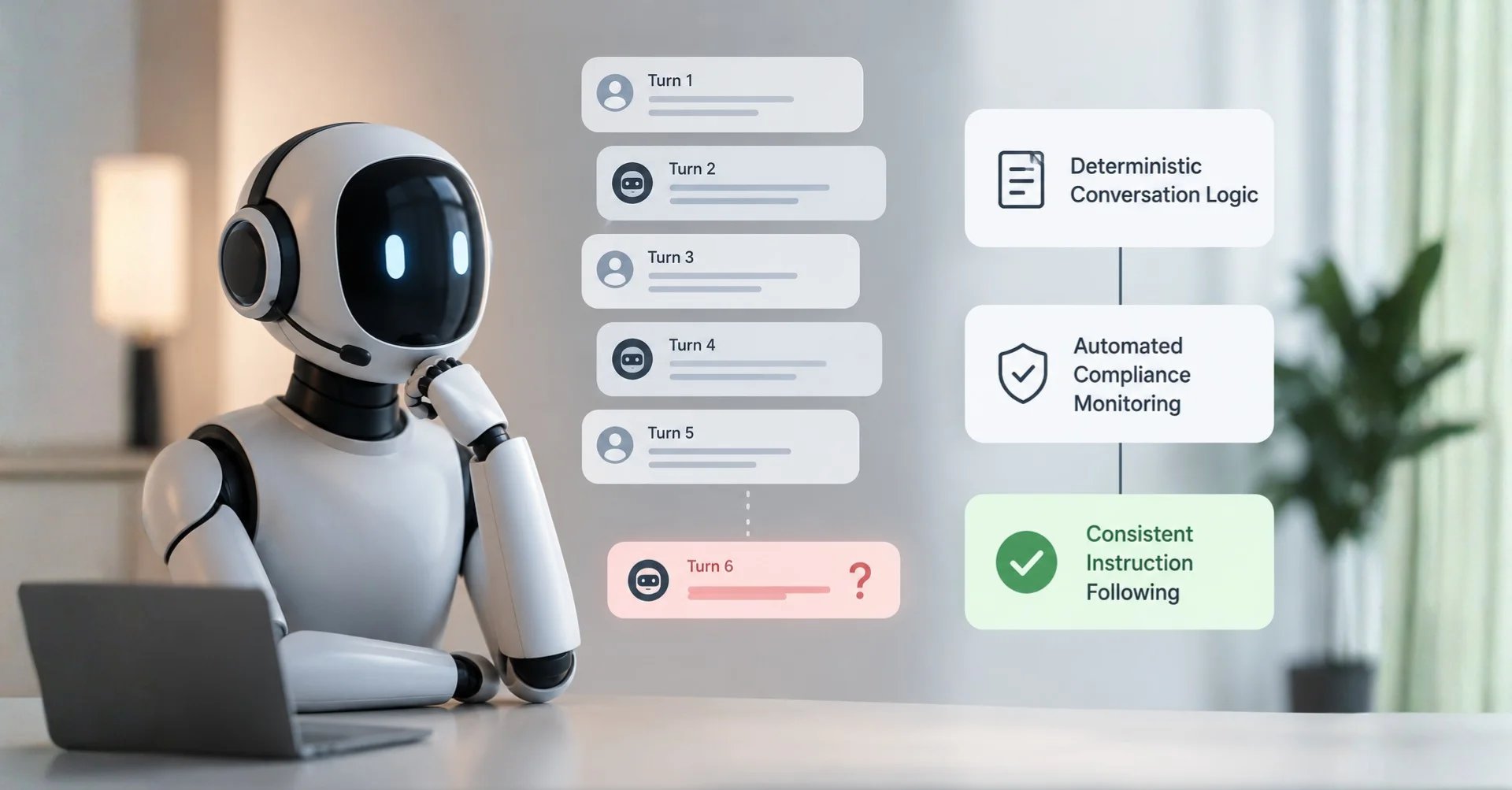
1. Flow Builder: Deterministische gesprekslogica, geen hoop op prompts
De Famulor Flow Builder dwingt gesprekslogica deterministisch af. In plaats van te vertrouwen op het LLM om regels te volgen, definieer je vaste gespreksroutes in een no-code editor: wanneer de beller X zegt, gebeurt actie Y — gegarandeerd. Het LLM wordt gebruikt voor natuurlijke taalverwerking binnen gedefinieerde paden, niet voor besluitvormingslogica. Het resultaat: functie-aanroepen worden betrouwbaar uitgevoerd, zelfs bij beurt 30.
2. Agent Coach: Geautomatiseerde meting van instructie-compliance
De Famulor Agent Coach analyseert elk gesprek automatisch op instructie-compliance. Hij controleert: heeft de agent de regels gevolgd? Heeft hij de juiste acties getriggerd? Heeft hij gehallucineerd? In plaats van handmatig "vibes testen" met AirPods, krijg je kwantificeerbare data voor elk gesprek — en kun je problemen systematisch identificeren en oplossen.
3. Prompt Editor V2: Modelspecifieke optimalisatie
De Famulor Prompt Editor V2 houdt rekening met het feit dat verschillende modellen anders reageren op identieke promptstructuren. Het helpt je prompts te optimaliseren voor het specifieke model dat je draait — niet generiek, maar op maat gemaakt. Wanneer je overstapt van GPT-4o naar een nieuwer model, helpt de editor bij de migratie.
Zeven stappen om instructieopvolging vandaag nog te verbeteren
Ongeacht welk platform je gebruikt, deze zeven stappen zullen de instructieopvolging van je voice-agent direct verbeteren:
- Prioriteer regels: Plaats de meest kritieke regels bovenaan je systeemprompt. Modellen wegen het begin van prompts zwaarder.
- Gebruik expliciete negatieve voorbeelden: Schrijf niet alleen op wat de agent moet doen — specificeer wat hij NIET mag doen. "NOOIT prijzen noemen" is duidelijker dan "Wees voorzichtig met prijsinformatie."
- Test gesprekslengte: Stop niet bij tests van 3 beurten. Simuleer realistische dialogen van 15–30 beurten met onderwerpwisselingen en onderbrekingen.
- Isoleer functie-aanroepen: Haal kritieke functie-aanroepen uit de LLM-prompt en implementeer ze als deterministische flows — precies zoals de Mid-Call Actions-workflow van Famulor werkt.
- Stel monitoring in: Analyseer transcripten automatisch op regelovertredingen. Handmatige steekproeven zijn niet genoeg voor betrouwbaarheid in productie.
- Optimaliseer per model: Stem je prompt af op het specifieke model. Wat werkt op GPT-4o, werkt niet automatisch op Gemini Flash.
- Configureer backchannel-gedrag: Test of je agent natuurlijke tussenwerpsels ("Ik begrijp het", "Duidelijk") op de juiste momenten gebruikt — of dat ze de gespreksstroom verstoren.
Industrie-voorbeelden: waar instructieopvolging bedrijfskritiek is
In bepaalde sectoren hebben falende instructieopvolgingen gevolgen die veel verder gaan dan een verloren lead:
Medische praktijk Dr. Becker, München (65 medewerkers): De voice-agent mag alleen afspraken boeken tijdens kantooruren en moet noodoproepen direct doorverbinden naar de praktijk. Een fout in de instructieopvolging betekent hier: een patiënt met pijn op de borst wordt gevraagd morgen terug te bellen. Met de Flow Builder van Famulor wordt nooddetectie geïmplementeerd als een deterministisch pad — geen LLM-discretie bij levenskritieke beslissingen.
Advocatenkantoor Hoffmann & Partners, Hamburg (12 medewerkers): De agent mag nooit juridisch advies geven en moet bij deadlines direct een advocaat inschakelen. Instructieopvolging over 20 gespreksbeurten is geen optie — een enkele fout kan leiden tot aansprakelijkheidsvragen.
Krause Elektrotechniek, Leipzig (8 medewerkers): Het installatiebedrijf gebruikt de voice-agent voor het plannen van afspraken en het inplannen van spoedklussen. De agent moet onderscheid maken tussen "mijn licht doet het niet" (plan volgende week) en "mijn stopcontact rookt" (direct doorverbinden). Dit onderscheid mag niet falen bij beurt 15.
Bereken je ROI met geautomatiseerde gesprekken
Ontdek hoeveel je per maand bespaart via AI voice agents.
ROI Resultaat
ROI 0%
Geen creditcard nodig
Conclusie: instructieopvolging is geen 'nice-to-have'
De voice-AI-industrie heeft in 2026 een duidelijk punt van volwassenheid bereikt. De technologie werkt — maar alleen als de instructieopvolging betrouwbaar is. Bedrijven die uitsluitend vertrouwen op prompt-gebaseerde sturing zullen tegen grenzen aanlopen naarmate de gesprekscomplexiteit toeneemt.
De oplossing ligt in een combinatie van deterministische gesprekslogica (Flow Builder), geautomatiseerde kwaliteitsmonitoring (Agent Coach) en modelspecifieke promptoptimalisatie. Famulor levert alle drie de componenten in één geïntegreerd platform — zonder dat je zelf multi-model-architecturen hoeft te orkestreren.
Volgende stap: Probeer Famulor gratis en zie hoe de Flow Builder en Agent Coach je problemen met instructieopvolging oplossen. Geen code, geen DevOps — klaar in 15 minuten.
Probeer onze AI-assistent
Ervaar hoe natuurlijk onze AI-telefoonassistent klinkt.
Vul je gegevens in en ontvang binnen enkele seconden een oproep van onze AI-agent.
De agent is getraind om over Famulor-diensten te praten en afspraken te maken.

Demo AI-agent
Famulor medewerker
Veelgestelde vragen
Wat is instructieopvolging bij AI-voice-agents?
Instructieopvolging is het vermogen van een AI-model om betrouwbaar de regels en beperkingen uit de systeemprompt te gehoorzamen gedurende een volledig gesprek — zelfs na 20 of meer gespreksbeurten.
Waarom negeert mijn voice-agent na een paar minuten de regels?
De meeste taalmodellen zijn getraind op korte dialogen. Vanaf beurt 5 neemt de betrouwbaarheid voor het naleven van regels en functie-aanroepen meetbaar af, omdat lange gesprekken ondervertegenwoordigd zijn in de trainingsdata.
Welke AI-modellen werken het beste voor voice-agents?
Sinds september 2026 bieden GPT-4o en Gemini 2.5 Flash de beste balans tussen intelligentie en latentie. Frontier-modellen zoals GPT-5 leveren betere instructieopvolging, maar zijn vaak te traag voor real-time telefonie.
Hoe kan ik instructieopvolging testen?
Simuleer realistische gesprekken van 15–30 beurten met onderwerpwisselingen en onderbrekingen. Geautomatiseerde tools zoals de Famulor Agent Coach controleren elk gesprek op regelovertredingen en kwantificeren de compliance-percentages.
Wat is het verschil tussen instructieopvolging bij chat en voice?
Chat-agents kunnen pauzeren om "na te denken". Voice-agents moeten binnen 500 milliseconden reageren. Voice vereist bovendien natuurlijke gespreksaspecten zoals backchannel-signalen en prosodie-afstemming, die chat-benchmarks niet meten.
Kan ik gewoon een chatbot als voice-agent gebruiken?
Nee. Chat en voice vereisen fundamenteel verschillende redeneerstructuren. Een voor chat geoptimaliseerde agent klinkt onnatuurlijk aan de telefoon en voldoet niet aan voice-specifieke eisen zoals timing en toonadaptatie.
Wat is de "Snel en langzaam denken"-architectuur?
Een aanpak die de voice-agent opsplitst in twee parallelle processen: een snelle lus voor real-time spraakinteractie en een langzame lus voor complexe taken zoals functie-aanroepen en guardrail-checks, waarbij resultaten asynchroon worden geïnjecteerd.
Hoe lost Famulor het probleem van instructieopvolging op?
Famulor combineert drie benaderingen: de Flow Builder dwingt gesprekslogica deterministisch af, de Agent Coach meet instructie-compliance automatisch en de Prompt Editor V2 optimaliseert prompts per model.
Wat kost slechte instructieopvolging een bedrijf?
Afhankelijk van de sector variëren de gevolgen van verloren leads en onjuiste boekingen tot aansprakelijkheidsrisico's. Een medische praktijk waarvan de agent noodsituaties niet herkent, riskeert veel meer dan alleen omzetverlies.
Welke sectoren profiteren het meest van verbeterde instructieopvolging?
Sectoren met gereguleerde of veiligheidskritieke processen: gezondheidszorg, juridische dienstverlening, financiële dienstverlening en installatiebedrijven met spoedhulp. Maar ook e-commerce en SaaS-support profiteren van minder escalaties en een hogere klanttevredenheid.

Auteur bij Famulor