Summarize Content With:




Carrier-Native AI Calling: What the Telekom-ElevenLabs Deal Means for Business Telephony
Deutsche Telekom and ElevenLabs unveiled the Magenta AI Call Assistant at MWC 2026, embedding conversational AI directly into the carrier network — no app downloads, no special hardware. For consumers, that is a genuine leap forward: real-time translation, call summaries, and mid-call actions triggered by a simple "Hey Magenta." For businesses that automate thousands of inbound and outbound calls every week, however, the announcement raises a different question entirely: can a carrier-level assistant replace a purpose-built AI voice-agent platform? The short answer is no — and understanding why matters for any company evaluating its next telephony investment.
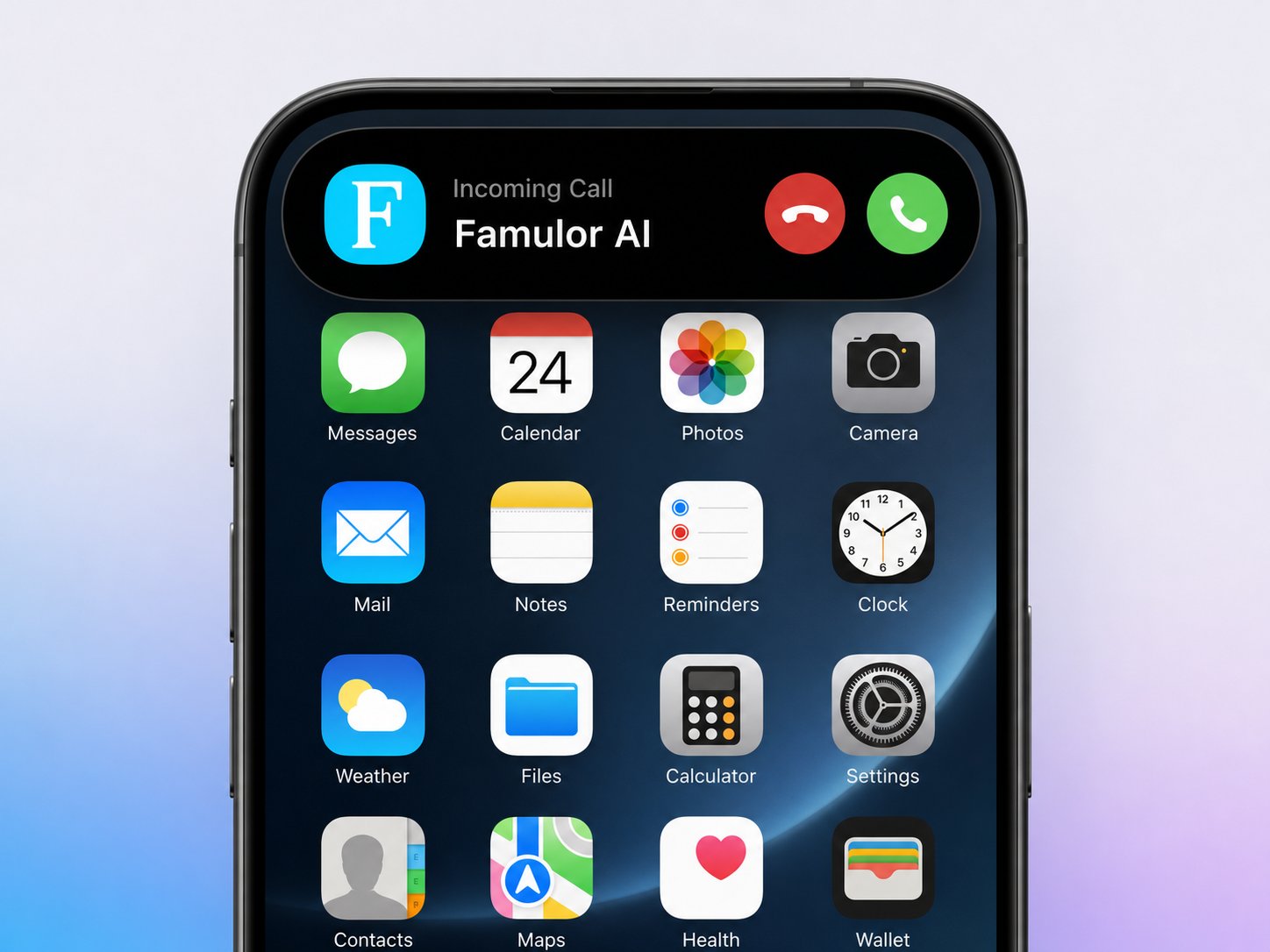
Carrier-native AI assists individual callers during live conversations. Business-grade voice AI replaces or augments entire call workflows end-to-end — from lead qualification and appointment scheduling to payment reminders and post-call CRM updates. Platforms like Famulor are built for exactly that gap, offering full automation with 40+ languages, SIP trunking for any PBX, and 300+ no-code integrations that feed every call outcome straight into your existing tech stack.
What the Telekom-ElevenLabs Partnership Actually Delivers
The Magenta AI Call Assistant is a network-integrated service that activates when a Telekom subscriber says "Hey Magenta" during a phone call. At launch, its headline feature is real-time translation — initially covering major European languages, with plans to expand to up to 50 languages. Beyond translation, the assistant can suggest restaurants mid-call, place reservations, and generate a written summary after the call ends. Because it runs on the carrier's infrastructure rather than a third-party app, it works on every device connected to the Telekom network, including legacy landlines.
Abdu Mudesir, a member of Deutsche Telekom's Board of Management, framed the launch clearly: "No apps, no special devices, no technical complexity." ElevenLabs co-founder Mati Staniszewski echoed the vision, calling it an effort to "redefine what a phone call can be." The rollout is scheduled for German Telekom customers later in 2026, making it one of the first carrier-embedded AI services in Europe.
Consumer AI Assistant vs. Business Voice Automation — The Core Difference
The Magenta assistant helps a person during a call. It translates, takes notes, and offers suggestions. The human remains in the loop at every moment: they still answer the phone, they still speak, they still decide. For a consumer managing a handful of personal calls, that is a meaningful upgrade.
Business telephony operates under entirely different constraints. A dental practice fielding 200 inbound calls per day, a logistics company confirming delivery windows across three time zones, or an insurance broker qualifying leads around the clock — these scenarios do not need an assistant sitting next to a human agent. They need an autonomous AI voice agent that answers the call, understands the caller's intent, executes actions (book an appointment, update a record, route to a specialist), and documents everything without human intervention.
That distinction — assistive versus autonomous — is the dividing line between what carrier AI offers and what platforms like Famulor provide. A carrier AI assistant cannot pick up the phone at 2 AM, qualify a prospect against your CRM data, create a deal in your pipeline, and send a confirmation via WhatsApp. A purpose-built AI voice agent connected to your existing PBX can do all of that on autopilot.
Feature-by-Feature Comparison: Carrier AI vs. Business Voice-Agent Platforms
| Capability | Carrier AI (Magenta) | Business Voice-Agent Platform (Famulor) |
|---|---|---|
| Primary function | Assists a human during a call | Handles calls autonomously end-to-end |
| Activation | Voice command ("Hey Magenta") | Automatic on every inbound/outbound call |
| Real-time translation | Yes, expanding to 50 languages | 40+ languages with multi-TTS engine support |
| Call summaries | Yes, after call ends | Real-time transcription + post-call analysis |
| CRM integration | None | 300+ integrations via no-code automation |
| Appointment booking | Suggests options, human confirms | Fully automated booking with calendar sync |
| Outbound campaigns | Not available | Automated outbound with lead lists and scripts |
| SIP / PBX compatibility | Carrier network only | Universal SIP trunking for any VoIP provider |
| Compliance and recording | Consent-based activation | GDPR-compliant recording, retention, and audit |
| Customisation | Consumer presets only | Flow builder, knowledge bases, custom prompts |
| Availability | Telekom subscribers only | Any business, any carrier, any country |
Why Carrier Lock-In Is a Risk for Business Telephony
A detail that deserves attention: the Magenta assistant works exclusively on Deutsche Telekom's network. If your company uses a different carrier — or multiple carriers across regions — the service simply is not available. For international businesses with offices in different countries, this creates an immediate gap. Business voice-agent platforms operate independently of the carrier layer. Famulor, for instance, connects via SIP trunking through providers like Telnyx, Twilio, or any standard-compliant trunk, meaning you can switch carriers or run multi-carrier setups without losing your AI automation.
Carrier lock-in also limits control over data. When AI processes calls at the network level, call data, transcripts, and summaries live in the carrier's ecosystem. Businesses subject to GDPR, HIPAA, or industry-specific compliance requirements need granular control over where data is stored, who can access it, and how long it is retained. A dedicated platform gives you that control; a carrier-embedded service may not.
Implementation: How Businesses Should Approach Carrier AI Announcements
The Telekom-ElevenLabs partnership is part of a broader trend: carriers integrating AI to retain consumer relevance. Vodafone, Orange, and AT&T have all made similar moves in 2025 and 2026. For IT decision-makers evaluating these announcements, the practical framework is straightforward.
First, separate the use cases. If your employees make frequent personal or semi-structured calls — sales reps phoning international prospects, field technicians coordinating with local contractors — a carrier AI assistant that translates and summarises can be a useful add-on. It does not replace your call automation stack; it supplements the human side of calling.
Second, audit your automation needs. Map every call flow that currently involves repetitive human work: appointment confirmations, order status inquiries, payment reminders, after-hours routing. These are the workflows where a business voice-agent platform delivers measurable ROI — typically reducing call-handling costs by 40 to 70 percent while keeping 24/7 availability.
Third, evaluate integration depth. The value of voice AI multiplies when every call outcome triggers downstream actions: a booked appointment appears in your practice management system, a qualified lead moves to the next pipeline stage in your CRM, a complaint ticket opens in your helpdesk. Carrier AI does not touch these systems. Platforms like Famulor connect to over 300 tools through a no-code automation builder, making every call a data event that drives your business forward.
Estimate your ROI from automating calls
See how much your business could save by switching to AI-powered voice agents.
ROI Result
ROI 0%
No credit card required
Real-World Scenarios: Where Each Approach Fits
Consider a mid-sized dental clinic in Munich with four practitioners and a reception team of two. They receive roughly 180 calls per day — appointment requests, cancellations, insurance questions, and emergencies. A carrier AI assistant could help the receptionist translate when an English-speaking patient calls. But the real bottleneck is not translation — it is capacity. At peak hours, 30 percent of calls go unanswered. An autonomous voice agent handles every call simultaneously, books directly into the practice calendar, sends confirmation messages, and escalates genuine emergencies to the on-call dentist. The receptionist focuses on in-person patients instead of being chained to the phone.
Now consider a property management company operating across Germany and Austria. Their tenants call about maintenance requests, lease questions, and emergency repairs at all hours. A carrier AI assistant would help an individual agent during one call. A voice-agent platform handles all calls across both countries, in German and Turkish and English, logs every request into the ticketing system, dispatches maintenance crews via webhook, and sends the tenant a status update — all without a human touching the phone.
In e-commerce, the pattern repeats. Order tracking, return authorisations, product availability checks — these are high-volume, low-complexity calls that a business voice agent resolves in under 90 seconds. Carrier AI cannot access your order management system to look up a tracking number. A platform connected to Shopify, WooCommerce, or your ERP can.
The Convergence Ahead: Carrier Infrastructure Meets Business Platforms
The most interesting implication of the Telekom-ElevenLabs deal is not what it delivers today but what it signals for tomorrow. As carriers embed AI at the network layer, the quality of voice synthesis, latency, and language coverage will improve for everyone — including business platforms that route calls through those same networks. Famulor already leverages ElevenLabs voice technology as one of its multi-TTS engine options, meaning improvements in ElevenLabs' voice models benefit Famulor users directly.
The likely trajectory is not carrier AI replacing business platforms but the two layers complementing each other. Carriers optimise the transport and basic AI features at the network level. Business platforms orchestrate complex workflows, integrations, and automation on top of that infrastructure. Companies that understand this layered model will make better purchasing decisions and avoid the trap of expecting a consumer feature to solve an enterprise problem.
Best Practices for Evaluating AI Telephony Solutions in 2026
Before committing to any AI telephony solution, run through these checkpoints. Does the solution work independently of your carrier? If you switch providers or add a second carrier for redundancy, your AI should keep running without reconfiguration. Can it operate autonomously? An assistant that helps during calls is useful; an agent that handles calls without human involvement is transformative. How deep are the integrations? Check for native connectors to your CRM, calendar, helpdesk, and automation tools — not just a generic API. What languages does it support out of the box? Multilingual support matters especially for businesses serving diverse communities or operating across borders. Is it compliant? GDPR, call recording laws, data residency — confirm that the platform handles these natively rather than leaving them to you.
Common mistakes include overestimating carrier AI capabilities (it will not automate your inbound queue), underestimating integration requirements (a standalone AI that cannot talk to your CRM creates data silos), and delaying implementation while waiting for "the next big carrier announcement." Voice AI platforms are production-ready today, and every month of delay is a month of unnecessary cost and missed calls.
Conclusion
The Telekom-ElevenLabs Magenta AI Call Assistant represents a genuine step forward for consumer telephony — bringing real-time translation and in-call AI assistance to millions of subscribers without requiring any new hardware or apps. For businesses, however, the key takeaway is clarity about scope: carrier-native AI assists humans during calls, while business voice-agent platforms automate calls entirely. The two solve fundamentally different problems. Companies that need 24/7 call handling, CRM integration, outbound automation, and carrier-independent deployment should invest in a dedicated platform. Famulor offers exactly this — with 40+ languages, universal SIP support, and 300+ integrations — ready to deploy today without waiting for a carrier rollout.
Try our AI Assistant
Experience how natural our AI phone assistant sounds.
Enter your details and receive a call from our AI agent within seconds.
Agent is trained to discuss Famulor services and book appointments.

Demo AI agent
Famulor representative
FAQ
What is the Telekom-ElevenLabs Magenta AI Call Assistant?
It is a carrier-embedded AI service that activates during phone calls on the Deutsche Telekom network, offering real-time translation, call summaries, and mid-call suggestions — without requiring an app or special hardware.
Can the Magenta AI assistant automate business calls?
No. The Magenta assistant helps individual callers during live conversations. It does not answer calls autonomously, integrate with CRM systems, or run outbound campaigns — features that business voice-agent platforms like Famulor provide.
How does carrier AI differ from a business voice-agent platform?
Carrier AI assists a human during a call (translation, summaries). A business voice-agent platform handles calls end-to-end without human involvement — booking appointments, qualifying leads, updating records, and triggering automations.
Does the Magenta AI assistant work outside Deutsche Telekom's network?
No. It is exclusive to Telekom subscribers. Businesses using other carriers or multi-carrier setups cannot access it. Dedicated platforms like Famulor work with any carrier via SIP trunking.
What integrations does a business voice-agent platform offer?
Platforms like Famulor connect to over 300 tools — including CRMs, calendars, helpdesks, ERPs, and messaging services — through a no-code automation builder, turning every call into an actionable data event.
Is carrier-level AI sufficient for multilingual business communication?
Carrier AI provides real-time translation for person-to-person calls. For automated multilingual call handling — where the AI agent itself speaks 40+ languages and handles calls without a human — a dedicated platform is required.
How much can businesses save by using an AI voice-agent platform?
Typical cost reductions range from 40 to 70 percent on call-handling expenses, with 24/7 availability eliminating missed calls. The exact savings depend on call volume, complexity, and current staffing costs.
Can I use ElevenLabs voice technology in a business voice agent?
Yes. Famulor supports ElevenLabs as one of its multi-TTS engine options, meaning you get the same high-quality voice synthesis within a platform built for business automation, CRM integration, and compliance.
When will the Magenta AI Call Assistant be available?
Deutsche Telekom plans to roll out the service to German subscribers later in 2026. Business voice-agent platforms like Famulor are available for deployment today across any carrier and country.

Writer at Famulor