Summarize Content With:




Parloa vs Ada vs Famulor: Which AI Customer Service Platform Fits in 2026?
You are comparing enterprise AI customer service platforms and the shortlist keeps returning the same names: Parloa, Ada and Famulor. They all promise AI agents that resolve customer requests. They differ in channel focus, buying process, pricing model and how fast a team can go live. This guide compares Parloa vs Ada vs Famulor on the points that decide a purchase: voice depth, chat depth, pricing transparency, setup effort, data location and fit by team size.
What each platform is built for
Parloa: agent fleets for large contact centers
Parloa is a German AI company that positions itself as an AI agent management platform. The idea: large enterprises design, deploy and optimize fleets of voice and chat agents next to human representatives. Reuters reported that its customers include Microsoft, Accenture, KPMG and Booking.com. The company raised a $350 million Series D in January 2026 at a valuation of $3 billion.
This tells you what Parloa optimizes for: scale, governance and big programs. A funding round of that size does not tell you how a ten-person support team will experience the product, but it does show that the roadmap serves enterprise buyers.
Ada: automated resolutions, chat first
Ada is a Toronto-based AI customer service company. It grew out of chat and messaging automation and sells AI agents that resolve requests across channels. Ada's terms define a voice conversation as a connected call that starts when the customer begins speaking and ends when the call disconnects. Third-party reviews report that its voice product supports 42 languages, fewer than its messaging support.
The focus on resolutions is Ada's strongest idea. It makes the question "did the AI solve it?" part of the commercial model instead of an afterthought.
Famulor: voice-first, self-serve, transparent
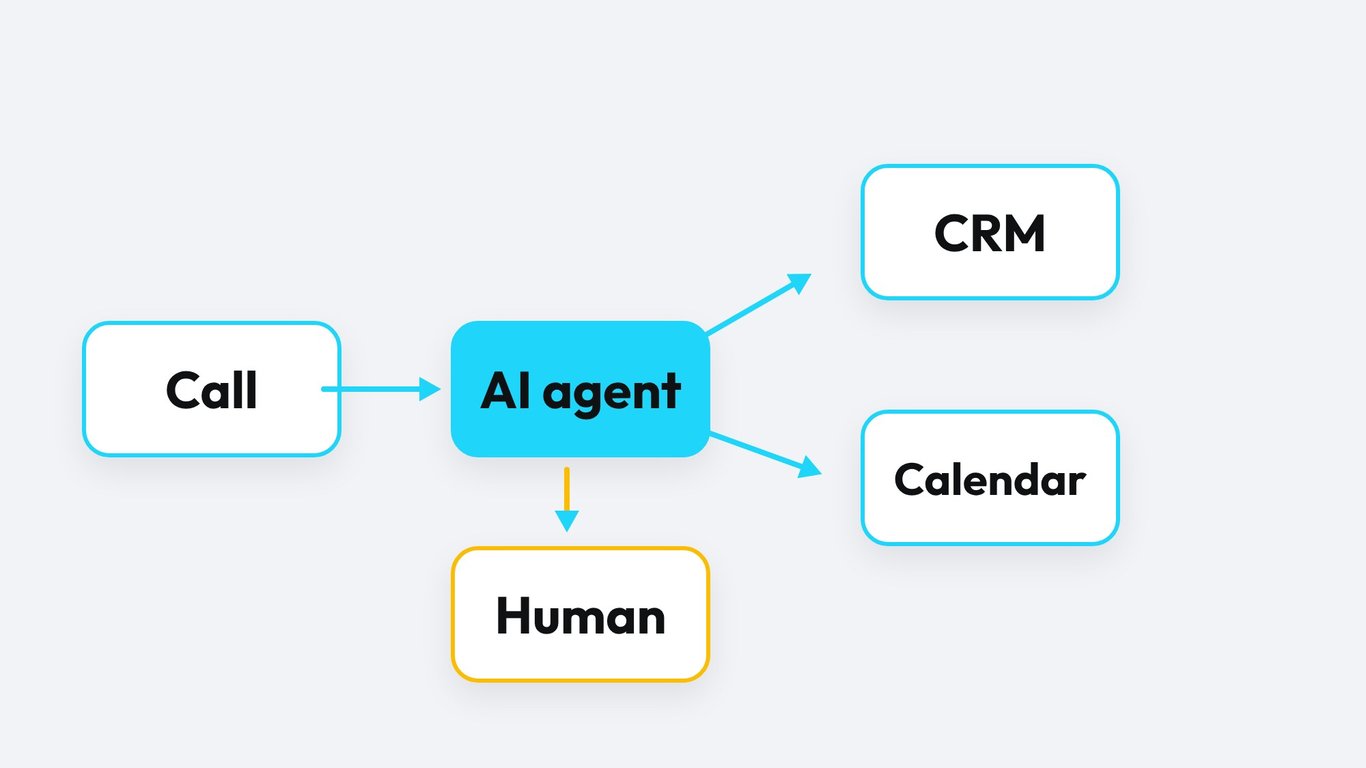
Famulor is an AI phone agent platform for inbound and outbound calls, with chat and messaging channels added around it. You build agents without code, connect a knowledge base, attach calendars and CRMs, and test with simulations before real callers hear anything. Prices are public on the pricing page, starting at €0.05 per minute, so a pilot does not start with a procurement cycle. For regulated teams there is a dedicated page on GDPR-compliant AI voice agents.
Parloa vs Ada vs Famulor: side-by-side comparison
The table below summarizes the differences that matter in an evaluation. Competitor facts come from public company reports and third-party reviews. Always confirm the current terms with each vendor before you sign.
| Criterion | Parloa | Ada | Famulor |
|---|---|---|---|
| Core strength | Voice and chat agent fleets for large contact centers | Automated resolutions, chat and messaging first | Voice AI agents, inbound and outbound |
| Typical buyer | Enterprise CX and contact center leaders | Mid-market and enterprise support teams | SMEs, agencies, startups and enterprise teams |
| Pricing visibility | Not published, sales-led | Not published, quote-based | Public, per minute and plans |
| Billing unit | Contract, not public | Conversation or resolution | Minutes and plan allowances |
| Time to first agent | Project-based onboarding | Guided onboarding | Same day, no code |
| Voice depth | Core product | Added to a chat-first platform | Core product |
| White label for agencies | Not a focus | Not a focus | Available as an add-on |
Read the table as a map of fit, not a scoreboard. A platform with a heavier buying process is not worse. It may simply match a buyer who needs a security review, a legal framework and a dedicated delivery team.
Pricing: what is known and what is not
Pricing is where the three platforms differ most. Two of them do not publish a price list, so any number you read outside a quote is an estimate.
Ada pricing signals
Ada does not list standard prices on its website. Third-party sources report an entry point around $30,000 per year, and an AWS Marketplace listing showed $33,000 for 12 months with 60,000 conversations. Several blogs quote $1 to $3.50 per AI resolution, but these are third-party reports, not an Ada rate card. Ada's own material has described conversation-based and resolution-based models.
The implied $0.55 per conversation is a single data point from one listing. It is useful for a rough budget, not as a quote. A conversation can contain several questions, and a voice call is billed differently from a chat session.
Parloa pricing signals
Parloa publishes no tiers and no per-interaction rates. Aggregators list a subscription model, but no figures. Plan for an enterprise contract with a defined scope, and ask for the unit of billing early: minutes, conversations, agents or a platform fee.
Famulor pricing
Famulor shows its prices. Pay as you go starts at €0.15 per minute, and plans such as Plus include a minute allowance (100 minutes) with extra minutes at €0.12. Yearly Plus is €27. Use the calculator below to estimate your own volume.
Estimate your ROI from automating calls
See how much your business could save by switching to AI-powered voice agents.
ROI Result
ROI 0%
No credit card required
Voice quality and channels
If your customers call, voice is not a feature on a list. It is the product. Latency, interruption handling, accents and number formats decide whether callers stay on the line. Parloa and Famulor treat voice as the core product. Ada's roots are in chat, so ask for a live voice demo with your own call scripts, not a recorded one.
For chat and messaging, Ada has the longer history. Famulor covers WhatsApp, SMS and messaging next to voice, so a missed call can turn into a follow-up message. Parloa covers voice and chat in one agent management layer.
Questions for a voice demo
- Can the agent handle a caller who interrupts mid-sentence?
- How are names, street addresses and order numbers captured and read back?
- What happens when the knowledge base has no answer?
- How does the warm transfer to a human work, and does the agent pass on the context?
Setup effort and time to value
Enterprise platforms usually start with a discovery phase: process mapping, integration scoping, a security review and a pilot. That is sensible for a program with hundreds of seats. It also means weeks or months before the first live call.
A self-serve platform shortens the loop. With Famulor you describe the agent, connect a knowledge base, plug in your calendar or CRM and test the conversation before launch. The simulations feature lets you run test calls against the agent, so you find weak answers before customers do.
A realistic 30-day plan
- Week 1: pick the three most frequent call reasons and write the expected answers.
- Week 2: build the agent, load the knowledge base and run simulations until the answers hold.
- Week 3: go live on a share of calls, such as after-hours or overflow only.
- Week 4: review transcripts and the analytics, fix gaps, then widen the traffic.
Typical use cases in practice
A comparison becomes concrete when you measure it against an example. Take a dental practice with four treatment chairs: patients call about appointments at 8 am, questions about invoices arrive at lunch, and the phone is unattended in the evening. An AI agent books appointments, reschedules them in the calendar and hands emergencies to the team. What matters here is how fast the practice can go live, not the size of the platform.
Another example is an insurer with several hundred customer service agents. There the volume is claims reports, contract questions and callbacks, spread across voice and chat, connected to legacy systems and clear approval processes. A vendor with its own delivery team has the advantage.
- Small teams and practices: fast start, fixed prices, little coordination.
- Agencies: several clients under your own brand, see white label.
- Enterprises: governance, security review and integration into grown systems.
Most teams sit between these extremes. Then a pilot with real calls is worth more than any feature list.
Data protection and hosting
For European teams, the questions are the same for every vendor: where is audio processed, how long are recordings kept, who are the subprocessors and is a data processing agreement available. Parloa is a German company and addresses this for enterprise buyers. Ada and Famulor publish privacy information as well. Request the subprocessor list and the retention settings in writing, and check the call recording rules for your country.
Who should choose which platform
Choose Parloa if
- you run a large contact center and plan a multi-year program with voice and chat
- you need a dedicated delivery team, formal governance and a long onboarding
- your procurement process already expects a sales-led enterprise contract
Choose Ada if
- most of your volume is chat and messaging and voice is a secondary channel
- you want an outcome-oriented commercial model based on automated resolutions
- you have a support operation large enough to justify an annual commitment
Choose Famulor if
- phone calls are your main channel, inbound or outbound
- you want public prices and a pilot within days, not quarters
- you are an agency or reseller and need a white label option
- you want to grow from a small pilot to a call center scale without changing platform, see the AI call center page
How to run a fair vendor evaluation
A demo is a performance. An evaluation is a test. To compare the three platforms fairly, use the same inputs for each one.
- Collect 30 real calls or tickets and remove personal data.
- Define success per call: resolved, handed over correctly or failed.
- Run the same script on each platform with the same knowledge base content.
- Measure resolution rate, handover quality, average call length and the cost at your volume.
- Ask for references in your industry and your language.
If you are also weighing alternatives to Parloa specifically, read our guide to the best Parloa alternatives.
Conclusion
There is no universal winner in Parloa vs Ada vs Famulor. Parloa fits large contact center programs, Ada fits chat-led support with a resolution-based model, and Famulor fits teams that want a voice-first agent with transparent pricing and a fast start. The deciding factors are your main channel, your volume and how soon you need a live agent. Start with a small, measurable pilot and let the numbers choose.
Ready to test it on your own calls? Open the Famulor pricing page, pick a plan and build your first agent today.
Try our AI Assistant
Experience how natural our AI phone assistant sounds.
Enter your details and receive a call from our AI agent within seconds.
Agent is trained to discuss Famulor services and book appointments.

Demo AI agent
Famulor representative
FAQ
What is the difference between Parloa and Ada?
Parloa focuses on managing fleets of voice and chat agents for large contact centers. Ada grew out of chat automation and sells AI agents that resolve requests across channels, with voice added later.
Does Ada publish its pricing?
No. Ada uses quote-based pricing. Third-party sources report an entry point around $30,000 per year and conversation-based or resolution-based billing.
How much does Parloa cost?
Parloa does not publish prices. Expect a sales-led enterprise contract and ask for the billing unit and overage terms in writing.
Which platform is best for voice calls?
Parloa and Famulor both treat voice as a core product. Ada is chat-first, so test its voice agent with your own call scripts before you decide.
Can I start without a sales call?
With Famulor, yes. Prices are public and you can build and test an agent on your own. Parloa and Ada start with a conversation with sales.
Is there an AI customer service platform for small businesses?
Yes. Famulor starts at €0.05 per minute and needs no code, which suits SMEs and agencies. Enterprise-first platforms usually fit larger budgets.
How do I compare AI customer service vendors fairly?
Run the same 30 real requests through each platform and compare resolution rate, handover quality and cost per resolved request at your volume.
Is Famulor GDPR-compliant?
See the page on GDPR-compliant AI voice agents for how Famulor handles European data protection requirements, and request the subprocessor list and retention settings for your own review.

Writer at Famulor