Resumir contenido con:




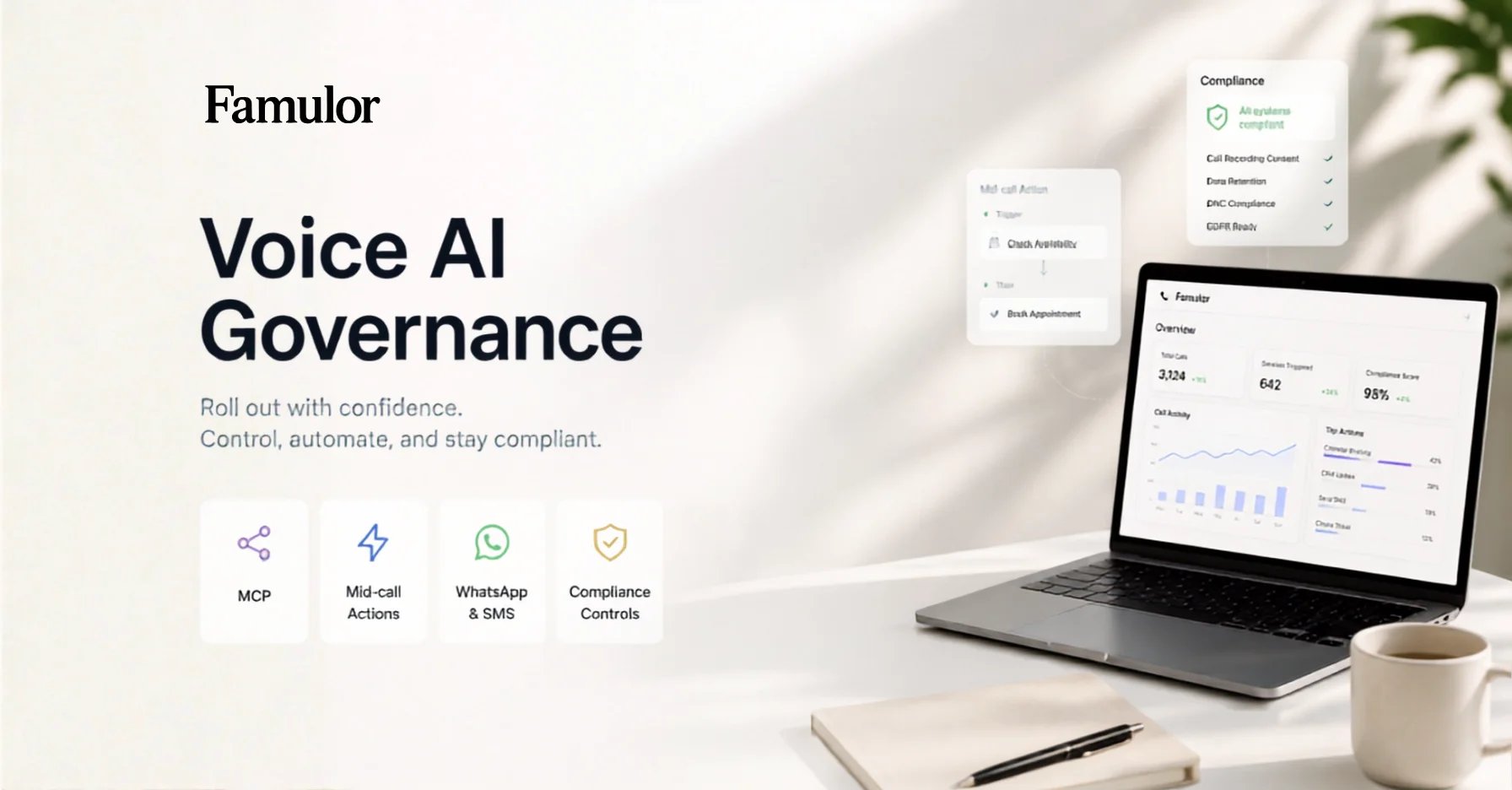
En 2026, los agentes telefónicos de IA ya no se evalúan únicamente por la calidad de su voz. La verdadera cuestión es si pueden actuar bajo control: consultar registros de CRM, reservar citas, activar seguimientos por WhatsApp o SMS, documentar resultados y mantener la trazabilidad. Ahí es donde convergen tres temas: Famulor MCP como capa de operaciones, Mid-call Actions para acciones en tiempo real durante una conversación, y la gobernanza para la privacidad, las aprobaciones y la supervisión.
Este informe técnico agrupa la intención de búsqueda detrás de conceptos como "gobernanza de agentes telefónicos de IA", "agente de voz MCP", "Ley de IA de la UE e IA de voz" y "cumplimiento de herramientas durante la llamada": ¿cómo debe una empresa construir una IA de voz que realice trabajo real sin escribir, enviar o decidir fuera de un marco controlado?
Por qué la gobernanza es ahora parte de la arquitectura del producto
Un agente de voz que solo responde preguntas es relativamente fácil de limitar. Un agente que utiliza herramientas durante una llamada en directo adquiere relevancia operativa: puede leer datos, cambiar estados, enviar mensajes o iniciar procesos de seguimiento. Esto genera nuevos requisitos de permisos, casos de prueba, registros y escalado.
Para los equipos europeos, la Ley de IA de la UE, el RGPD, los acuerdos de procesamiento de datos, las normas de retención y la limitación de la finalidad son factores que importan simultáneamente. La consecuencia práctica es sencilla: la gobernanza no debe aparecer después de la puesta en marcha como un documento de políticas; debe integrarse en el flujo de trabajo.
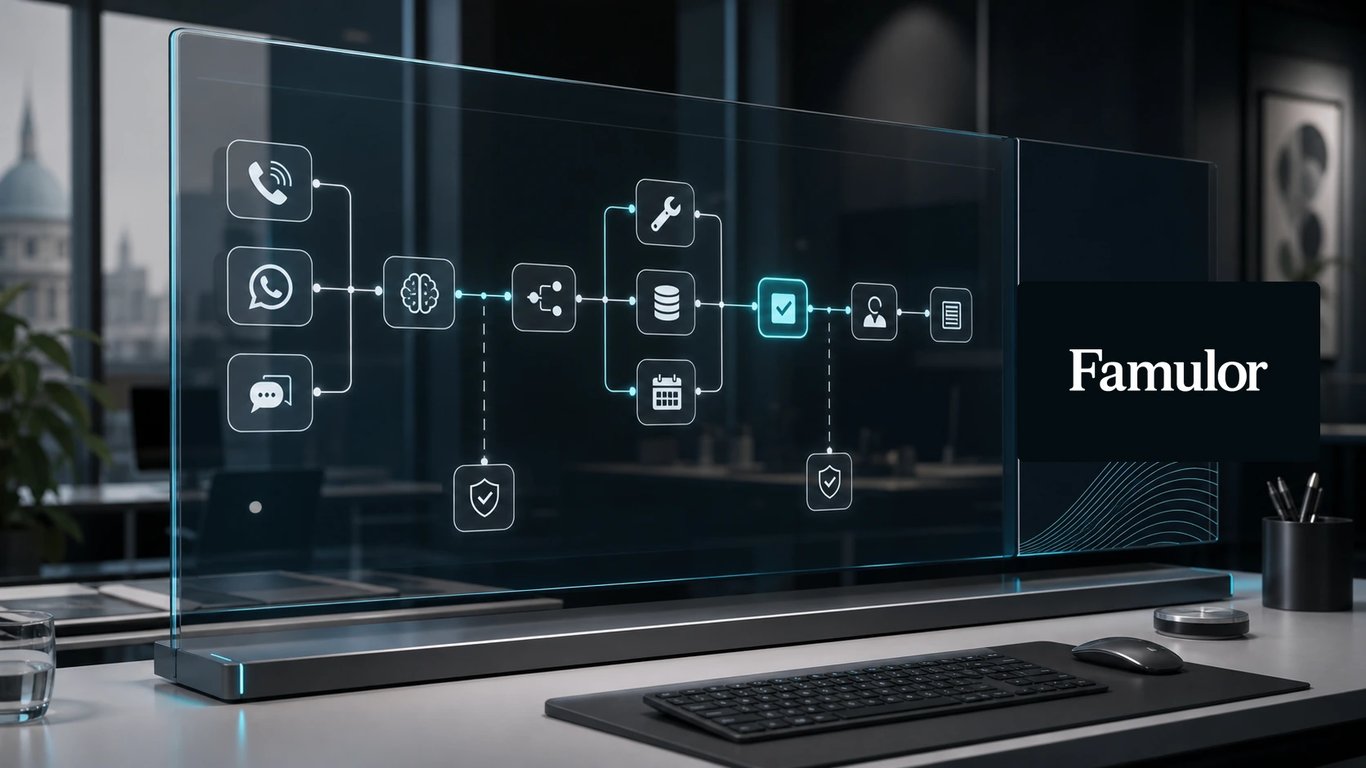
Las tres capas de una pila de IA de voz controlada
| Capa | Rol | Pregunta de gobernanza |
|---|---|---|
| Capa de operaciones MCP | Operar Famulor desde ChatGPT, Claude, Cursor u otros clientes MCP; gestionar asistentes, leads, campañas, bases de conocimiento y llamadas. | ¿Quién puede leer, escribir, iniciar campañas o confirmar acciones que consuman saldo? |
| Mid-call Actions | Ejecutar acciones definidas durante una llamada telefónica: consulta de CRM, verificación de citas, creación de tickets, SMS o solicitud de API interna. | ¿Qué parámetros están permitidos, qué respuesta se puede verbalizar y cuándo debe intervenir un humano? |
| Post-llamada y omnicanalidad | Procesar transcripciones, evaluaciones, seguimientos por WhatsApp/SMS y webhooks tras la conversación. | ¿Qué se almacena, durante cuánto tiempo, quién revisa las excepciones y qué sistemas reciben los datos? |
Punto de control 1: Inventario de herramientas en lugar de dispersión
Comienza con un inventario de cada acción que un agente telefónico de IA pueda ejecutar: consultas de CRM, reservas de calendario, actualizaciones de tratos, SMS, plantillas de WhatsApp, webhooks y APIs internas. Clasifica cada acción por riesgo: solo lectura, escritura interna, mensaje externo, acción que consume saldo o eliminación.
Famulor separa aquí dos patrones claros: el cliente MCP gestiona las operaciones a nivel de cuenta mediante OAuth, mientras que las Mid-call Actions limitan el comportamiento durante la llamada en directo a herramientas definidas con precisión. Esto mantiene la separación entre "operar la cuenta" y "actuar durante la conversación" de forma comprensible.
¿Tu proyecto Voice AI está listo en compliance?
Marca los elementos clave de GDPR y EU AI Act para un piloto más seguro.
Famulor
Voice AI
Progreso compliance
67%
Aclarar antes del piloto
Punto de control 2: Privilegios mínimos para canales y acciones
Una arquitectura robusta no otorga al agente un "acceso al CRM" genérico. Le proporciona un caso de uso preciso: "buscar un contacto por número de teléfono", "comprobar espacios disponibles para este servicio" o "crear un ticket con un resumen de la llamada". Cuanto más específica sea la acción, más fácil será probarla, aprobarla y depurarla.
Esto es aún más importante para WhatsApp y SMS. Un seguimiento tras un lead cualificado necesita disparadores claros, reglas de plantilla, lógica de opt-in y un resumen legible para humanos. Un buen punto de partida son los documentos de Famulor sobre WhatsApp Business y capacidades de SMS.
Punto de control 3: Pruebas con escenarios de conversación reales
La gobernanza rara vez falla en la hoja de cálculo. Falla en los casos límite: números de teléfono incompletos, registros de clientes contradictorios, consentimiento retirado, un hueco que desaparece durante la llamada o una herramienta que devuelve un error técnico. Por tanto, las pruebas deben cubrir rutas de conversación reales, no solo respuestas de API exitosas.
Para cada Mid-call Action, los equipos deben definir la condición de disparo, los parámetros requeridos, la respuesta permitida, la frase de reserva, la regla de escalado y el campo de registro. En Famulor, las herramientas pueden conectarse a la Plataforma de Automatización para que los flujos de trabajo sin código sigan devolviendo respuestas síncronas controladas al agente.
¿Qué sistemas debe conectar Voice AI?
Selecciona tus herramientas y recibe una ruta de integración.
Famulor
Voice AI
Integraciones seleccionadas: 4
Un modelo de despliegue pragmático
- Elige un viaje limitado: cualificación de citas, recuperación de llamadas perdidas o soporte a clientes existentes.
- Limita el riesgo de las herramientas: primero leer y sugerir, después escribir y solo entonces añadir mensajes externos o inicios de campañas.
- Define métricas: tasa de finalización, tasa de escalado, errores de herramientas, correcciones manuales, quejas y tiempo de resolución.
- Establece reglas de aprobación: ¿qué acciones se ejecutan automáticamente, cuáles requieren confirmación y cuáles permanecen solo para humanos?
- Expande tras la auditoría: añade más idiomas, canales, departamentos y clientes MCP solo después de comprender los registros y las excepciones.
Conclusión: la gobernanza hace que la IA de voz sea más rápida, no más lenta
Los despliegues empresariales más sólidos tratan la gobernanza como un mecanismo de escalado. MCP hace que Famulor sea operable desde ChatGPT, Claude y otros clientes. Las Mid-call Actions dotan al agente de capacidades operativas. Los controles de cumplimiento e integración mantienen esas capacidades dentro de un marco claro.
Para el siguiente paso, comienza con el conector MCP de Famulor, la guía de conectores para Claude y ChatGPT y la documentación sobre Mid-call Actions.

Autor en Famulor