Summarize Content With:




Interruptions are not a minor detail in Voice AI. They determine whether an AI phone agent feels like a natural conversation partner—or stops mid-sentence because of an “uh-huh,” a cough, or background noise. As of July 14, 2026, Famulor’s “Allow interruptions” setting can be controlled in all three conversation modes: Pipeline, Speech-to-Speech, and Dualplex™.
This turns a technical setting into a clear conversation-design decision: where should the caller be able to take the floor at any moment, and which message must the agent deliver in full? This guide explains barge-in, provides a practical decision matrix, and lays out a test plan for real enterprise telephony.
What does barge-in mean for an AI phone agent?
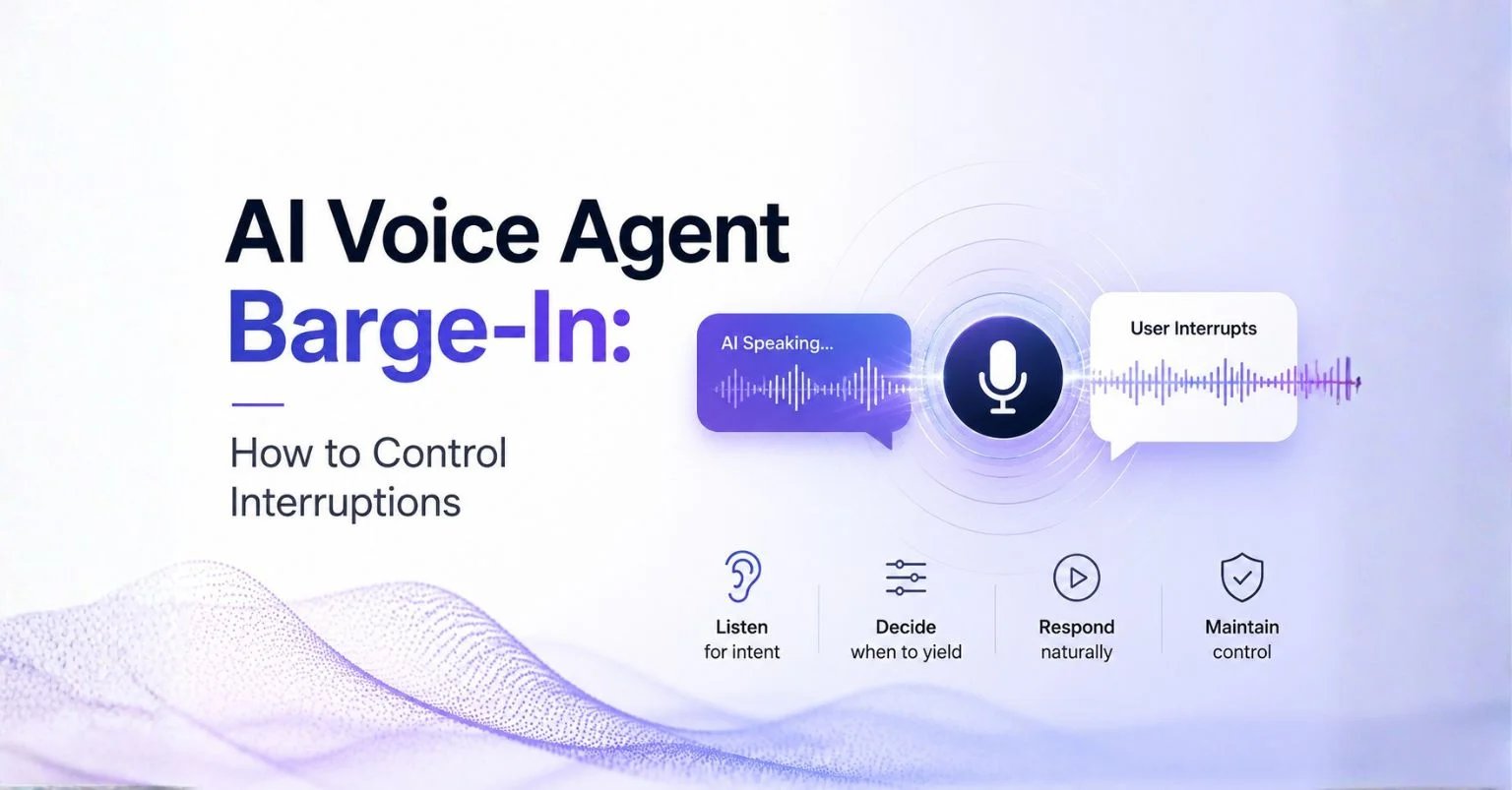
Barge-in is the ability of a voice agent to stop its own speech as soon as the caller starts talking. A good system must do more than detect audio: it needs to distinguish a genuine attempt to take the turn from irrelevant noise.
Several layers work together:
- Voice Activity Detection (VAD): Detects whether human speech is present on the line.
- End-of-turn detection: Determines when the caller has actually finished speaking.
- Audio cancellation: Stops the current output quickly enough to avoid talking over the caller.
- Context recovery: Processes the interruption without losing the conversation thread or a value that was already confirmed.
The challenge is a trade-off. High sensitivity makes the conversation responsive but raises the risk of false interruptions. Low sensitivity protects against television audio, side conversations, and echo, but may cause the agent to keep talking for too long. Famulor’s guide to interruptions and speech sensitivity explains the relevant controls in more detail.
What changed in Famulor
Previously, “Allow interruptions” could be controlled in Pipeline mode, while Speech-to-Speech and Dualplex™ assistants were always interruptible. With the latest update, the toggle now applies to every conversation mode. Teams can therefore configure highly natural realtime models to finish important passages without being cut off.
You can find the setting under Assistant settings → “Allow interruptions?”. It complements the other audio and timing parameters described in the general assistant settings guide.
When interruptions should stay enabled
Barge-in generally provides the better experience during open, conversational phases. The caller can correct an assumption, shorten the path, or move directly to the relevant information.
- Lead qualification: Prospects can correct assumptions immediately and skip irrelevant questions.
- Appointment booking: A proposed time can be rejected or refined right away.
- First-line support: Customers can say early that they already tried a standard troubleshooting step.
- FAQs and reception: Callers reach the actual reason for their call faster.
- Exploratory consultation: Follow-up questions and brief acknowledgements feel more natural.
For automated appointment booking in particular, barge-in prevents long, rigid monologues. The agent should still divide responses into short units and deliberately leave space after an option or critical value.
When complete delivery matters more
Interruptions should be disabled when a sentence needs to function as a complete information unit. This is not limited to legal notices; it includes any passage where half a sentence could be operationally risky or misleading.
| Conversation situation | Recommendation | Reason |
|---|---|---|
| Open needs discovery | Interruptions on | Natural follow-up and fast correction |
| Long FAQ answer | On, but shorten the answer | The caller should be able to select what is relevant early |
| Opening hours or option list | Usually off | Every option needs to remain audible |
| Address, IBAN, or reference number | Off | Completeness matters more than speed |
| Confirmation before an action | Off | Prevents incomplete or ambiguous approval |
| Disclaimer or mandatory information | Off | The content should not end because of accidental noise |
| Open support conversation | On | Less frustration and faster routing |
The toggle is not a substitute for good conversation design. If a two-minute passage is only “safe” because nobody can interrupt it, it is probably too long. Keep mandatory passages concise, explain why they are being read, and then ask explicitly for understanding or confirmation.
A practical enterprise test plan
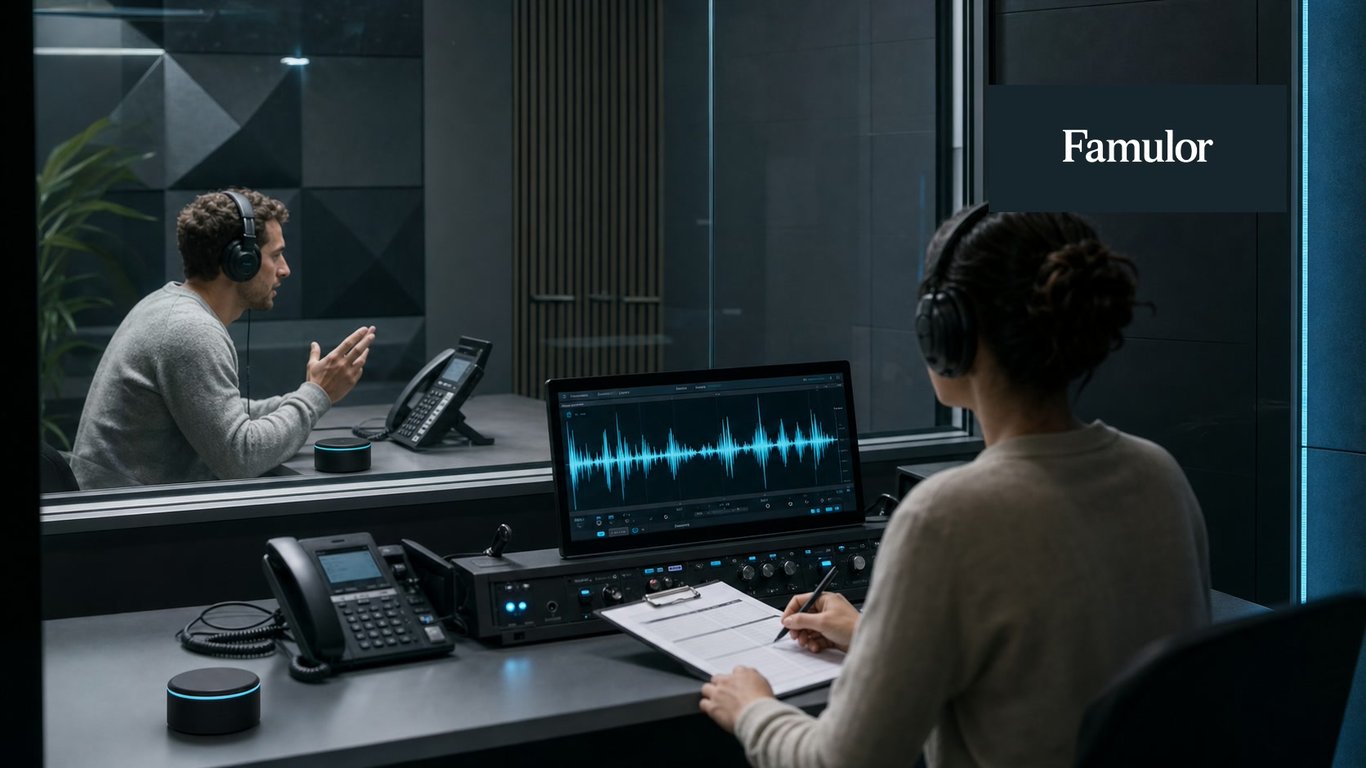
A quiet desktop test is not enough. Barge-in quality becomes visible only in conditions that resemble real customer calls. Build a small, repeatable test matrix before rollout.
1. Controlled baseline cases
- Interrupt the agent at the beginning, middle, and end of a sentence.
- Use short interjections such as “yes,” “wait,” and “no, that’s different.”
- Check that the new statement is captured in full and the context is preserved.
- Verify that the agent does not accidentally repeat the same sentence after an interruption.
2. False triggers
- Television or radio in the background
- Typing, doors, dishes, and street noise
- Coughing, laughter, and short acknowledgement sounds
- Speakerphone echo
- A second person in the room
3. Critical complete passages
Test opening hours, multi-part options, numbers, addresses, and approval language while deliberately talking over the agent. When interruptions are disabled, the passage should finish reliably. The agent should then pick up the caller’s reaction without restarting the conversation unnecessarily.
4. Real telephony conditions
Repeat the tests over mobile networks, SIP, headsets, speakerphones, and a weak connection. Include different voices, speaking speeds, and accents. Famulor already recommends validating every relevant change with a short test call or small campaign; the assistant testing guide provides a structured starting point.
Pipeline, Speech-to-Speech, or Dualplex™: the decision remains operational
The right interruption setting is not determined by the technical engine alone. Pipeline provides granular control over transcription, model, and voice. Speech-to-Speech prioritizes a particularly direct, natural dialogue. Dualplex™ combines fast multimodal processing with high-quality voices. Since the update, teams can make the operational choice—interruptible or complete—in every mode.
This matters for organizations running several assistants or conversation phases. A reception agent can be deliberately conversational, while an agent responsible for confirmations may require more controlled delivery. Define the rule by process and document the reason, not just the switch position.
Which metrics matter after go-live?
Do not evaluate interruption quality by intuition alone. In sampled calls, label at least four events:
- True interruption detected: The caller intended to take over and could do so.
- False interruption: Noise or a backchannel stopped the agent unintentionally.
- Missed interruption: The caller spoke, but the agent continued talking.
- Poor recovery: The agent stopped correctly but then lost context or repeated itself.
Combine these events with hang-up rate, repeated questions, call duration, successful bookings or process completions, and human handoffs. This turns a subjective “sounds natural” assessment into a defensible quality decision.
Try our AI Assistant
Experience how natural our AI phone assistant sounds.
Enter your details and receive a call from our AI agent within seconds.
Agent is trained to discuss Famulor services and book appointments.

Demo AI agent
Famulor representative
The best default is a consciously tested default
For many conversational use cases, “Allow interruptions” remains the right starting point. For disclaimers, complete lists, sensitive numbers, and binding confirmations, uninterrupted delivery is often more appropriate. What matters is that teams make the choice for each conversation objective and validate it under real conditions.
Famulor can now apply this decision consistently across Pipeline, Speech-to-Speech, and Dualplex™. Start with a clearly scoped process, test real sources of noise, and optimize from call data. That is how Voice AI learns to listen not only in a polished demo, but in day-to-day enterprise operations.

Writer at Famulor