Resumir contenido con:




When you talk to ChatGPT, you no longer have to wait for rigid “you finished — I finished” turns. With GPT-Live, OpenAI moved ChatGPT Voice to full duplex: listening and speaking at the same time — plus the option to search, reason and delegate tasks in the background.
For businesses the interesting question is: what of that lives in ChatGPT Voice, and what can you use in your own voice assistants? At Famulor the matching answer is under Realtime → Full Duplex (Beta) — plus separate building blocks for live translation (Translate) and current web research (Perplexity connector). Famulor is not GPT-Live and does not require the gpt-live-1 model; the engine name in the docs is Full Duplex (Beta).
OpenAI source: Introducing GPT-Live. Famulor changelog: 2026-09-12 Full Duplex.
What is GPT-Live at OpenAI?
GPT-Live is OpenAI’s new generation of speech models for ChatGPT Voice: full-duplex conversations, more natural turn-taking, and the option to delegate search or reasoning in the background — without breaking the conversation.
Three points stand out:
- Full duplex — The model can listen while it speaks. It continuously decides whether to keep talking, pause briefly, ask a follow-up or let you interrupt — instead of waiting for a clear silence first.
- More natural conversation — Short acknowledgements like “mhm” or “okay”, sensible waiting when you think, and less rigid back-and-forth.
- Delegation for deeper work — When something needs search, reasoning or more complex steps, GPT-Live can hand that work to a frontier model in the background and keep the conversation going. OpenAI also frames this in the context of web search and agentic work.
ChatGPT Voice also includes live translation in continuous interaction and visual answers for topics such as weather or markets. Details and availability are on OpenAI’s side; languages and rollout can change.
In short: GPT-Live is OpenAI’s answer to “voice should feel like a real conversation — and still stay smart.”
What does Full Duplex mean at Famulor?
At Famulor you choose the engine mode Full Duplex (Beta) under Realtime: the assistant keeps listening while it speaks and manages turn-taking itself — parallel to GPT-Live’s full-duplex idea, but as Famulor’s own engine name.
According to the Famulor docs, that means:
- The assistant keeps listening while it speaks and manages turn-taking itself.
- You pick one compatible native conversation voice for the conversation, greetings, consent and tool announcements.
- Existing assistants stay on Realtime Standard until you consciously enable Full Duplex.
- Extra credits for active connection time (including pauses) are shown; current prices appear in the workspace under Usage.
- Beta features must be enabled; availability depends on workspace and model access.
Region matters: Full Duplex is available for workspaces with region US or Global. In the EU region the option is disabled (“Not available in the EU region”). The same limit applies via API and MCP. Only change region if that fits your hosting, compliance and workspace requirements.
Full Duplex does not automatically replace every Pipeline or Half-Cascade setup. For many production telephony flows, Pipeline remains the most controllable choice. Full Duplex shines where conversation feel and interruptibility matter — demos, concierge, voice-first experiences, natural support dialogues.
Details: Engine modes — Full Duplex (Beta).
Live translation: GPT-Live or Famulor Translate?
At OpenAI, live translation is part of GPT-Live’s continuous-interaction story. At Famulor, translation is a separate engine mode: Translate — a live interpreting room between two people, distinct from Full Duplex.
- Translate is a live interpreter for two people.
- You choose language and voice per speaker.
- Join via browser or phone; guests need no Famulor account.
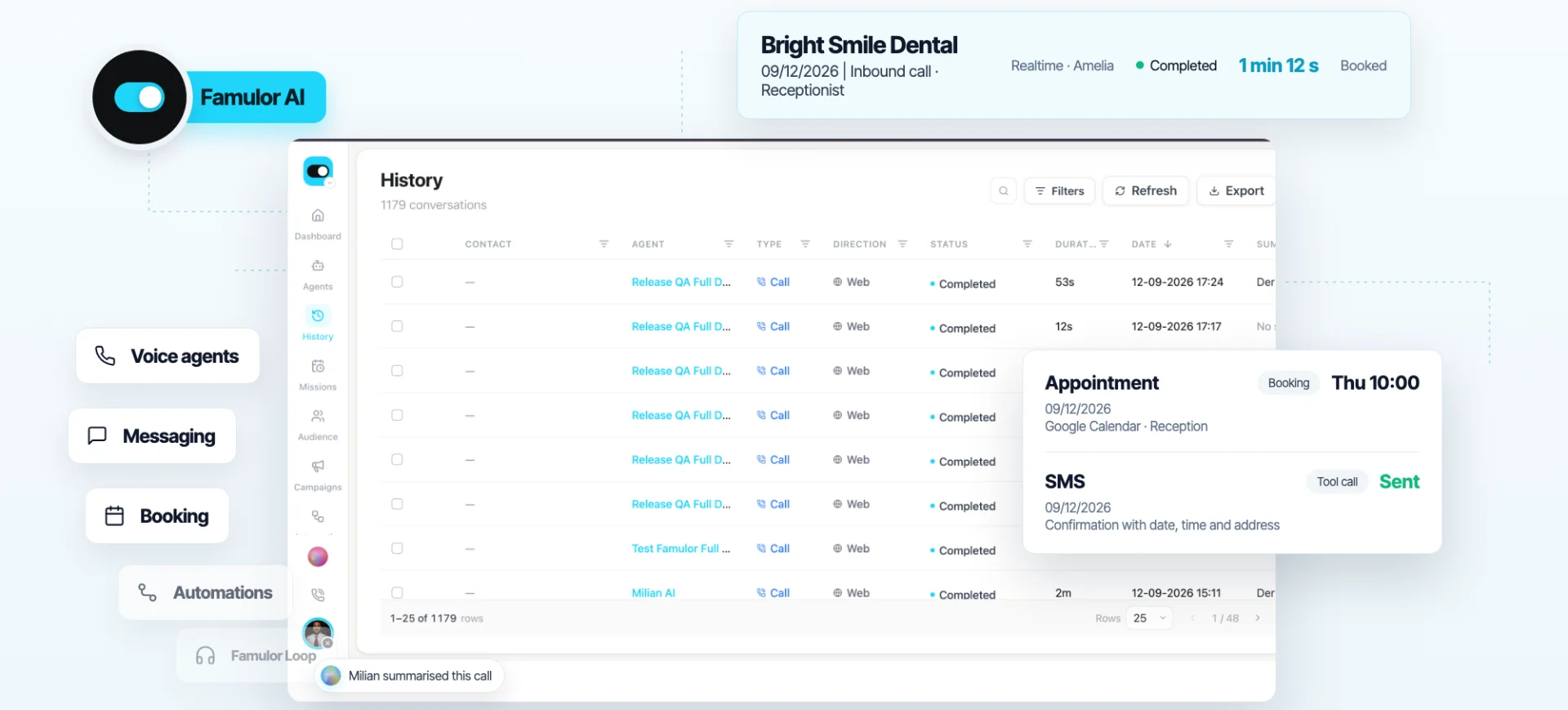
- Original and translation appear in the room and are saved in History.
This is not “an assistant serving one customer”, but an interpreting room between two people. For internal calls, support with a language barrier or international sales calls, Translate is the Famulor path — whether your customer-service assistant runs on Pipeline or Realtime.
How-to: Translate docs. Product post: Live call translation with Famulor Translate.
Agentic search: how does it stay in the conversation?
GPT-Live can delegate search and reasoning while the conversation continues. At Famulor you build comparable “current info” via tools — for example the Perplexity agent connector — clearly separate from the Full Duplex engine mode.
- The Perplexity connector (Agent Connectors) lets an assistant fetch up-to-date web answers during a call or chat — beyond the knowledge base.
- You bring your own Perplexity API key, pick a model and can steer tone/format with a system prompt.
- You can also start automations mid-conversation and use knowledge bases, flows and tools.
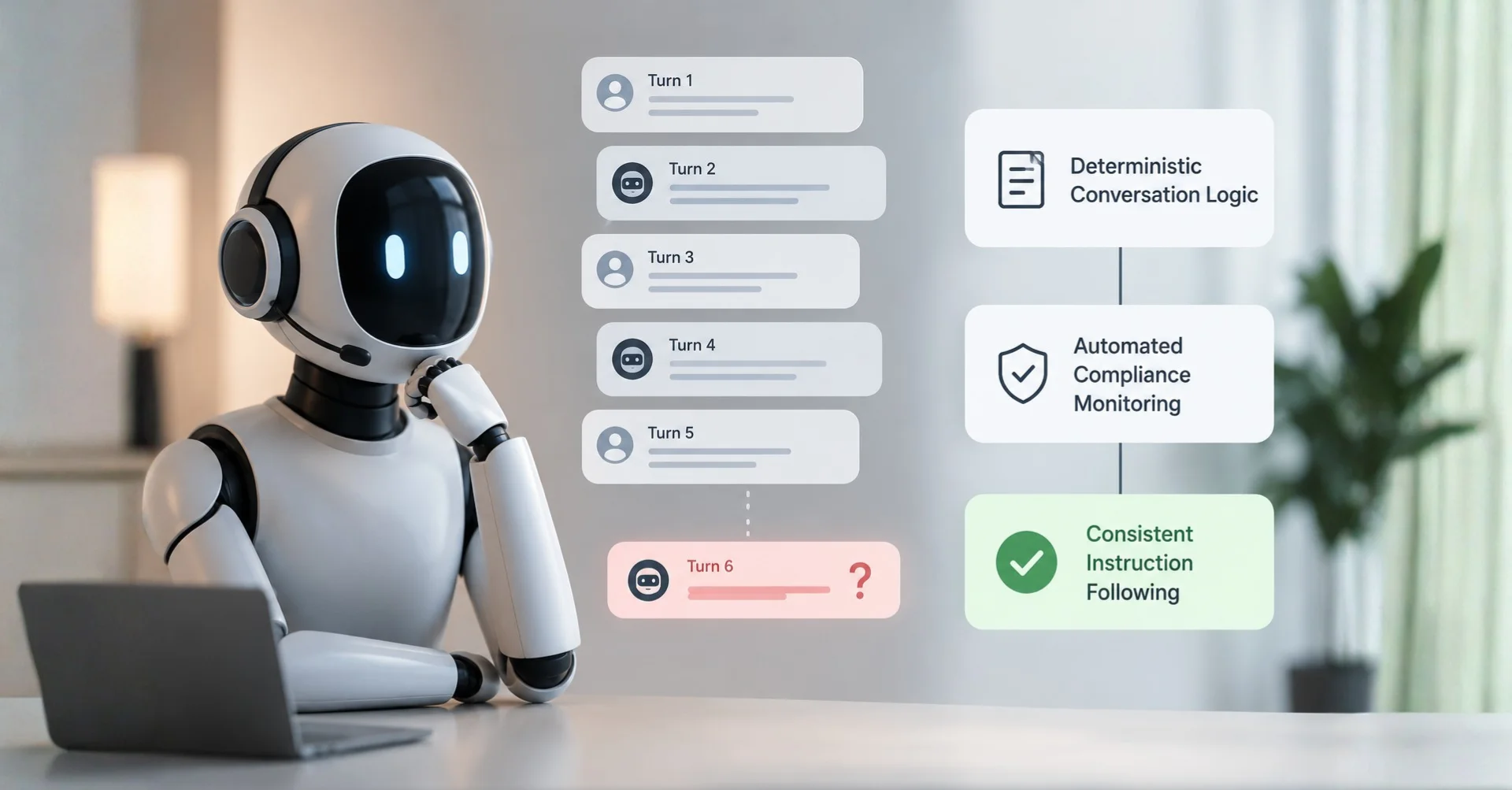
Agentic here means: not only chatting, but looking up, checking and acting during the conversation — without dropping the caller into a dead pause (filler phrases and asynchronous tools help too).
Setup: Agent Tools — Agent Connectors.
What should you take away in practice?
OpenAI GPT-Live and Famulor cover similar conversation ideas — but with clearly separated product building blocks. This overview helps you map them:
| Topic | OpenAI ChatGPT Voice (GPT-Live) | Famulor |
|---|---|---|
| Listen and speak at the same time | Core of GPT-Live (full duplex) | Realtime → Full Duplex (Beta) |
| Live translation | Part of the GPT-Live voice experience | Separate mode Translate |
| Current search / deeper tasks | Delegation to a frontier model + search | e.g. Perplexity connector, tools, automations |
| Use case | Consumer ChatGPT | Your own no-code voice/omnichannel assistants (phone, WhatsApp, chat, …) |
If you tried GPT-Live and want the same “real conversation flow” in your assistants: in Famulor open Assistant → Engine and choose Realtime → Full Duplex (Beta) (when region and Beta allow). For two-language calls use Translate. For fresh facts in a call: connect the Perplexity connector and assign it to the assistant.
FAQ
What is GPT-Live at OpenAI?
A new generation of speech models for ChatGPT Voice with full duplex, more natural turn-taking and the option to delegate search or reasoning in the background. Source: OpenAI — Introducing GPT-Live (link above).
What does Full Duplex mean at Famulor?
Under Realtime you choose Full Duplex (Beta): the assistant keeps listening while it speaks. Available for US/Global (Beta); disabled in the EU region. Docs: Full Duplex (Beta).
Is Famulor the same as GPT-Live?
No. Famulor is not GPT-Live and does not claim the gpt-live-1 model. The Famulor engine name is Full Duplex (Beta) under Realtime.
Live translation: GPT-Live or Famulor Translate?
At OpenAI, live translation is part of the GPT-Live voice experience. At Famulor, Translate is a separate interpreting mode for two people. Docs: Translate.
Agentic search: how does it stay in the conversation?
Via tools such as the Perplexity connector, the assistant fetches current web answers during a call or chat — separate from the Full Duplex mode. Docs: Agent Connectors.
What should you take away in practice?
Full-duplex feel → Full Duplex (Beta); two-language calls → Translate; fresh facts → Perplexity/tools. Check the EU region before expecting Full Duplex.
Next: review engine modes in the docs, try Translate, or book a demo. Changelog: 2026-09-12.
Autor en Famulor