Summarize Content With:




AI Voice Agent for Waste and Recycling: Handle Every Pickup Call
A waste and recycling company lives on routine. Bins are emptied on a fixed schedule, containers are delivered on a promised day, and bulky items are collected within an agreed window. The phone rings when something breaks that routine: a missed bin, a full container, a new move-in address. Those calls are short, repetitive and urgent for the caller, which makes them a strong fit for an AI voice agent for waste and recycling.
This guide shows which calls to automate first, how the agent should hand over to your dispatch team, how to prepare for seasonal peaks and what a realistic 30-day rollout looks like. The examples use a regional waste service with a small dispatch desk, but the same logic applies to municipal utilities, container rental firms and recycling yards.
Why the phone is still the main channel in waste services
Many customers of a waste service are not digital first. Private households, small landlords, craftspeople with a construction site and older residents often pick up the phone because they want a quick answer and a confirmation. Online forms exist, but a caller with a full bin in front of them rarely searches for the right form.
Three traits make the calls hard to staff:
- Peaks are predictable but sharp. After a public holiday, a storm or a route change, the same question arrives dozens of times within an hour.
- The questions are narrow. "When is my next pickup on Birkenweg?" has one correct answer that already lives in your route system.
- Time of day matters. Crews start early, and customers call before work or in the evening, outside the hours of a small office.
A voice agent answers in the first second, asks for the address, looks up the route and replies. If it cannot solve the request, it books a callback or creates a ticket. Nobody waits in a queue, and your team sees a clean list of what needs a human.
The six call types to automate first
Do not start with everything. Pick the call types where the answer is rule based and the data is available. The table shows a typical split and the handoff rule for each.
| Call type | What the agent does | Hand over to a person when |
|---|---|---|
| Schedule question | Asks for street and house number, reads out the next pickup per waste stream | The address is not found in the route data |
| Missed collection | Collects address, bin type and photo link by SMS, creates a re-collection ticket | The caller reports a repeat miss or a blocked street |
| Bulky waste booking | Explains what is accepted, offers free slots, confirms by SMS or WhatsApp | The items include hazardous or oversized material |
| Container order | Takes size, material type, address, access notes and desired date | The site needs a road permit or a crane |
| Billing question | Explains fee types, sends the invoice copy link, logs the dispute | The caller disputes an amount or asks for a payment plan |
| Address or contact change | Captures the new data and writes it to the customer record | Ownership or contract holder changes |
The pattern is simple: the agent owns the repeatable part and a person owns every decision that needs judgement or carries legal weight.
How a good call flows
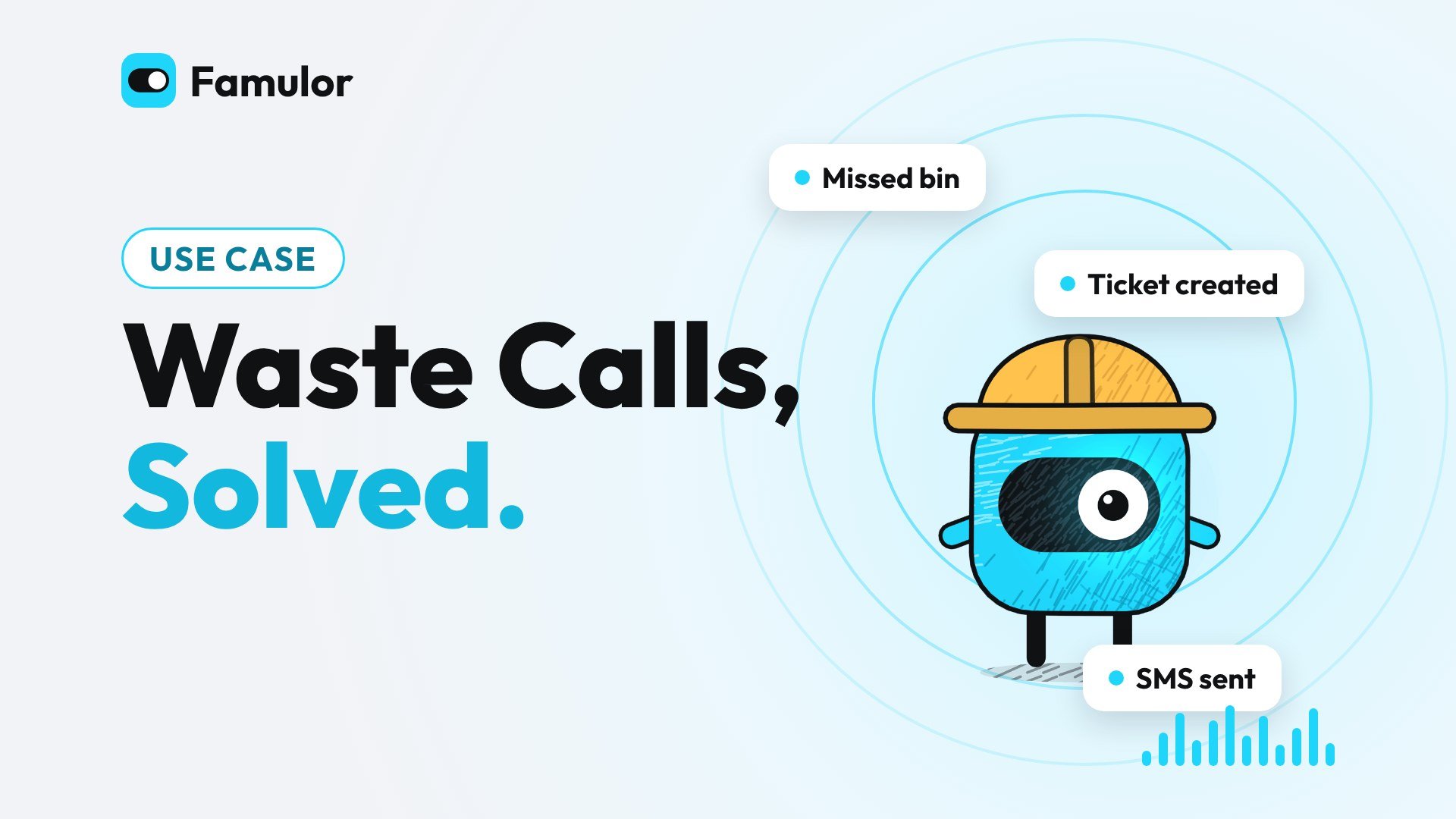
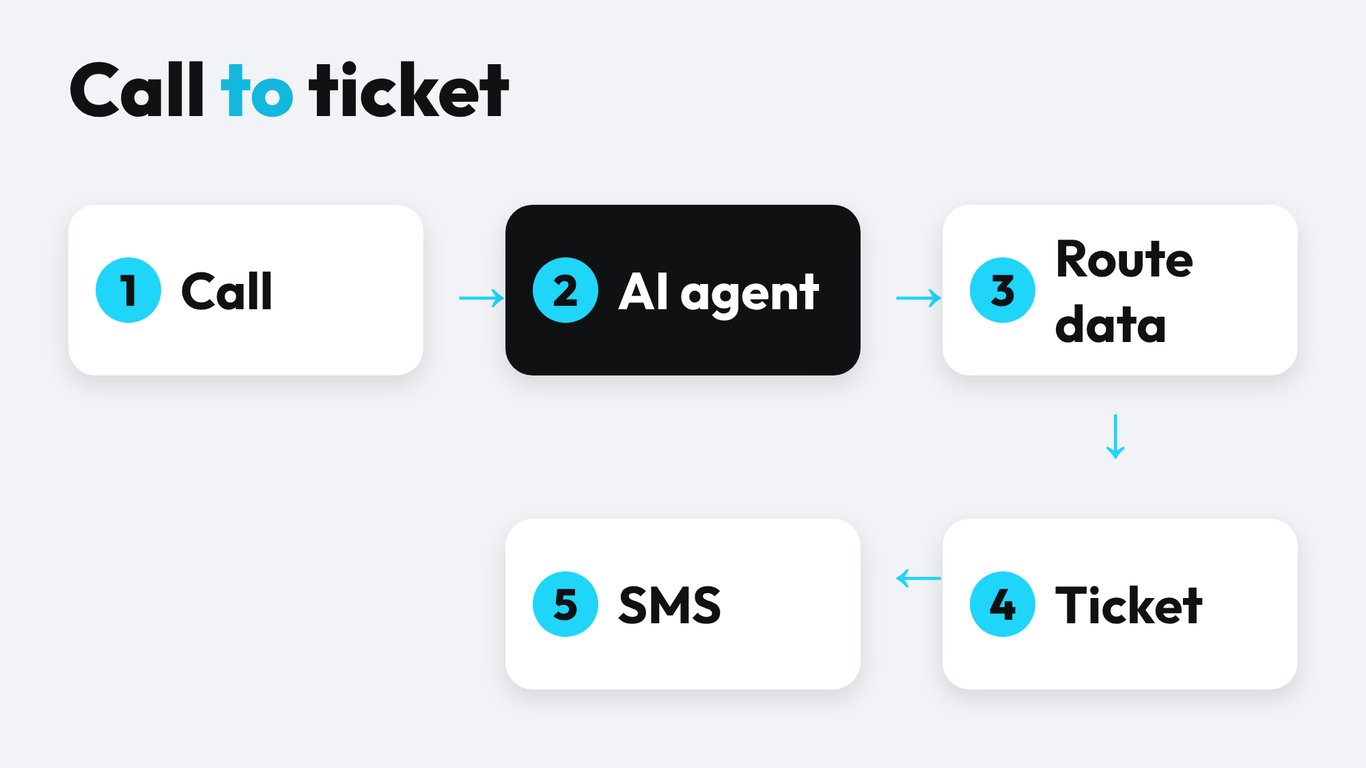
Take a missed collection as the example. A caller says the brown bin was not emptied this morning. The agent confirms the address, checks the route data for that day and asks one clarifying question: was the bin placed at the curb before 6 am? Depending on the answer, it either creates a re-collection ticket for the next available run or explains the reason, such as a blocked street, and sends the detail by SMS.
The same structure works for every call type: identify, check data, resolve or hand over, confirm in writing. Written confirmation is what stops the second call. A caller who gets an SMS with the ticket number and the planned date does not phone again that afternoon.
What the handoff must contain
When the agent passes a call to dispatch, the person should not have to ask the first three questions again. A good handoff summary includes name, address, call reason, what the agent already checked and what the caller expects. With booking integrations and ticket webhooks, this summary lands in the tool your team already uses.
Connect the data, or the agent only guesses
A voice agent is only as good as the data it can reach. For waste services, three sources matter:
- Route and schedule data per street and waste stream. Without it, the agent cannot answer the most common question.
- Order and ticket system. The agent must be able to create a container order or a re-collection ticket, not just promise one.
- Customer record. Name, contract and invoice contact let the agent greet known callers and avoid asking for data twice.
If your route data lives in a spreadsheet or a PDF, you can still start. Upload the schedule as a knowledge source and let the agent answer from it, then move to a live interface once the process works. For written follow-ups, the WhatsApp integration and SMS let the same assistant send confirmations on the channel the customer prefers.
Prepare for seasonal peaks
Peaks are where automation pays off fastest. A human desk is sized for the average day. A peak overloads it for a few days and leaves callers in a queue or on voicemail. A voice agent scales with the call volume, because every call gets its own conversation.
Typical peak triggers for a waste service:
- Holiday shifts. When a public holiday moves the pickup by a day, the same schedule question arrives all at once.
- Christmas tree and garden waste seasons. Short windows with strict rules create many "what is accepted" calls.
- Spring clean-up and move-out periods. Bulky waste and container orders spike together.
- Weather and strikes. A delayed route means hundreds of callers ask the same thing.
Handle hazards and complaints with care
Some calls must never be fully automated. If a caller mentions asbestos, chemicals, batteries that are leaking, a fire in a container or an injury, the agent should stop the normal flow, give a short safety instruction and forward the call to the on-call phone. The same applies to angry callers and repeated missed collections. Our guide on how AI voice agents handle angry callers covers the tone and escalation rules in detail.
A useful rule: write down the ten phrases that always trigger a human handoff, test them in a simulation and review them every quarter. For after-hours dispatch with a clear emergency path, see the AI emergency hotline playbook.
Compliance and trust
Waste services handle addresses, names and sometimes photos of property. Three points keep the setup clean:
- Tell callers they speak with an AI assistant at the start of the call.
- Inform about recording and storage before any data is captured, and keep retention short.
- Use a processor agreement and EU hosting where your customers expect it.
Municipal operators often need extra approvals, for example from a data protection officer or a works council. Involve them in week one, not after the pilot.
What it costs and what it saves
The cost of a voice agent follows the minutes of conversation. A schedule question takes about a minute, a container order a few minutes. At €0.15 per minute on pay as you go, a call of three minutes costs a fraction of the staff time it replaces, and the plans with included minutes lower the effective rate further. Check the current pricing for the plan that fits your volume.
The saving is not only the minutes. Count the callbacks you no longer need to make, the tickets that arrive complete and the overtime you avoid in peak weeks. Use the calculator below with your own call volume and average handling time.
Estimate your ROI from automating calls
See how much your business could save by switching to AI-powered voice agents.
ROI Result
ROI 0%
No credit card required
A 30-day rollout plan
A small team can launch in a month without disrupting daily work.
Week 1: pick scope and gather data
Choose two call types, usually schedule questions and missed collections. Export the route data, write the acceptance rules for each waste stream and agree on the handoff numbers. Decide who reviews the transcripts every day.
Week 2: build and test
Set up the agent with a clear greeting, the data sources and the handoff rules. Run test calls with real phrases from your team, including dialect, street names with unusual spelling and noisy backgrounds. Simulate edge cases such as an unknown address.
Week 3: soft launch
Forward the overflow and after-hours calls to the agent, not the full line. Read the transcripts, fix wrong answers and refine the knowledge base. Track the share of calls resolved without a person.
Week 4: widen the scope
Add bulky waste or container orders if the first two call types run stable. Add written confirmations by SMS or WhatsApp. Then decide whether the agent should answer the main line during peaks.
If you prefer a step by step tutorial for the platform side, the guide to setting up an AI phone assistant shows the first setup in detail.
Measure what matters
Pick a few numbers and review them weekly:
| Metric | Why it matters | How to read it |
|---|---|---|
| Resolution rate | Share of calls closed without a person | Rising means the knowledge base is working |
| Handoff reasons | Shows which topics the agent cannot solve yet | Top three reasons become next week's tasks |
| Repeat calls within 24 hours | Shows whether answers actually helped | High values point to unclear confirmations |
| Abandoned calls | Callers who hang up before an answer | Should drop toward zero after launch |
| Ticket completeness | Share of tickets with address and reason | Dispatch should not need to call back |
Famulor's analytics view shows transcripts and outcomes per call, so the weekly review takes minutes, not hours. For a deeper look at improving prompts with data, see the article on A/B testing for voice AI agents.
Common pitfalls
- Too much scope at launch. Two call types done well beat eight done halfway.
- No fallback. Every flow needs an exit to a person or a callback.
- Outdated route data. Update the schedule source as soon as routes change, or the agent repeats old answers.
- Silent failures. Review a sample of transcripts every day in the first month.
- No written confirmation. Without an SMS, callers phone again to check.
Conclusion
Waste and recycling calls are a textbook case for voice automation: short, frequent, rule based and clustered in peaks. Start with schedule questions and missed collections, connect your route data, define clear handoffs and review transcripts daily. After a month you will know which share of your calls the agent closes alone, and you will have a dispatch team that spends its time on real problems.
Ready to try it with your own routes? Open the waste and recycling solution, book a demo and bring your five most common caller questions. We will build the first flow with you.
Try our AI Assistant
Experience how natural our AI phone assistant sounds.
Enter your details and receive a call from our AI agent within seconds.
Agent is trained to discuss Famulor services and book appointments.

Demo AI agent
Famulor representative
FAQ
Can an AI voice agent answer questions about pickup dates?
Yes. Once it can read your route and schedule data, it asks for the street and house number and reads out the next pickup for each waste stream. If the address is unknown, it hands over to a person.
What happens when a caller reports a missed bin?
The agent records address, bin type and the reported time, checks the route status and creates a re-collection ticket. The caller gets the ticket number by SMS.
Can the agent take container orders?
It can collect container size, material type, address, access notes and the desired date, then create the order in your system. Orders that need permits or special equipment go to a person.
How does the agent handle hazardous waste questions?
It states the basic rule, sends the official guidance link and forwards the call to your specialist or on-call phone. It does not give technical advice on dangerous materials.
Does it work outside office hours?
Yes. The agent answers around the clock, resolves routine requests and leaves complete tickets for the next morning. Emergencies can be routed to an on-call number.
Which languages does it support?
Famulor agents speak many languages, which helps in regions with a mixed population. Test the agent with real street names and accents before launch.
Is the setup GDPR compliant?
The agent announces that it is an AI, informs about recording and stores data under a processor agreement with EU hosting. Involve your data protection officer early.
How long does it take to launch?
A focused pilot with two call types fits into about four weeks, including data preparation, testing and a soft launch with overflow calls.
Can the agent connect to my existing systems?
Yes, through integrations, webhooks and the API. Start with a simple ticket or email handoff and move to a live system connection later.

Writer at Famulor