Résumer le contenu avec:




Une intégration CRM n'est efficace que si l'équipe commerciale peut se fier à ses données. Un agent téléphonique doté d'une IA peut capturer des noms, des besoins, des budgets, des préférences de réunion et les prochaines étapes au cours d'une conversation. Mais si ces détails arrivent sous forme de résumé non structuré, atterrissent dans le mauvais champ ou créent des contacts en double, le résultat n'est pas l'automatisation, mais une corvée de nettoyage de données.
Ce guide explique comment les entreprises peuvent concevoir un flux de données fiable, de la conversation jusqu'au CRM. Les éléments fondamentaux sont un contrat de données clair, une validation avant écriture, des actions sécurisées en cours d'appel et une écriture post-appel auditable. Ce modèle fonctionne avec HubSpot, Salesforce, Pipedrive et les CRM personnalisés via les intégrations Famulor, la plateforme d'automatisation, l'API ou le protocole MCP.
Pourquoi les données d'IA vocale nécessitent des contrôles spécifiques
Les formulaires produisent des chaînes de caractères dans des champs prédéfinis. Les conversations produisent du sens en langage naturel. Un prospect pourrait dire : « Nous avons environ 80 personnes au service, mais seulement 25 sont régulièrement au téléphone. » Un système fiable ne doit pas transformer cela en 80 agents de centre de contact. Il doit distinguer la taille de l'entreprise, la taille de l'équipe et la population réelle d'utilisateurs.
Quatre classes d'erreurs sont particulièrement critiques :
- Erreurs de reconnaissance : les noms, adresses e-mail, numéros de téléphone ou identifiants de commande sont mal entendus.
- Erreurs sémantiques : une déclaration est mappée vers le mauvais champ CRM, comme « fournisseur actuel » au lieu de « fournisseur privilégié ».
- Erreurs d'identité : un nouveau contact est créé alors qu'une fiche correspondante existe déjà.
- Erreurs de processus : une action se déclenche trop tôt alors que l'appelant corrige l'information plus tard.
L'implication clé est simple : la transcription est une source, mais elle ne constitue pas automatiquement l'enregistrement CRM. Une couche de traduction contrôlée doit être placée entre les deux.
1. Définir un contrat de données voix-vers-CRM
Avant qu'un assistant n'écrive dans des champs, chaque destination nécessite une définition sans ambiguïté. Un contrat de données pratique spécifie au minimum le nom du champ, le type de données, les valeurs autorisées, la source, la règle de validation et le comportement en cas d'incertitude.
| Champ CRM | Type | Validation | En cas d'incertitude |
|---|---|---|---|
| phone_e164 | Chaîne | Code pays + longueur plausible | Relire et confirmer |
| Chaîne | Syntaxe + confirmation épelée | Ne pas écrire ; demander un suivi | |
| lead_status | Enum | Valeurs de statut définies uniquement | Définir sur « needs_review » |
| employee_band | Enum | 1–10, 11–50, 51–250, 251+ | Poser une question de clarification |
| next_action_at | Date/heure | Fuseau horaire + vérification future | Ne pas créer de tâche |
Utilisez des valeurs contrôlées pour le statut, le secteur, la priorité et la disposition de l'appel plutôt que du texte libre. Le texte libre reste utile pour les notes et les résumés, mais les automatisations opérationnelles nécessitent des énumérations stables. Un flux de travail peut alors réagir de manière fiable à qualified, callback_requested ou not_interested.
2. Séparer les actions en direct de l'écriture post-appel
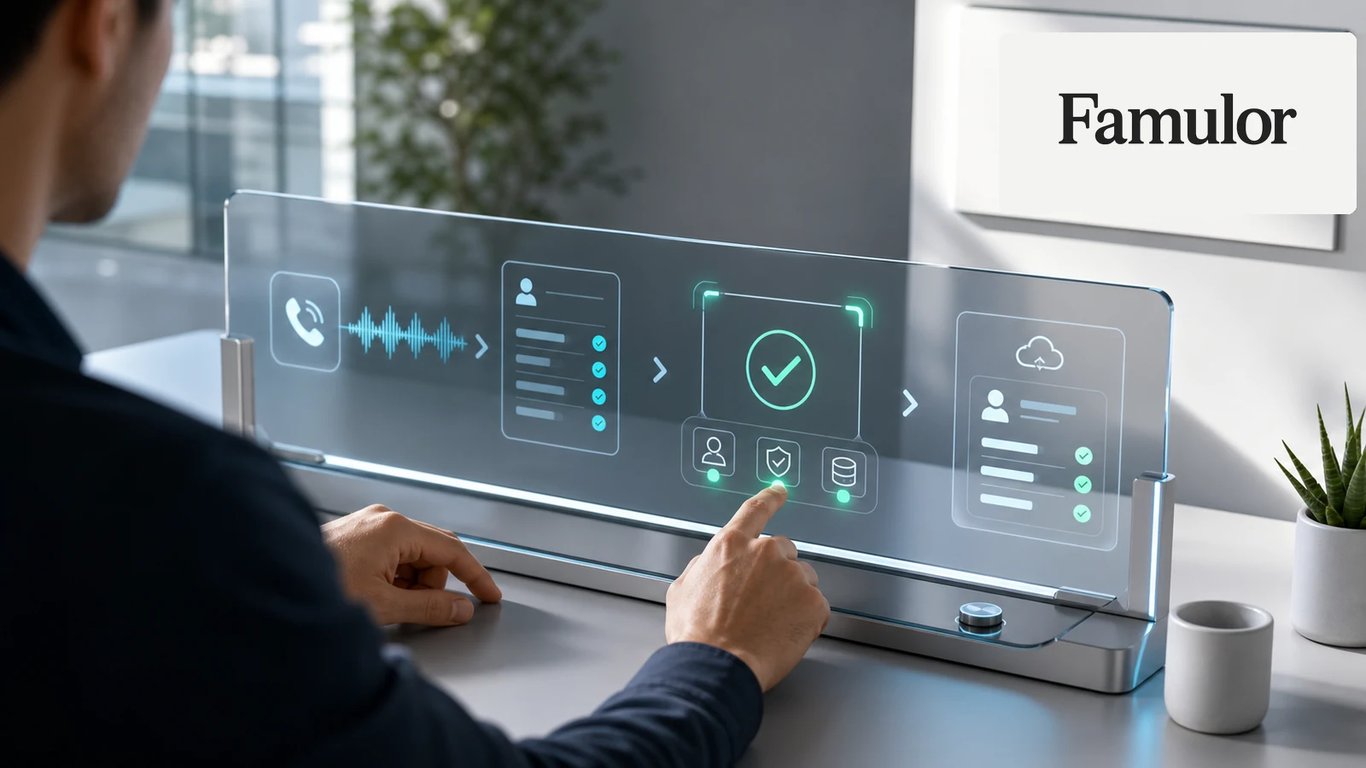
Toutes les actions CRM ne doivent pas être effectuées au même moment. Pendant la conversation, utilisez des actions dont les résultats affectent le dialogue : trouver un contact, vérifier la disponibilité, récupérer une étape de transaction ou réserver une réunion. Les Mid-call Actions de Famulor, les outils MCP connectés ou une automatisation qui renvoie une réponse directe à l'assistant sont conçus pour cette couche.
Après l'appel, le résumé final, la disposition, les champs extraits, l'avis d'enregistrement et la tâche de suivi peuvent être écrits ensemble. Le Post-Call Webhook est le déclencheur le plus robuste car l'état final de la conversation est disponible et la transaction peut être regroupée.
- En direct : lire, valider, réserver ou effectuer une action réversible.
- Post-appel : mettre à jour l'enregistrement final, journaliser l'activité, définir la disposition et déclencher le processus suivant.
- Examen humain : acheminer les cas risqués ou contradictoires vers une file d'attente d'exceptions.
Quels systèmes Voice AI doit-il connecter ?
Sélectionnez vos outils et obtenez un chemin d’intégration rapide.
Famulor
Voice AI
Intégrations sélectionnées: 4
3. Résoudre l'identité avant le contenu
L'échec d'intégration le plus courant n'est pas un mauvais champ, mais un mauvais enregistrement. Établissez une hiérarchie de correspondance fixe. Un ordre sain est : ID CRM vérifié, numéro de téléphone normalisé, adresse e-mail confirmée, et seulement ensuite une correspondance floue sur le nom et l'entreprise.
Les correspondances floues ne doivent jamais être fusionnées automatiquement. Si le système trouve deux contacts avec des noms similaires, l'assistant peut poser une question de clarification non sensible ou le flux de travail peut marquer le cas pour examen. Pour les campagnes sortantes, transmettez l'ID de prospect ou de contact interne en tant que variable avant l'appel ; cela élimine les incertitudes pendant la conversation.
4. Valider les détails critiques au sein du dialogue
Une transcription de haute qualité ne remplace pas la validation métier. Utilisez les confirmations de manière sélective là où un seul caractère peut changer une action :
- Relire les numéros de téléphone par groupes.
- Épeler les noms inhabituels et les domaines d'e-mail.
- Confirmer la date, l'heure et le fuseau horaire ensemble.
- Indiquer explicitement la devise et la période pour les valeurs monétaires.
- Résumer brièvement avant de valider des réservations ou des modifications d'enregistrement.
Le contrôle de la conversation est également important pour les avis obligatoires, le langage de consentement et les confirmations. Famulor peut contrôler le paramètre « Autoriser les interruptions » selon les modes de l'assistant. Laissez l'interruption activée pour une qualification naturelle, mais désactivez-la sélectivement pour les passages qui doivent être délivrés intégralement.
5. Rendre chaque écriture idempotente
Les webhooks et les automatisations peuvent être délivrés plus d'une fois. Sans idempotence, des notes, tâches ou transactions en double apparaissent. Utilisez un ID d'événement unique, tel que l'ID d'appel Famulor combiné au type d'action, comme clé d'idempotence dans la destination ou dans un stockage intermédiaire.
Une écriture robuste suit cette séquence :
- Authentifier l'événement et vérifier sa version de schéma.
- Résoudre le contact en utilisant la stratégie d'identité définie.
- Normaliser les champs et les valider par rapport au contrat de données.
- Vérifier si l'ID d'événement a déjà été traité.
- Écrire le contact, l'activité et la tâche dans un ordre défini.
- Lire le résultat et journaliser le succès ou l'exception.
6. Stocker la provenance et la certitude
Un champ tel que « Budget : 50 000 € » est difficile à évaluer sans provenance. Pour les points de données importants, enregistrez également si la valeur a été confirmée par l'appelant, lue depuis le CRM, extraite d'une source de connaissances ou déduite par le modèle. Au lieu d'inventer un pourcentage de confiance précis, une petite classification de certitude est souvent plus utile :
- confirmed : explicitement confirmé par l'appelant ;
- observed : clairement énoncé pendant la conversation ;
- inferred : dérivé du contexte et inadapté aux actions irréversibles ;
- needs_review : contradictoire, incomplet ou non validable.
Ces métadonnées améliorent les audits, le débogage et la priorisation de l'examen humain. Elles empêchent également les hypothèses générées par le modèle d'écraser silencieusement les valeurs CRM faisant autorité.
7. Surveiller la qualité des données comme une métrique opérationnelle
Le taux de complétion des appels et la durée moyenne ne suffisent pas pour l'automatisation CRM. Mesurez également :
- la part des champs requis qui passent la validation ;
- le taux de contacts en double ;
- le taux de succès et de réessai de l'écriture ;
- la part des cas marqués
needs_review; - le taux de correction manuelle par champ ;
- le temps écoulé entre la fin de l'appel et la disponibilité de l'enregistrement CRM.
Analysez les échecs par champ et par cause profonde. Si les adresses e-mail sont fréquemment corrigées, le dialogue nécessite une meilleure routine de confirmation. Si les dispositions sont incohérentes, la définition est généralement trop large, le modèle n'est pas nécessairement trop faible.
Un pilote de 10 jours pour des données CRM fiables
- Jours 1–2 : choisir un cas d'usage clair et pas plus de dix champs de destination.
- Jour 3 : définir le contrat de données, les énumérations et la hiérarchie de correspondance.
- Jours 4–5 : construire séparément les actions de lecture, les actions en direct et l'écriture post-appel.
- Jour 6 : créer des cas de test avec des corrections, du bruit de fond, des doublons et des réponses incomplètes.
- Jours 7–8 : commencer avec un petit volume réel et un examen humain.
- Jour 9 : évaluer les erreurs de champ et les exceptions.
- Jour 10 : resserrer les règles et augmenter le volume seulement après.
Conclusion : une bonne IA vocale écrit moins, mais écrit de manière fiable
La valeur d'un agent téléphonique IA ne vient pas du remplissage du plus grand nombre de champs possible. Elle provient de données actuelles, correctement appariées et opérationnellement utiles. Un contrat de données propre, des confirmations sélectives, des actions séparées en direct et post-appel, ainsi que des flux de travail idempotents transforment les informations de conversation en intelligence CRM fiable.
Famulor combine ces couches via des Mid-call Actions, la plateforme d'automatisation, MCP, l'API et les webhooks. Commencez par un processus, mesurez les taux de correction par champ et passez à l'échelle uniquement lorsque les ventes et les opérations font confiance à l'écriture.

Rédacteur chez Famulor