Résumer le contenu avec:




Salesforce AI Voice Agent Integration: How to Connect Phone Calls to Your CRM in 2026
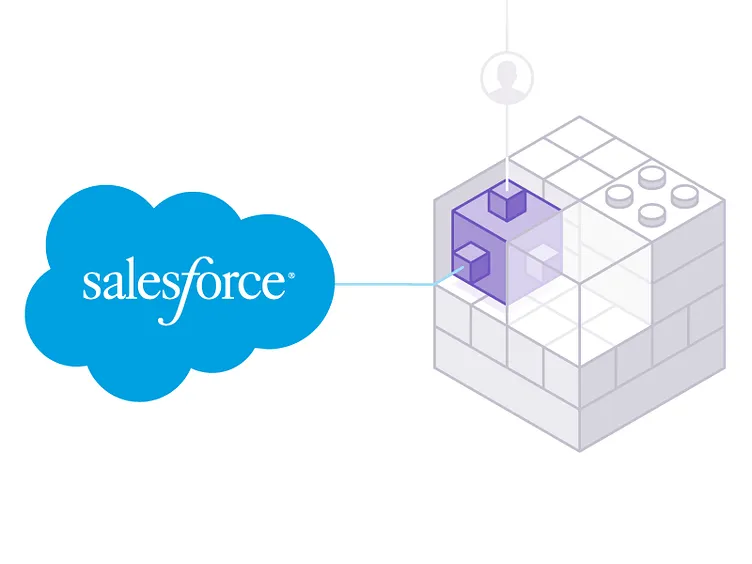
If you run sales or service on Salesforce, the fastest way to lose revenue is a phone call that never makes it into the system. A prospect leaves a voicemail, a customer asks about an order, a renewal is due — and none of it is logged, scored, or routed until someone gets around to it. A Salesforce AI voice agent integration closes that gap: an AI answers or places the call, handles the conversation in natural language, and writes the outcome straight back into Salesforce as a lead, case, task, or activity.
In short: you no longer need a human to sit between the phone line and the CRM. With Famulor, you can stand up a voice agent that books appointments, qualifies inbound leads, and updates Salesforce records automatically — without writing code. This guide explains why 2026 is the year to do it, the integration options on the table, how to set it up step by step, and the mistakes to avoid.
Why 2026 is a turning point for Salesforce telephony
There is a concrete reason this topic is urgent right now. In early 2026 Salesforce moved Open CTI — the long-standing bridge that connected external phone systems to the Salesforce agent desktop — into maintenance mode, with full retirement scheduled for February 28, 2028. No new features, no enhancements. Salesforce is steering customers toward Service Cloud Voice and its Agentforce layer, where voice lives natively inside the platform.
That shift forces a decision for every team that automates calls. You can commit fully to Salesforce-native voice, or you can keep your telephony flexible and connect a dedicated AI voice platform that writes into Salesforce through its API and webhooks. For most small and mid-sized teams, the second path is faster to deploy, cheaper per minute, and far less locked-in — which is exactly where a platform like Famulor fits.
What a Salesforce AI voice agent actually does
A voice agent is not a chatbot with a phone number bolted on. It listens, understands intent, asks follow-up questions, and takes action mid-call. Tied to Salesforce, a single agent can cover several jobs at once:
- Inbound reception: answer every call 24/7, identify the caller against existing Salesforce contacts, and create a case or task for anything it cannot resolve.
- Lead qualification: ask budget, timeline, and fit questions, then create a scored Lead with the answers stored as fields — no rep time spent on tyre-kickers.
- Outbound follow-up: call back inbound web leads within minutes, confirm interest, and update the Opportunity stage automatically.
- Appointment booking: check availability, book the slot, and log the meeting as a Salesforce activity.
- Renewals and reminders: place outbound reminder calls for renewals or overdue invoices and write the disposition back to the account.
Consider a concrete example. A 40-person B2B software vendor, "Northwind Cloud," gets 200 inbound demo requests a month. Reps used to call back hours later; many leads had gone cold. Their Famulor agent now calls each new Salesforce Lead within two minutes, confirms company size and use case, and either books a demo or marks the Lead as unqualified — with every answer written into custom fields. The SDR team starts each morning with a clean, pre-qualified pipeline instead of a list of cold numbers.
Integration approaches compared
There is no single "right" way to connect AI voice to Salesforce — it depends on how deep you want voice embedded in the agent desktop versus how much flexibility and speed you need. The table below compares the realistic options in 2026.
| Approach | How it connects to Salesforce | Best for | Trade-off |
|---|---|---|---|
| Service Cloud Voice (native) | Voice runs inside Salesforce; Agentforce handles AI turns | Large contact centers already standardized on Salesforce | Higher cost, heavier setup, tight platform lock-in |
| Partner telephony (Genesys, NICE, Talkdesk, Vonage) | Certified connector into Service Cloud Voice | Enterprises replacing a legacy contact-center stack | Enterprise pricing and procurement cycles |
| Dedicated AI voice platform (Famulor) | REST API, webhooks, and 300+ no-code integrations write to Salesforce | SMBs and teams that want voice live in days, not quarters | Voice sits beside, not inside, the Salesforce console |
| DIY build (open-source stack) | Your own code calls the Salesforce API | Engineering teams with spare capacity | You own latency, uptime, telephony, and maintenance |
For teams whose priority is "answer every call and keep the CRM current" rather than "rebuild the contact center," the dedicated-platform route is usually the pragmatic first choice. It keeps your phone numbers and call-center logic independent of any one CRM, while still feeding Salesforce everything it needs.
How the Famulor + Salesforce integration works under the hood
Famulor connects to Salesforce the same way modern automation tools do — through data, not a proprietary socket. There are three building blocks:
- Webhooks: when a call ends, Famulor fires a structured payload (caller, intent, collected variables, transcript summary, outcome) to an endpoint you choose.
- Variables and knowledge bases: the agent collects defined variables during the call — order number, budget, preferred date — and grounds its answers in your uploaded knowledge base, so it speaks accurately about your products and policies.
- No-code automation: through 300+ integrations and connectors like Make, n8n, and Zapier, that payload becomes a Salesforce record — create or update a Lead, log a Task, advance an Opportunity, or open a Case.
Because Famulor supports SIP trunking to any VoIP or PBX provider, you can keep your existing business numbers and carrier. And because it speaks 40+ languages, the same Salesforce workflow can serve callers in German, English, Spanish, or French without separate agents per market.
Step-by-step setup
You can have a working prototype the same afternoon. Here is the path most teams follow:
- Define the job. Pick one workflow first — for example, "qualify inbound demo requests." Resist the urge to automate everything on day one.
- Build the agent. In Famulor, write the system prompt, upload a knowledge base, and define the variables you want captured (company size, use case, timeline).
- Connect the number. Buy a number in Famulor or route your existing line via SIP trunking so callers reach the agent.
- Map the data to Salesforce. In your automation tool, map each Famulor variable to a Salesforce field. Decide the trigger: create a Lead, update a Contact, or open a Case.
- Set the handoff rule. Define when the agent should transfer to a human — a live call handoff for hot leads or edge cases keeps customer experience high.
- Test, then go live. Run test calls, confirm records land correctly in Salesforce, then point production traffic at the agent.
Most of this is configuration, not engineering. A non-technical operations lead can own it, which is the whole point of a no-code approach.
Pricing and ROI
The honest comparison is not "AI versus free." It is the per-minute cost of an AI voice agent against the fully loaded cost of the call being missed, sent to voicemail, or handled by a human at a desk. A missed inbound demo request at Northwind Cloud is not a small loss — it is a deal that never enters the pipeline. When you weigh a few cents per minute against the lifetime value of a captured lead, the math usually favors automating the predictable, repetitive calls and reserving human time for the complex ones. You can see transparent per-minute rates on the Famulor pricing page and model your own numbers below.
Estimez votre ROI en automatisant vos appels
Voyez combien vous pourriez économiser chaque mois grâce aux voice agents IA.
Résultat ROI
ROI 0%
Sans carte bancaire
What to write back into Salesforce
The value of the integration lives or dies on the data quality of what lands in the CRM. A call that creates a record with nothing but a phone number and a timestamp is barely better than a missed call. Decide in advance which structured fields each call should populate so reporting, routing, and follow-up actually work. A practical baseline for an inbound lead-qualification agent looks like this:
- Identity fields: caller name, company, and phone, matched against existing Contacts to avoid duplicates.
- Qualification fields: budget band, timeline, team size, and use case — each mapped to a typed picklist or number field, not free text.
- Outcome fields: a clear disposition such as "demo booked," "callback requested," or "not a fit," which drives the next automation.
- Context fields: a short call summary and a link to the full transcript, so a rep can pick up exactly where the agent left off.
At Northwind Cloud, that mapping is what lets the SDR team sort the morning pipeline by qualification score and skip the manual triage entirely. The agent does the data entry; the humans do the selling.
Best practices and common mistakes
Teams that get the most from a Salesforce voice integration tend to share a few habits — and avoid a few traps.
- Do start narrow. One workflow done well beats five done poorly. Expand once the first is reliable.
- Do write back clean data. Map variables to typed Salesforce fields, not a free-text notes blob, so reporting and routing actually work.
- Do define escalation clearly. Tell the agent exactly when to transfer to a human, and make sure that handoff carries context.
- Don't skip duplicate handling. Decide upfront whether a call updates an existing Contact or creates a new Lead, or you will pollute the CRM.
- Don't ignore compliance. For outbound calls and call recording, follow local consent rules; for EU operations, keep data handling and recording disclosure in line with GDPR.
- Don't over-script. A rigid menu recreates the IVR frustration you were trying to escape. Let the agent converse naturally and only constrain the data it must collect.
Industry use cases
The same Salesforce pattern adapts across very different businesses:
- SaaS sales: instant callback and qualification of inbound web leads, with Opportunity stages updated automatically.
- Financial services: renewal and review reminders logged as activities, with sensitive steps handed to a licensed human.
- Home services: a solar installer captures every job call after hours, books site surveys, and creates a Lead with address and roof type pre-filled.
- Professional services: a tax firm screens new client enquiries, collects the basics, and routes qualified prospects to the right partner's calendar.
For a CRM-specific walkthrough on a different platform, the Famulor HubSpot integration guide follows the same playbook and is a useful companion read. Larger teams evaluating governance and scale can review the Famulor enterprise options.
Conclusion
The retirement of Open CTI makes 2026 the year to rethink how voice meets Salesforce. You can re-platform your entire contact center, or you can connect a fast, flexible, multilingual AI voice agent that answers calls and keeps your CRM current automatically. For most sales and service teams, the second path delivers value in days, keeps telephony independent, and costs a fraction of an enterprise re-platform. Famulor is built for exactly this — no-code setup, SIP trunking, 40+ languages, and 300+ integrations that write straight into Salesforce. Start with one workflow, prove the ROI, and expand from there. The concrete next step: pick your highest-volume repetitive call type and build an agent for it this week.
Essayez notre Assistant IA
Découvrez à quel point notre assistant téléphonique IA sonne naturel.
Entrez vos coordonnées et recevez un appel de notre agent IA en quelques secondes.
L'agent est formé pour parler des services Famulor et prendre des rendez-vous.

Demo AI agent
Famulor representative
FAQ
Can an AI voice agent write directly into Salesforce?
Yes. After each call, Famulor sends a structured payload via webhook that your automation tool turns into a Salesforce Lead, Contact update, Task, or Case. The data lands without manual entry.
Do I need Service Cloud Voice to use AI voice with Salesforce?
No. Service Cloud Voice is one option, but a dedicated platform like Famulor connects through the Salesforce API and no-code automation, so you can keep your existing telephony and still update records.
What happens to Open CTI integrations?
Salesforce moved Open CTI into maintenance mode in early 2026 and plans full retirement on February 28, 2028. Teams relying on it should plan a migration to a supported voice approach well before then.
Can the AI transfer a call to a human?
Yes. You define escalation rules, and the agent performs a live handoff to a rep when a lead is hot or the request is complex, passing along the context it has gathered.
Does it support languages other than English?
Famulor speaks 40+ languages, so one Salesforce workflow can serve callers across multiple markets without building a separate agent for each language.
How long does setup take?
A focused single-workflow integration can be configured and tested the same day, because the work is mostly mapping variables to Salesforce fields rather than writing code.
Is it compliant for recording and outbound calls?
You remain responsible for consent and disclosure under local law and, in the EU, GDPR. Famulor supports the controls you need, but configuring them correctly for your jurisdiction is part of setup.
What does it cost compared to a human receptionist?
AI voice is billed per minute, typically a small fraction of staffing the same call volume with people. The strongest ROI comes from automating predictable, repetitive calls and reserving human time for complex cases.
Rédacteur chez Famulor